Yearly Archives: 2010

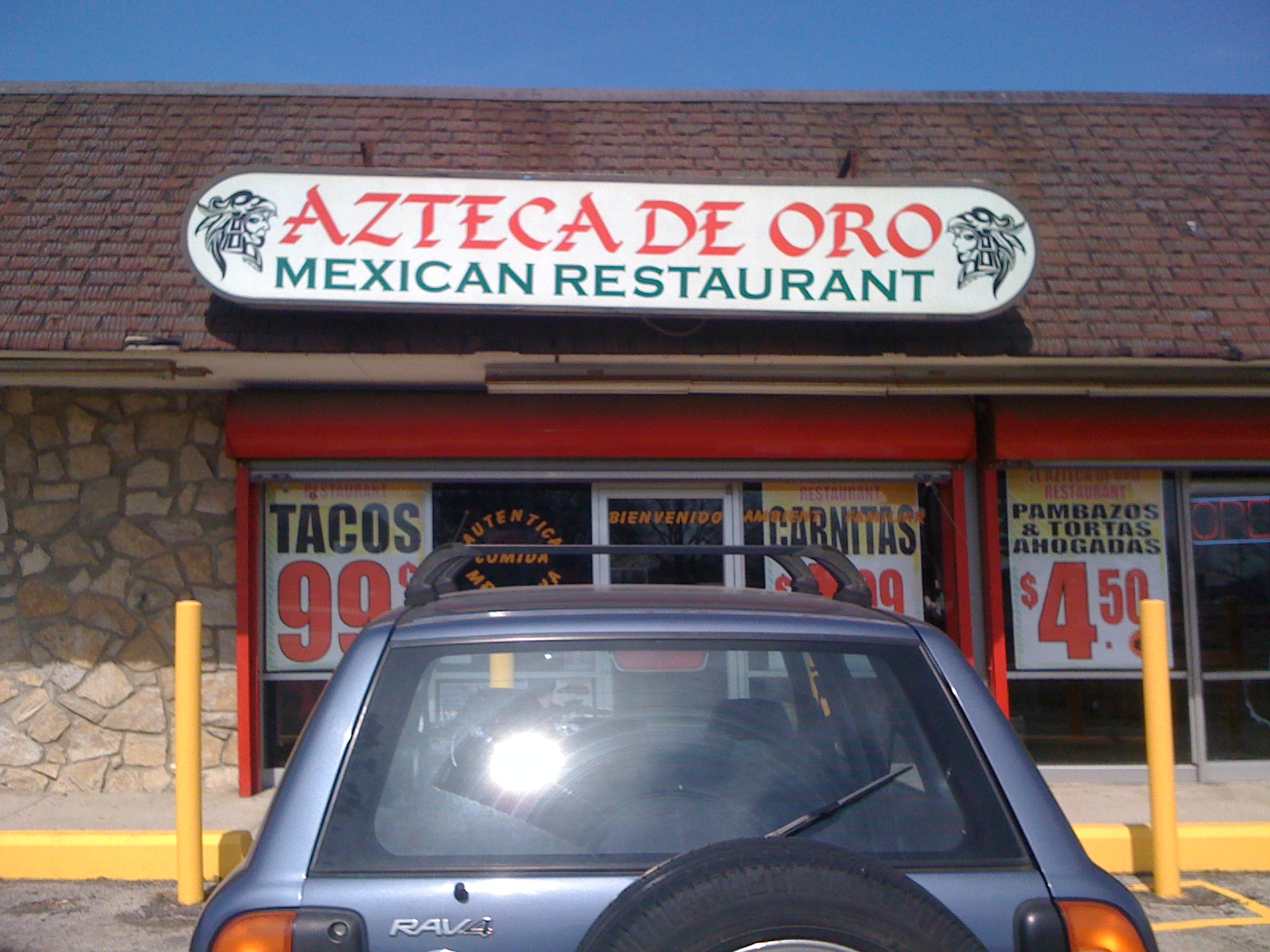
Azteca De Oro

CLOSED
Cuisine: Mexican

Industrial Mile Rd., just off Georgesville (address not posted)

Click here to map it!

I don’t know that I’ve ever said this about a restaurant before, but Azteca De Oro is, well… cute.  Not unlike most of the restaurants we’re reviewing here, it’s an assemblage of the second-hand: start with the bones of an old restaurant, add tables, chairs, and whatever else you can scrounge up, maybe hit a few walls with paint.  Sometimes this approach adds up to something more than the sum of its parts, other times… not so much.  In ADO’s case, it comes together with an unaffected, well worn, cheerful charm (that the photos, unfortunately, do a bad job of conveying).
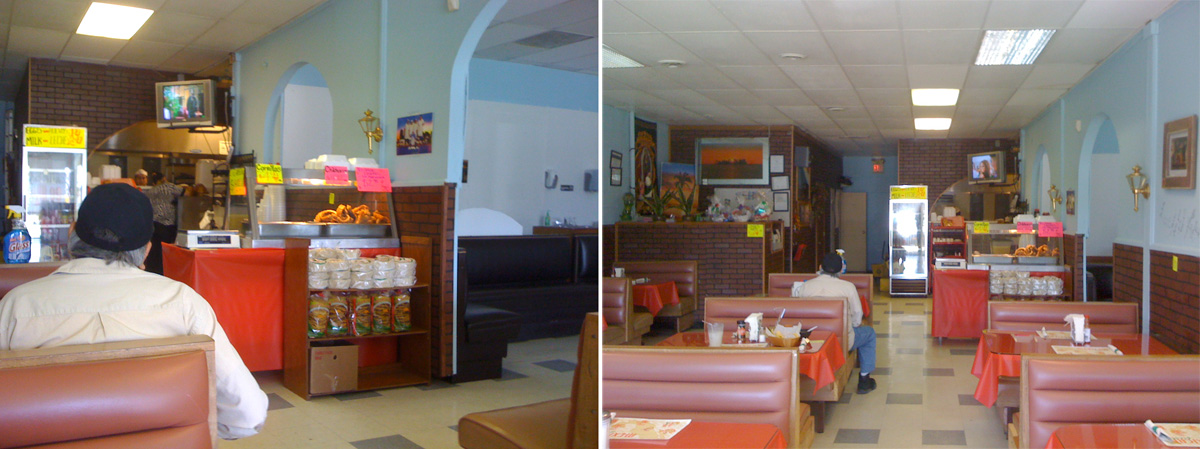
ADO’s menu is extensive and clearly oriented towards a Mexican customer base.  With offerings like huaraches, gorditas, menudo and pambazos, these guys operate as though their competition is the taco trucks (which, as far as their Mexican clientele are concerned, they probably are).  This felt like familiar territory, so I figured I’d put them to the test by ordering the tacos campechanos – a plate of 5 tacos, each with a different meat inside – and washing it down with some horchata.

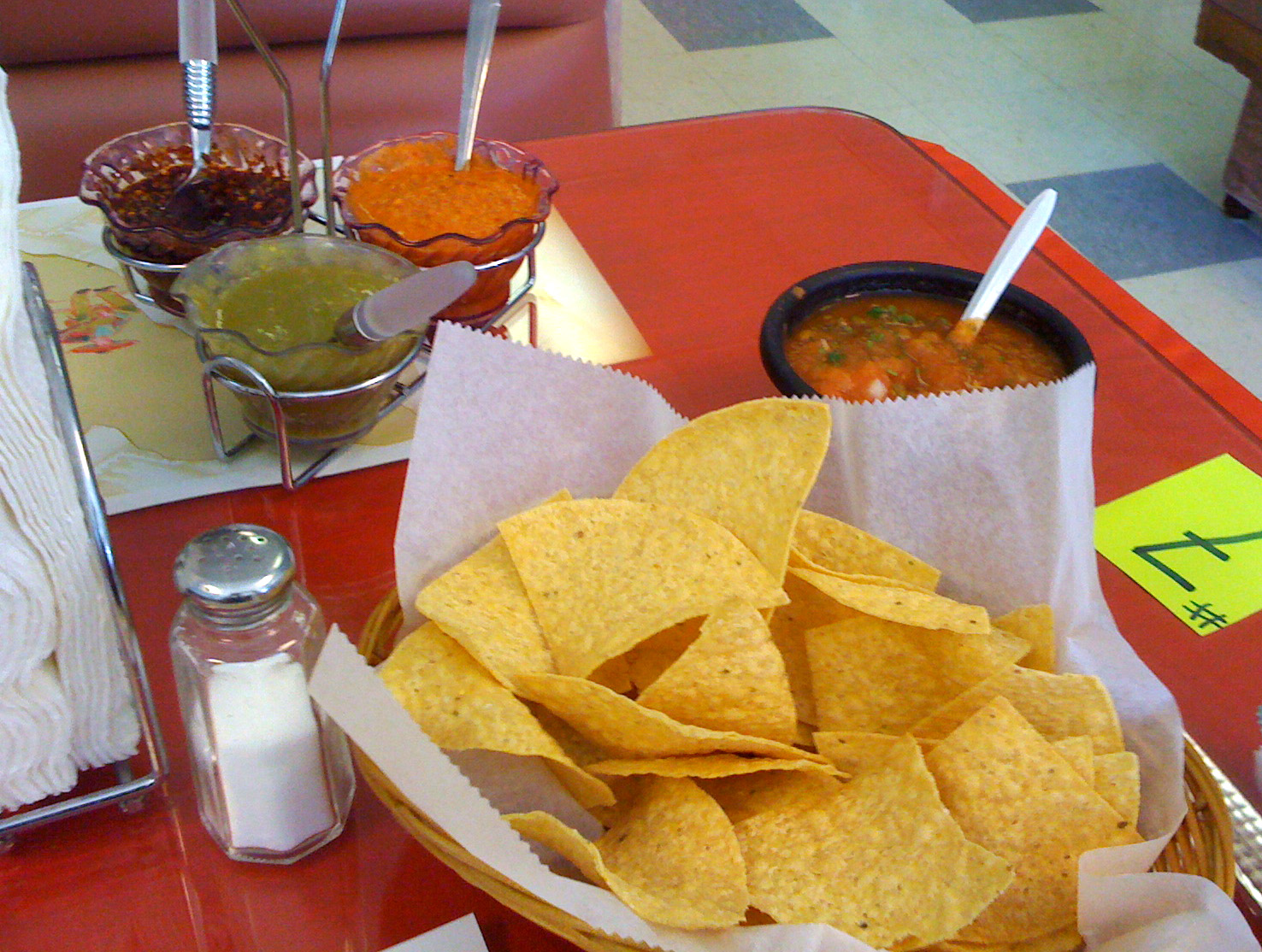
Chips and a nice selection of salsas came out.  The tortilla chips were fine, but the salsas were the star – conspicuously fresh and flavorful.  The lighter red-orangeish salsa was a standout – smoky, garlicky, and with a nice hot kick.  The deep red stuff packed a searing spicy heat punch.  The horchata, a sweet rice milk beverage flavored with cinnamon and vanilla, was there to help take the edge off.
My taco selection arrived quickly, and as expected, was prepared Mexican style (two small corn tortillas each, cilantro and onions on top).  Going through the list by meat selection:

  • Al pastor (seasoned pork) – About as good as al pastor gets without being spit-roasted.  A satisfying, big-flavored option.
  • Asada (seasoned roast beef) – A little on the tame side, flavor-wise, but a willing companion to the smoky salsa
  • Cecina (cured beef) – Nice flavor, expectedly chewy.  Great with the smoky salsa.
  • Pollo (chicken) – excellent seasoning, but a bit on the tough side.
  • Cochinita (marinated shredded pork) – Very tender, subtle flavor, best with the green sauce.
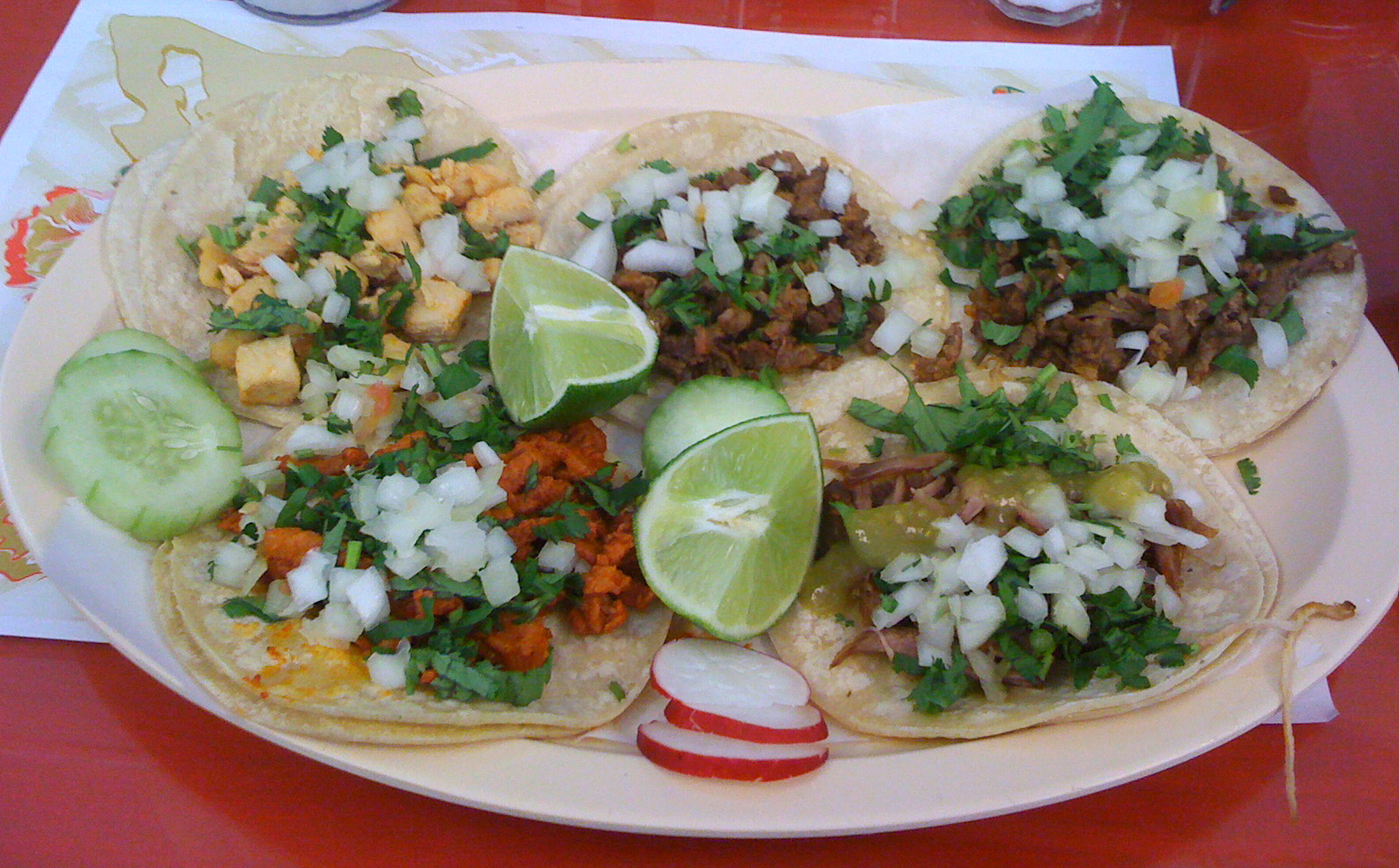
Overall, the tacos were solid, authentic, and certainly taco truck worthy.  Vegetarian options were scant to non-existant.

ADO also serves breakfast, and with huevos rancheros, chilaquiles, tamales as well as other egg options. It’s feels slightly odd having chips and salsa at breakfast time, but once they’re there it’s hard to resist.   We sampled both the rojo and verde chilaquiles and preferred the red. The verde option was too acidic (lime and tomatillo heavy) for our taste.
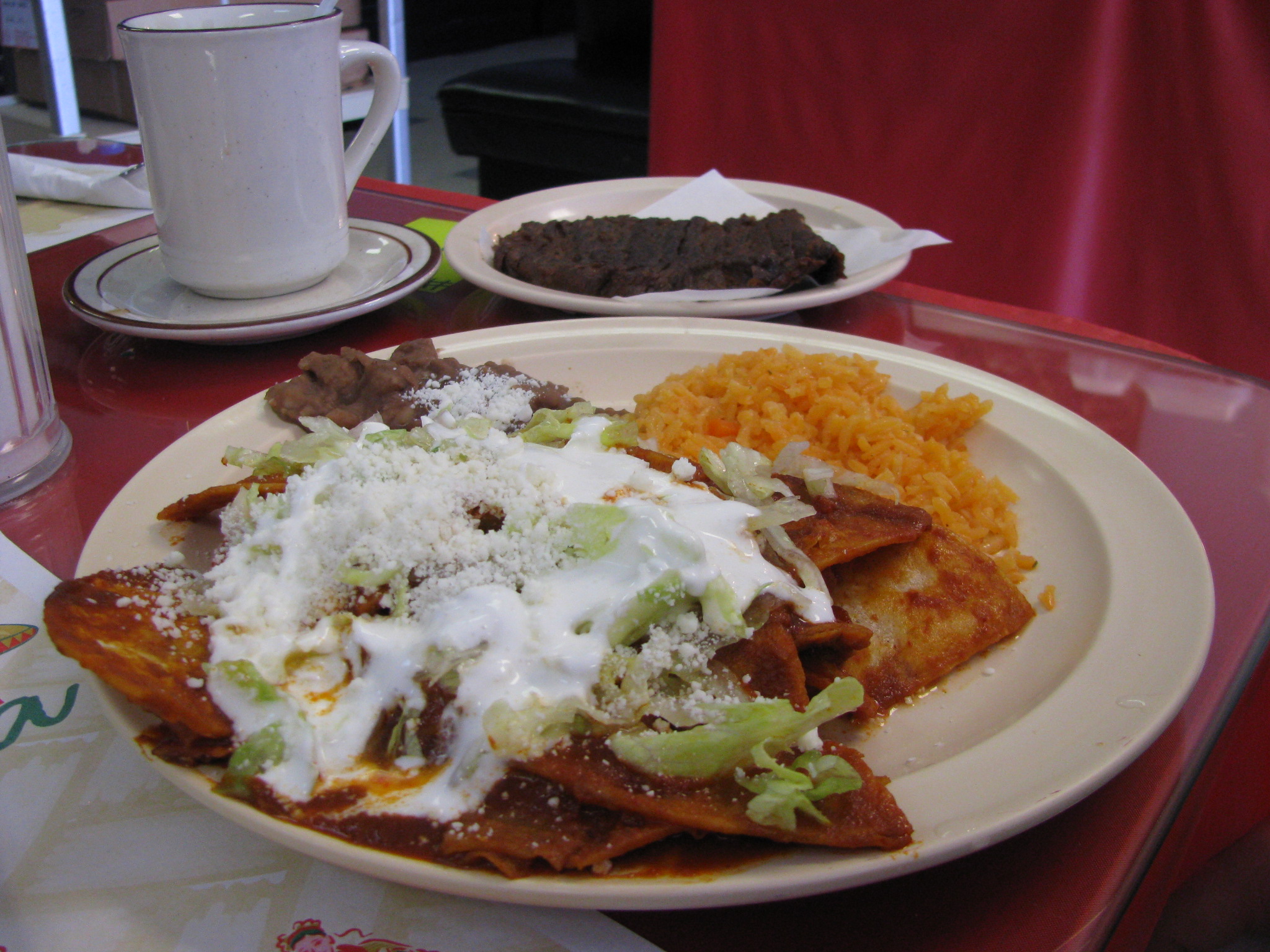
Chilaquiles are cut up corn tortillas fried and served with chili sauce. They are served to use up leftover tortillas and as a hangover cure. At Azteca de Oro they are topped with lettuce, sour cream and cheese and served with rice and beans.
Calanley Restaurant

Cuisine: Somali
3149 Cleveland Ave.
263-3530

Click here to map it!

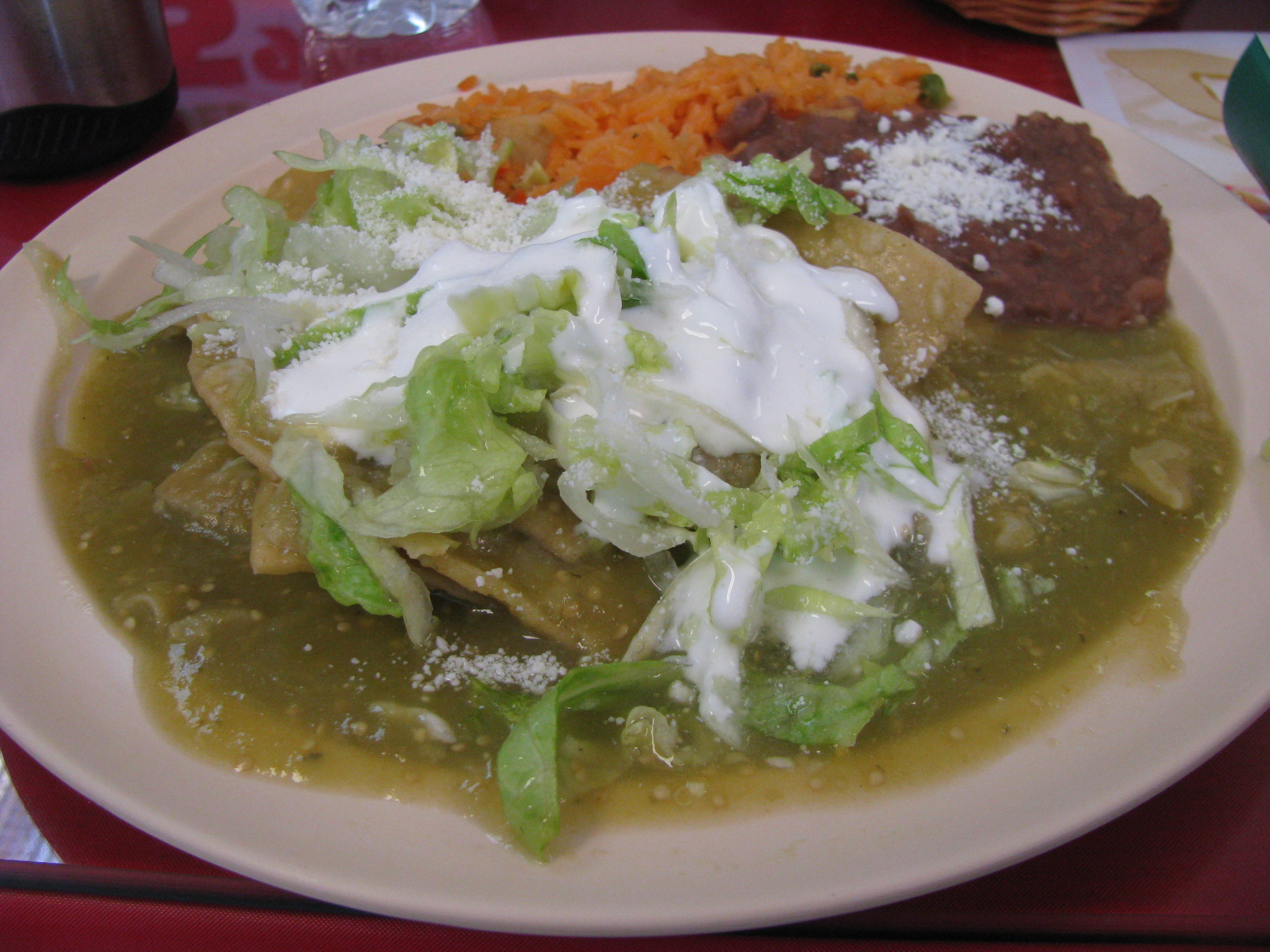
Having driven past Calanley quite a few times, we’ve always felt a vague sense of unease about the place based upon its exterior appearance – there’s just something foreboding about the windowless building.

This unease appeared to be mutual, at least at first – it seemed as though Calanley may have never served non-Somalis prior to our visit. We definitely sensed a bit of anxiousness initially.

Especially from the poor man at the counter… our presence seemed to completely blindside him. His job was to take our order, and he seemed frustrated by, at minimum, our shared inability to bridge the language divide.

Thankfully, frustration led to resourcefulness.  He tapped an English-speaking Somali customer for assistance, and called on an English speaking employee from the kitchen. With their help, everything came into focus.

Turns out that Calanley is primarily frequented by regulars – unsurprisingly, almost all Somali. These customers know the offering (and the language), so there is little use for a menu. An out-of-date English-language menu was searched for and found, though, and after a few tries we managed to select items off of it that were still currently being served.

We ordered the ‘chicken steak’, KK (kimis & kalaankal), and Ethiopian anjera with beef stew, and took our seat.  Complimentary bananas, juice, and bottled water came out shortly thereafter.

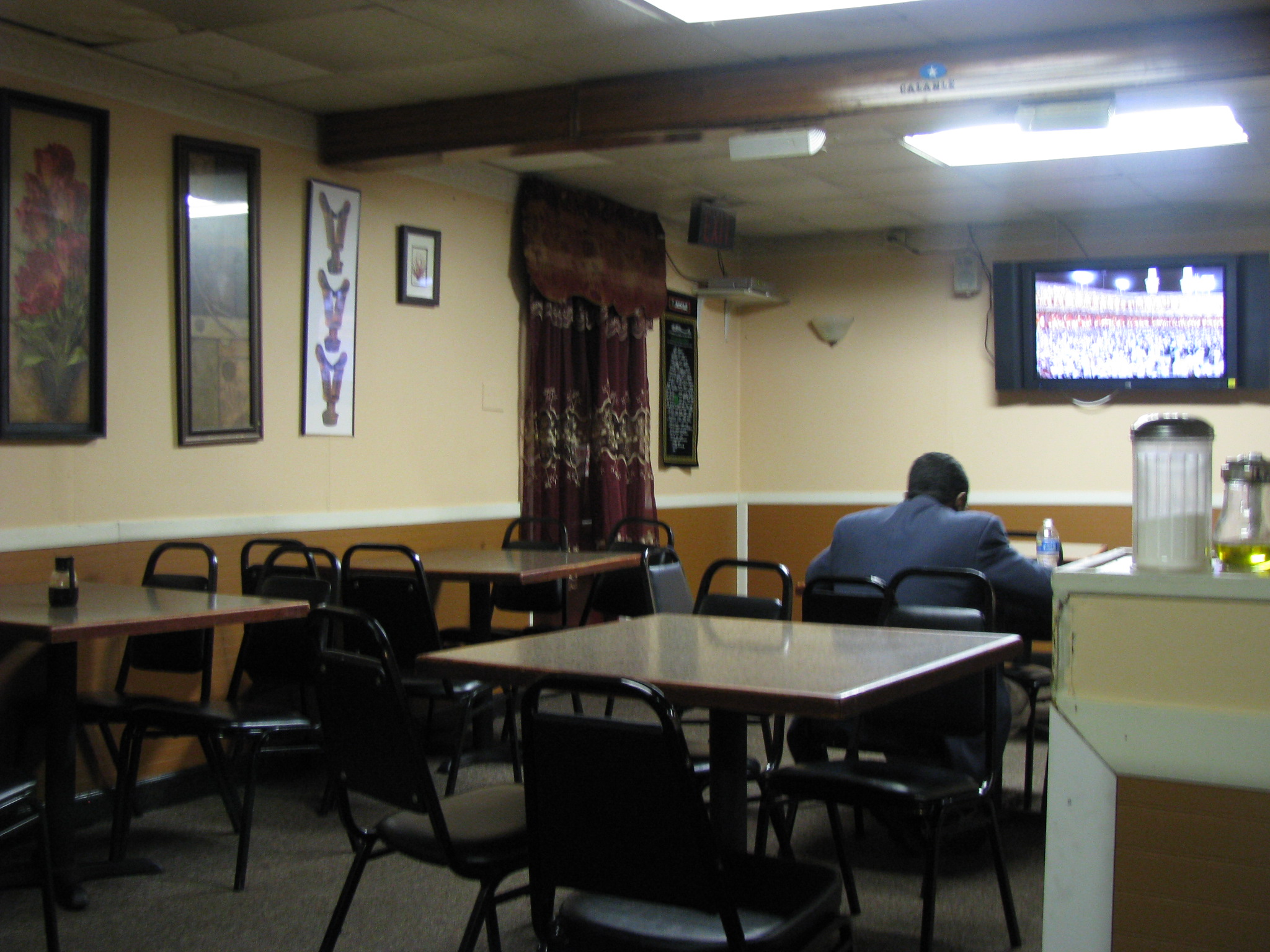
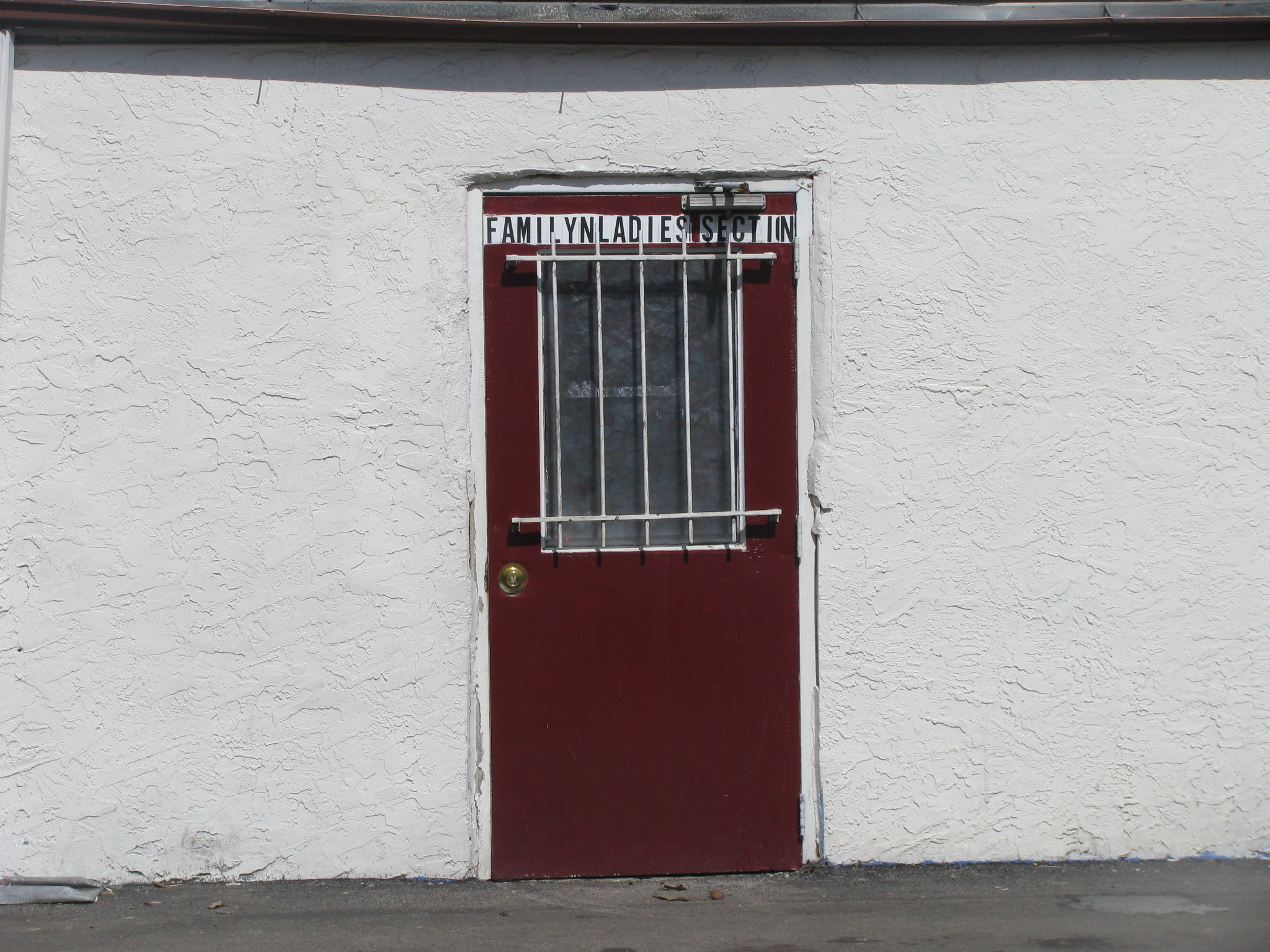
Calanley’s interior is basic, and the ambience was based largely around a television playing what appeared to be recordings of prayer ceremonies during the hajj.  This led us to recall that there was a separate exterior entrance for ‘families and ladies’ that opened into another smaller (closed off) dining room… we wondered if our female dining companion’s presence in the larger dining room might be causing distress.  We concluded that it probably wasn’t, at least if the remainder of our time there was any indication.

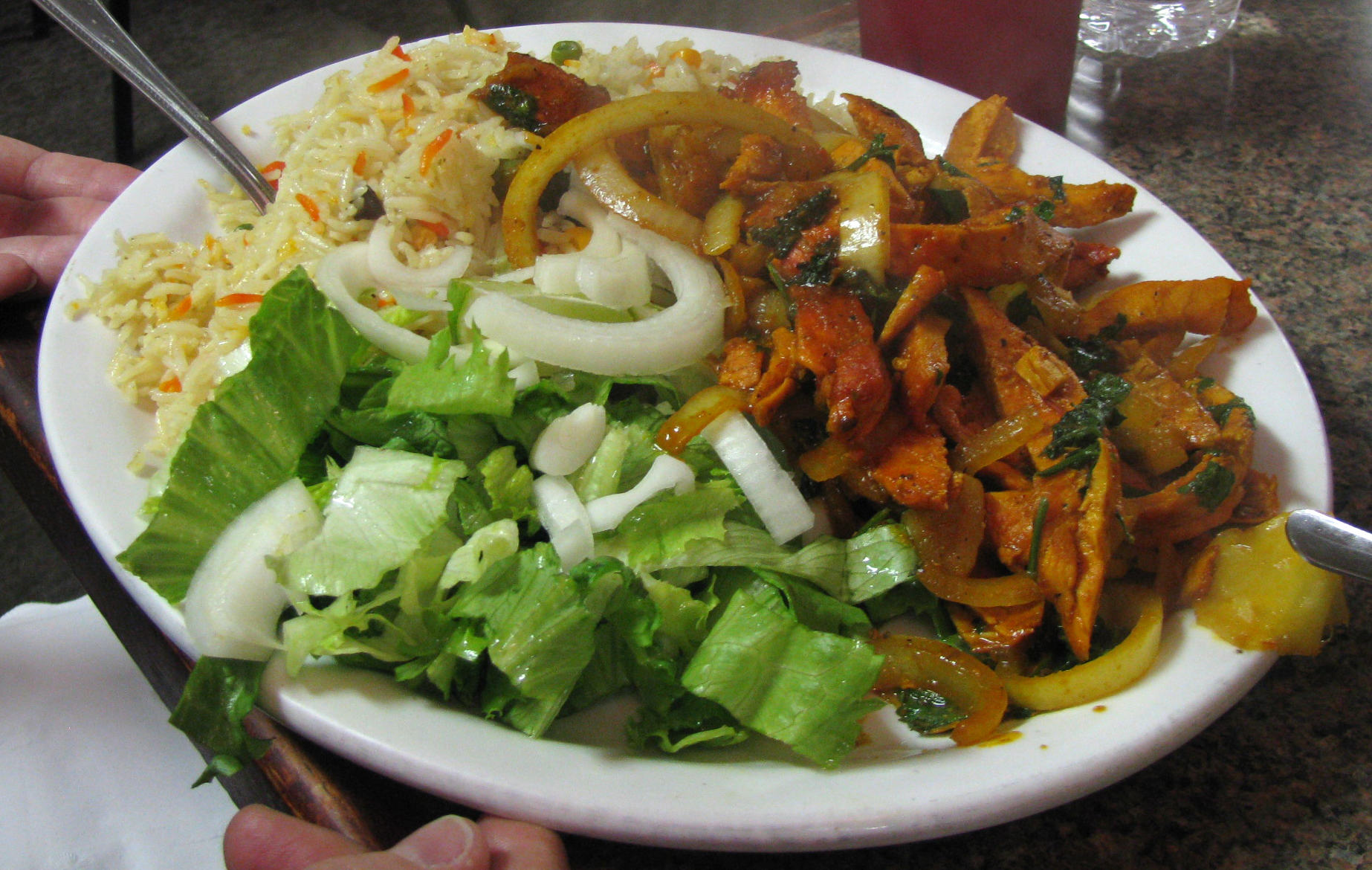
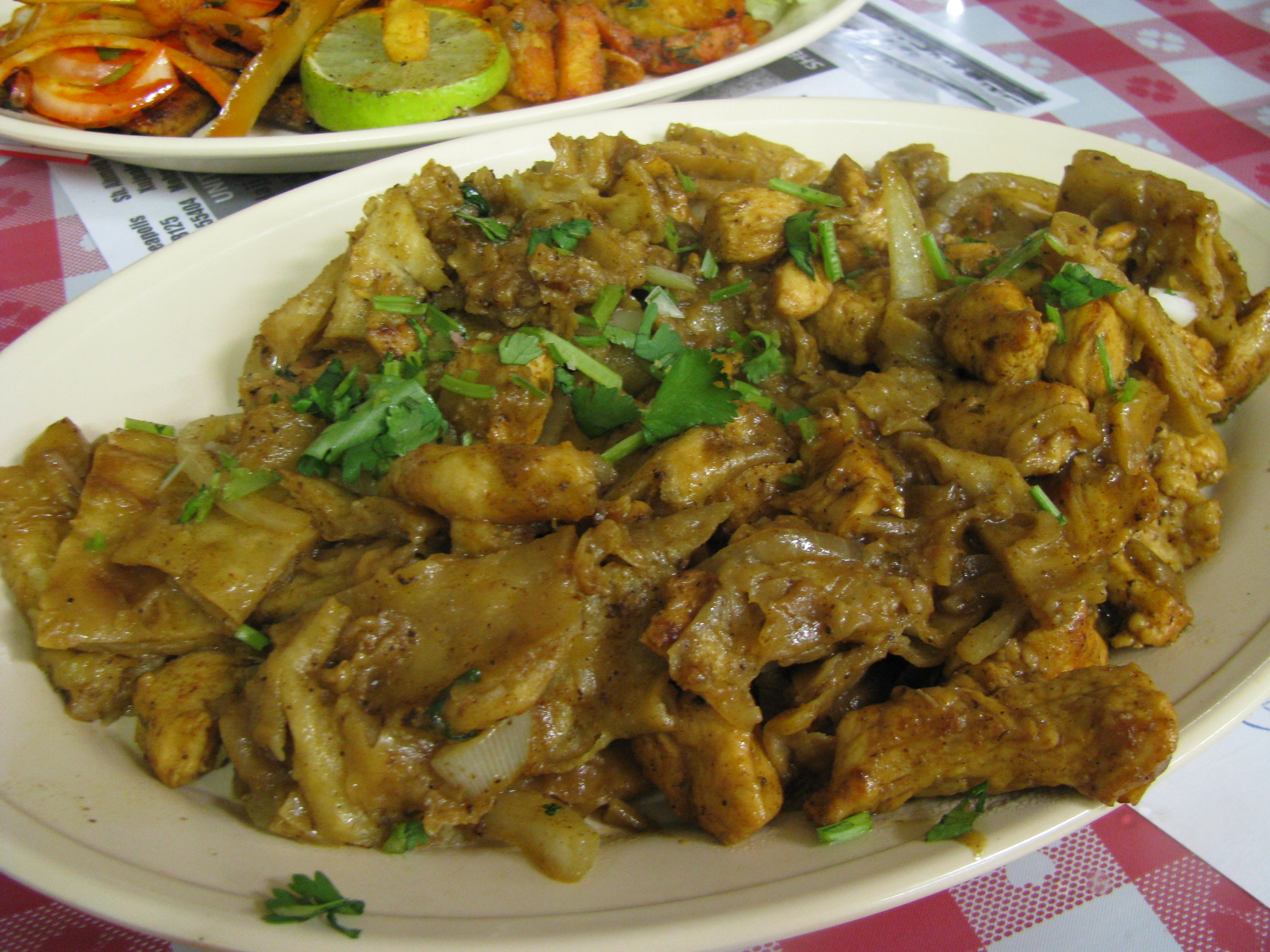
Our meals arrived quickly, and as seems to be the norm with Somali restaurants, portions were generous.  We tried the ‘chicken steak’ with rice first. This was very similar to African Paradise’s chicken preparation, which is to say it was cut into strips and similar to an Indian tandoori mixed with sauteed onions.  Roundly enjoyed.

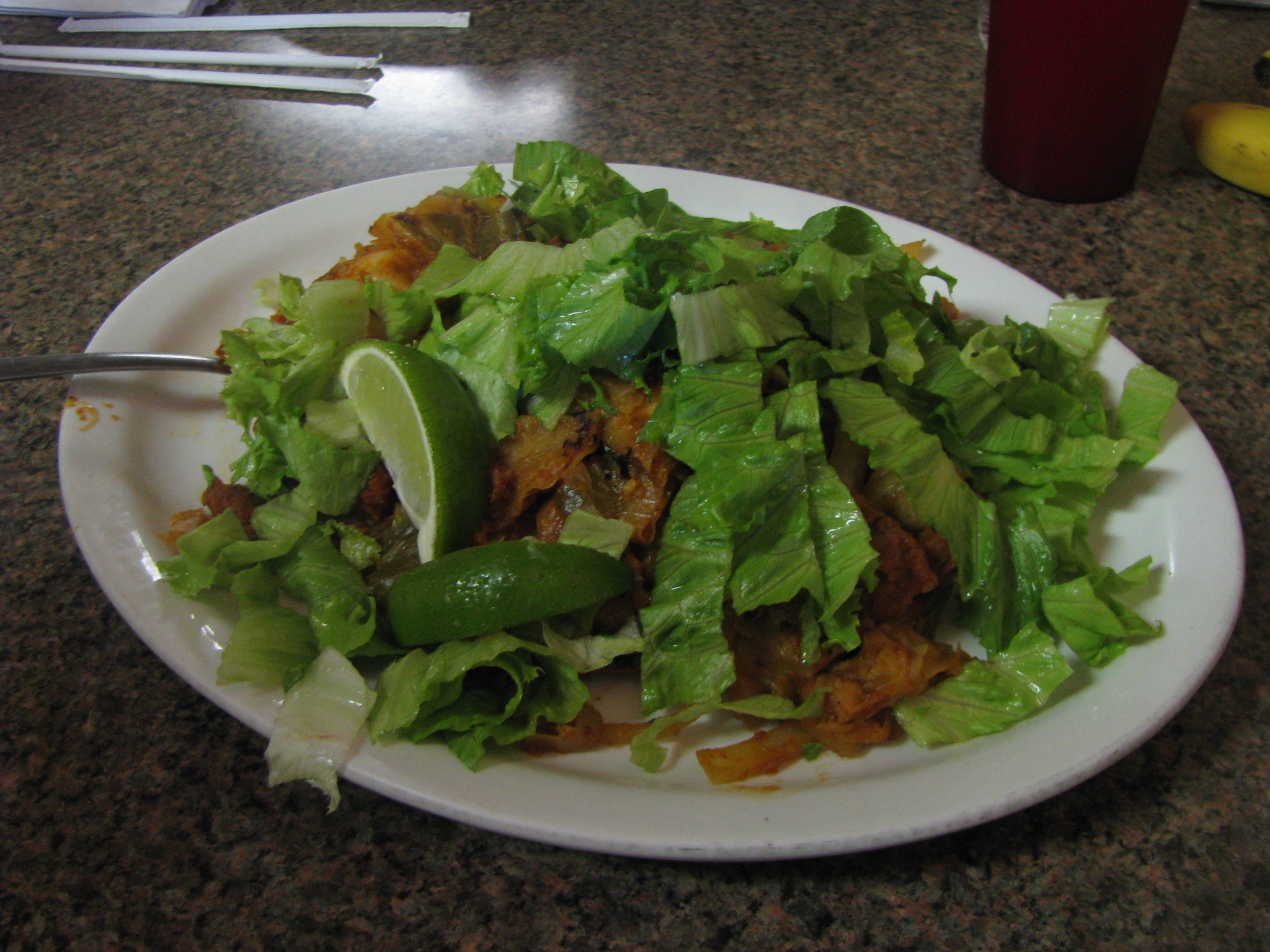
Next, the KK.  In some of our early research, we came across a thread on a Somali web forum that discussed Somali food/restaurants in Columbus.  In it, Calanley was widely thought to be *the* place for KK.  Underneath the lettuce was kimis (thin strips of flat bread) and kalankaal (seasoned cubed beef) mixed together in a thick, tomatoey sauce. We found it to be enjoyable, but perhaps a bit less so than the chicken.

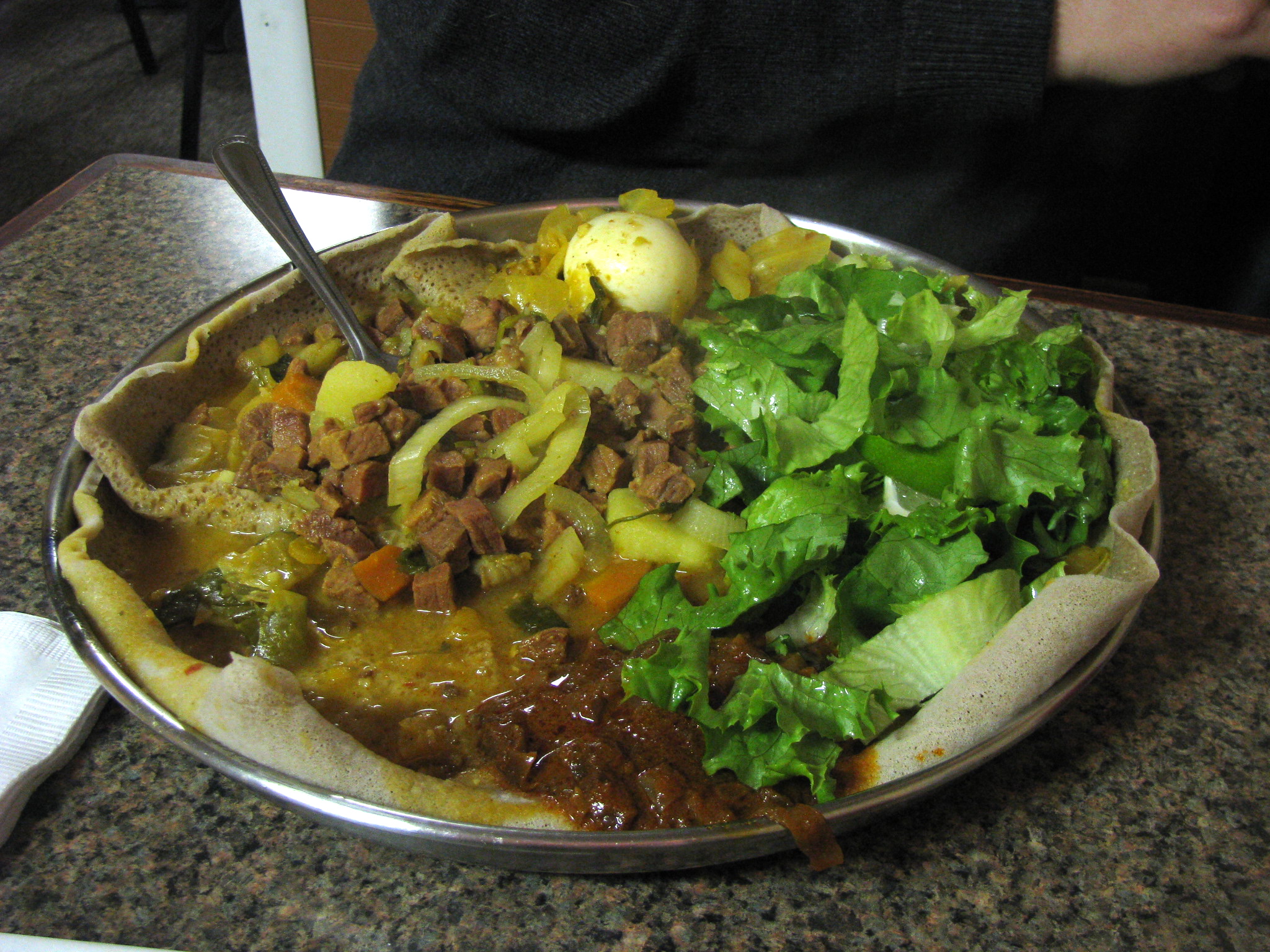
Finally, we tried the anjera with beef stew.  This was quite a spread – stew, salad, a wickedly spicy hot sauce, and a hard boiled egg, all atop a massive piece of anjera (also known as injera, a spongy Ethiopian flat bread).  The anjera seemed a bit on the mushy side, and the stew was fine if unexceptional… we probably wouldn’t build a return trip around it.

While we walked in to an atmosphere of concern at Calanley, we left to smiles.  We liked the place, and appreciated the efforts they went to in accommodating us.  Once we were able to express our interest in their food, everything else fell into place.  Suffice it to say that any cultural observations above (as with all cultural observations on this blog) are recounted solely for the purpose of providing practical insights for the uninitiated.

We were unable to evaluate the vegetarian friendliness of the offering due to the menu situation, but all dishes discussed contained meat, as seems to be the case with Somali cuisine more generally.  There was nothing posted to indicate halal preparations, but we’d wager it probably all is.

Poong Mei (Spring of China)

Cuisine: Chinese
4720 Reed Road, near Reed and Henderson.
614.273.9998

Click here to map it!

Poong Mei Asian Bistro is the restaurant also/formerly known as Spring of China. The owners realized that the original name was misleading as their offerings span Chinese, Korean and Japanese, but the transition to a new name seems to be very gradual. We were told that Poong Mei means successful in Chinese, tasty in Korean and beautiful in Japanese and the owners thought that all of these were auspicious for their business.

The menu is divided into Chinese/ Western, Chinese, Korean/Japanese and Korean and there are some interesting selections in each. Our interest was piqued by a rumor that they made their own noodles in house, which indeed they do – there is a whole page devoted to them. They also make their own dumplings from scratch.

The restaurant has a little more of a Korean feel than Chinese, especially when we were presented with a banchan-like selection of kim chi and  pickles.

The dumplings are available steamed and boiled. On the advice of our server we opted for the steamed. The dumplings were large, and the dough on the thicker side, but both the filling and the dough were obviously freshly made. The filling was pork with vegetables and was fragrant with ginger and with flecks of scallion. My understanding from the menu is that the boiled dumplings have a thinner skin and there are 15 in the serving.

The same filling is used for the pork buns. As you can see the portion size for both is very generous and certainly good for sharing.

We wanted to try the noodles and opted for zha jhang myun – hand made noodles with chopped vegetables, pork and shrimp in black bean sauce. The black bean sauce had more of a fermented smoky flavor than the store bought versions – it was pure umami. The texture of the hand made noodles was good, but the dominance of the black bean sauce made it hard to discern their flavor.

Salt and pepper crispy squid is one of our favorite dishes at Yau’s and we decided to order it for the sake of comparison (and because we can’t resist crispy squid). They were more battered and crunchy than Yau’s and were utterly addictive.

The last dish we tried were the crispy tofu balls with bok choi and ginger and garlic sauce. The tofu balls (which contained shrimp as well) were really good and a pleasant variation on the usual tofu preparations. While the outside was crispy the inside was deceptively light and moist. Perhaps a dish that could win over tofu skeptics. 

Poong Mei has enough range in its menu to please both fans of American Chinese food and more intrepid diners with everything from sweet and sour chicken to boiled pork feet, sea cucumber and jelly fish.

Banadir Cuisine

Cuisine: Somali
3246 Cleveland Avenue
(614) 268-0933
Hours: lunch & dinner (we didn’t see posted hours)

Click here to map it!

Subtitle: In Which We Learn About The Proper Time Of Day To Go Out For African Food

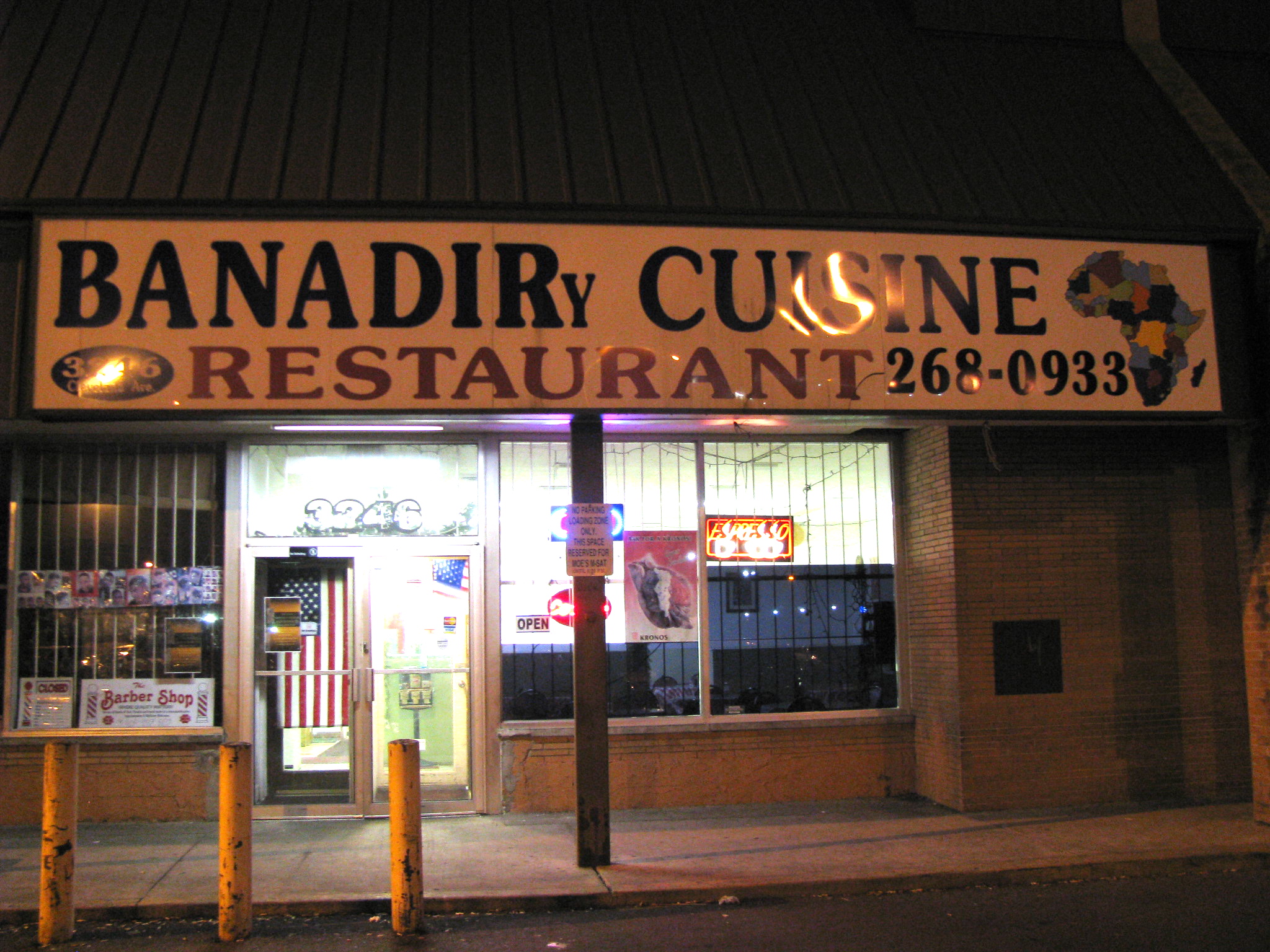
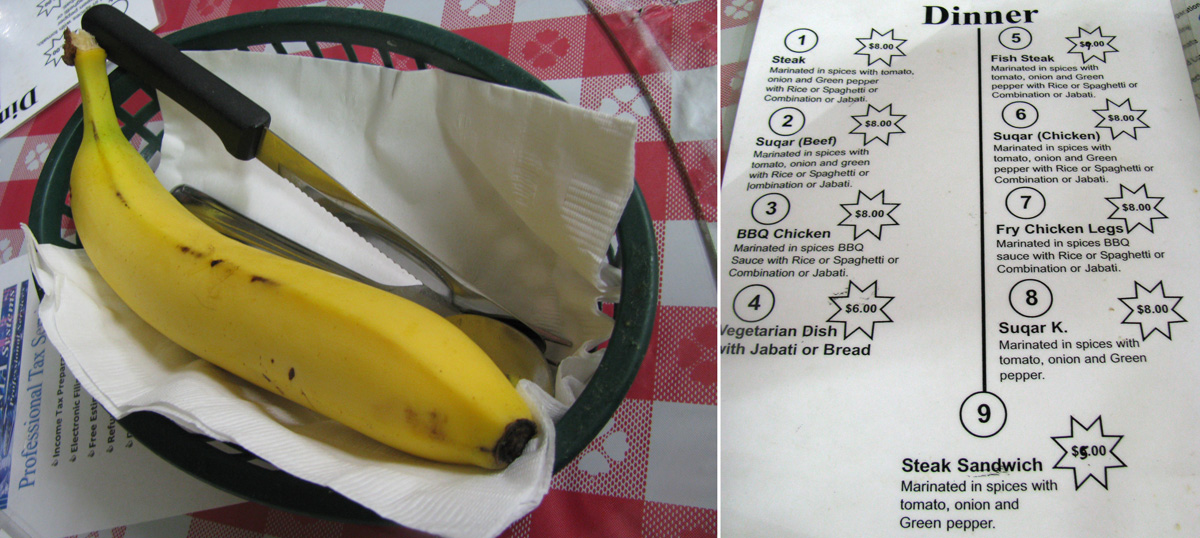
We entered the well-worn dining room of Banadir Cuisine to warm welcomes from the staff, and were promptly shown to our table. Baskets with utensils, napkins and complimentary bananas arrived with the menus.

The menus, here as in every other African restaurant we’ve been to, are notable for their bias towards lunchtime – that is to say, the lunch selection is usually 3-4 times larger than that of the dinner menu. A lot of the lunch items sounded awfully good, but so it goes… it’s dinner, we’re here, and we’re hungry.

We ordered the fish steak, beef steak, and the chicken suqar.  All of the dishes came with the option of jabati, rice, or spaghetti, and when we asked for jabati with the chicken suqar, our server offered to have it cut into slices and mixed it in with the dish, ‘K’ style.  Why not?

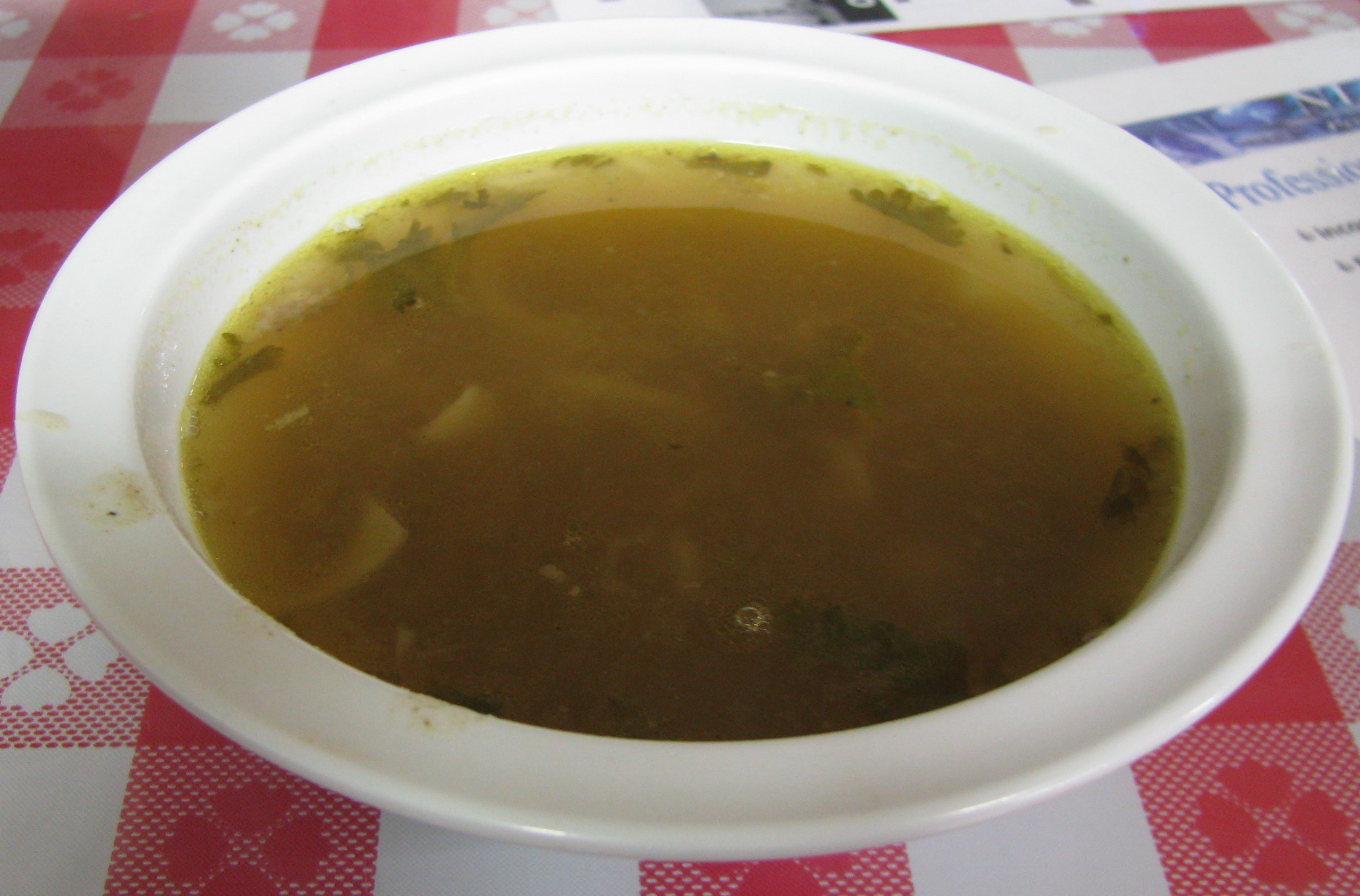
We also ordered tea (served with or without milk) and were given soup as part of the dinner order.  The tea, when ordered with milk, was chai flavored – similar to African Paradise’s offering but (mercifully) less aggressively sweetened.  The soup, ostensibly vegetable but flecked with goat meat, looked innocent enough, but was surprisingly rich and meaty tasting – these guys know how to make a mean (apparently goat based) soup stock.


Upon finishing the soup, our mains arrived.  Opting for ‘K’ style on the chicken suqar turned out to be a good move – the suqar struck us as something of a halfway point between a curry and a stir fry, and the jabati bread strips were dense enough to hold their own in the mix, both absorbing the sauce and presumably thickening it.  An unqualified hit with all who tried it.

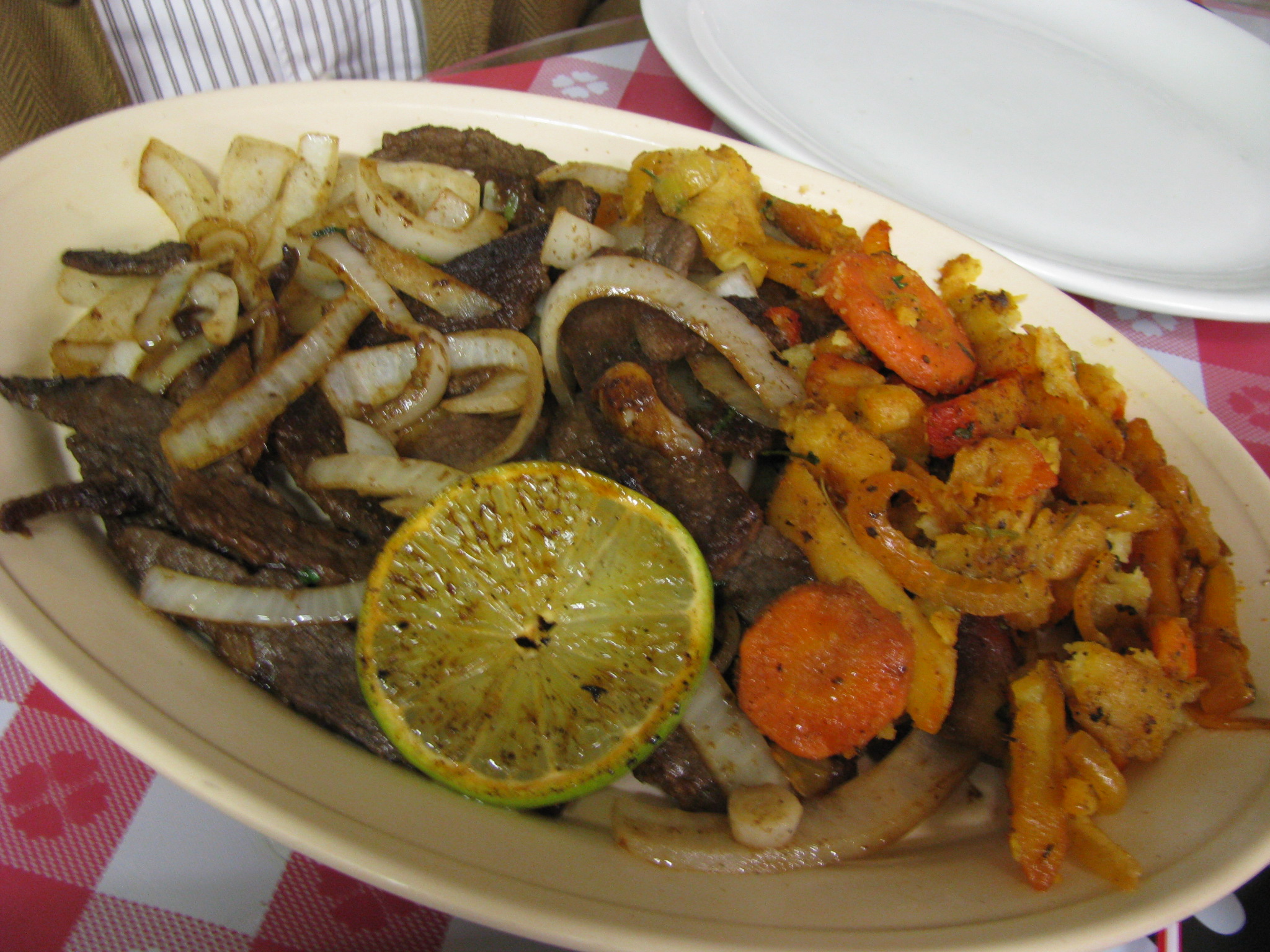
The beef steak was less well received.  Flavor was nice, with a significant pepper hit, but the consistency of the beef led to murmurings about truck-stop jerky.  It’s possible that the chewiness of the preparation is traditional, but we’re still left wondering how it’d be if the beef were more tender.

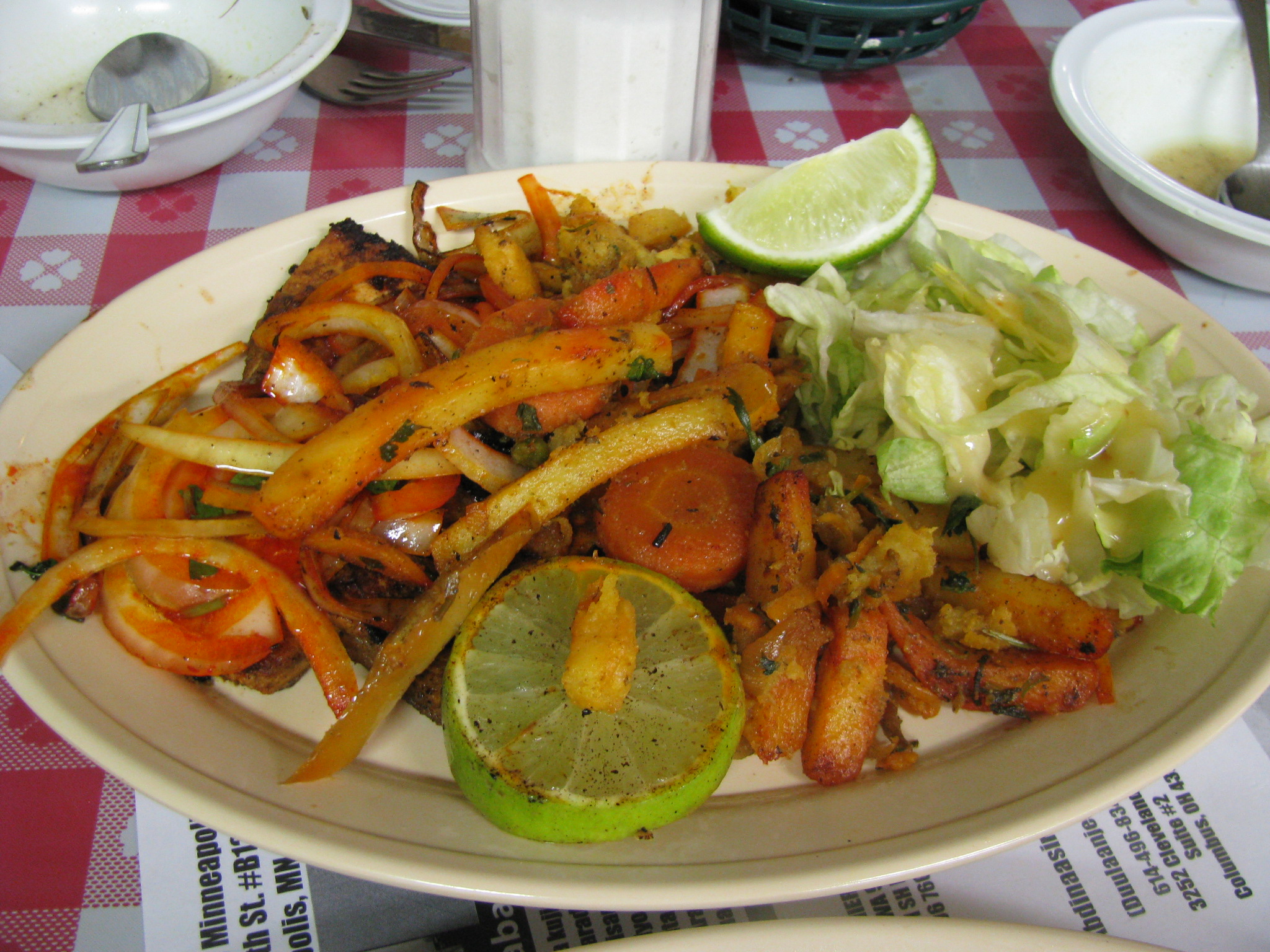
Finally, the fish steak.  This was four or so reasonably sized pieces of salmon with a heavily spiced char crust, topped with a mix of vegetables and french-fry-cut potatoes. Slices of lime and a small salad garnished. The flavors of this dish were roundly appreciated, though there was some discussion about the oiliness.

Sated, I walked up to the cash register to pay.  While doing so, I asked the owner about the reasoning behind offering so many more items for lunch.

‘Simple’, he responded (and I paraphrase), ‘Africans, in Africa, traditionally work until about 2:00-3:00pm, and then have the main meal of the day.  This generally translates into lunch for Africans in the US.  What we call dinner here is a minor meal for most Africans. Usually Americans eat dinner here.’

‘Yep, that’s us’, I chuckled to myself.

Our next stop for African cuisine will be the Calanley Restaurant.  For lunch.

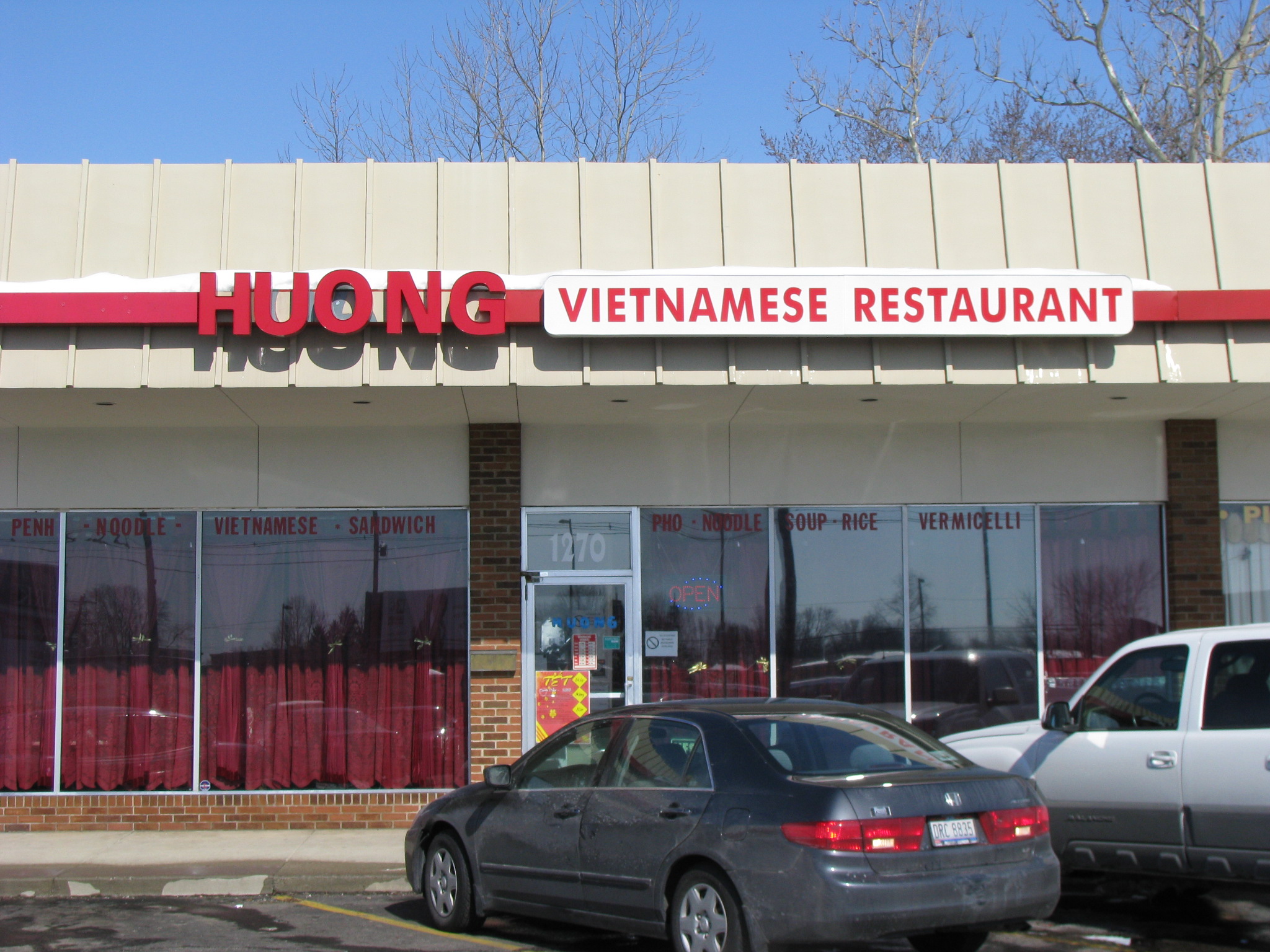
Huong

Cuisine: Vietnamese
1270 Morse Road
614.825.0303
Open daily for lunch and dinner: hours vary (close early on Tuesday)
Website: http://huongvr.blogspot.com/

Click here to map it!

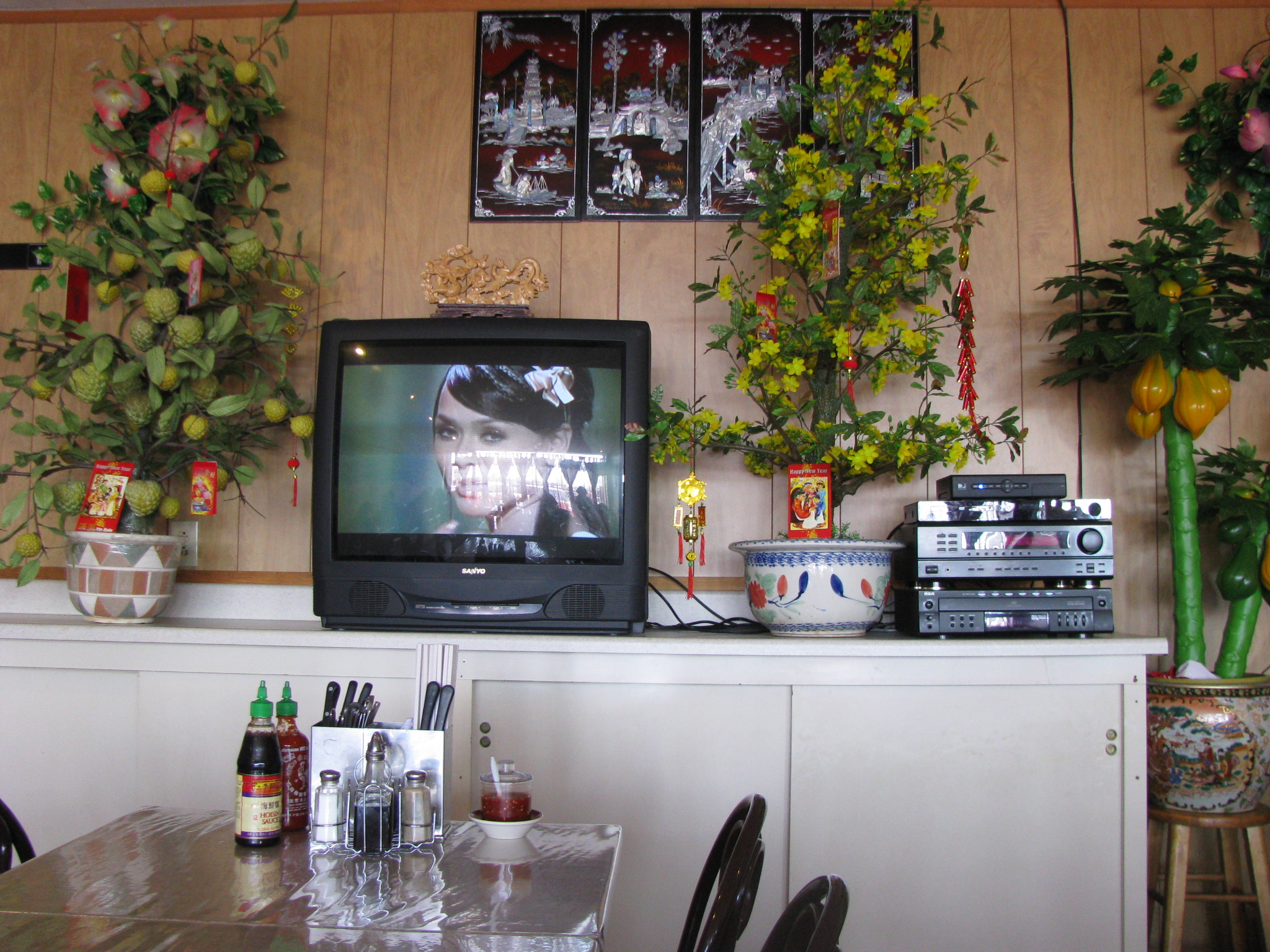
This winter we’ve tried a number of Vietnamese restaurants and Huong was definitely one of our favorites. We were instantly taken with the colorful dining room complete with plastic fruit trees, flowers and a large wall mural, as well as with the charming staff.

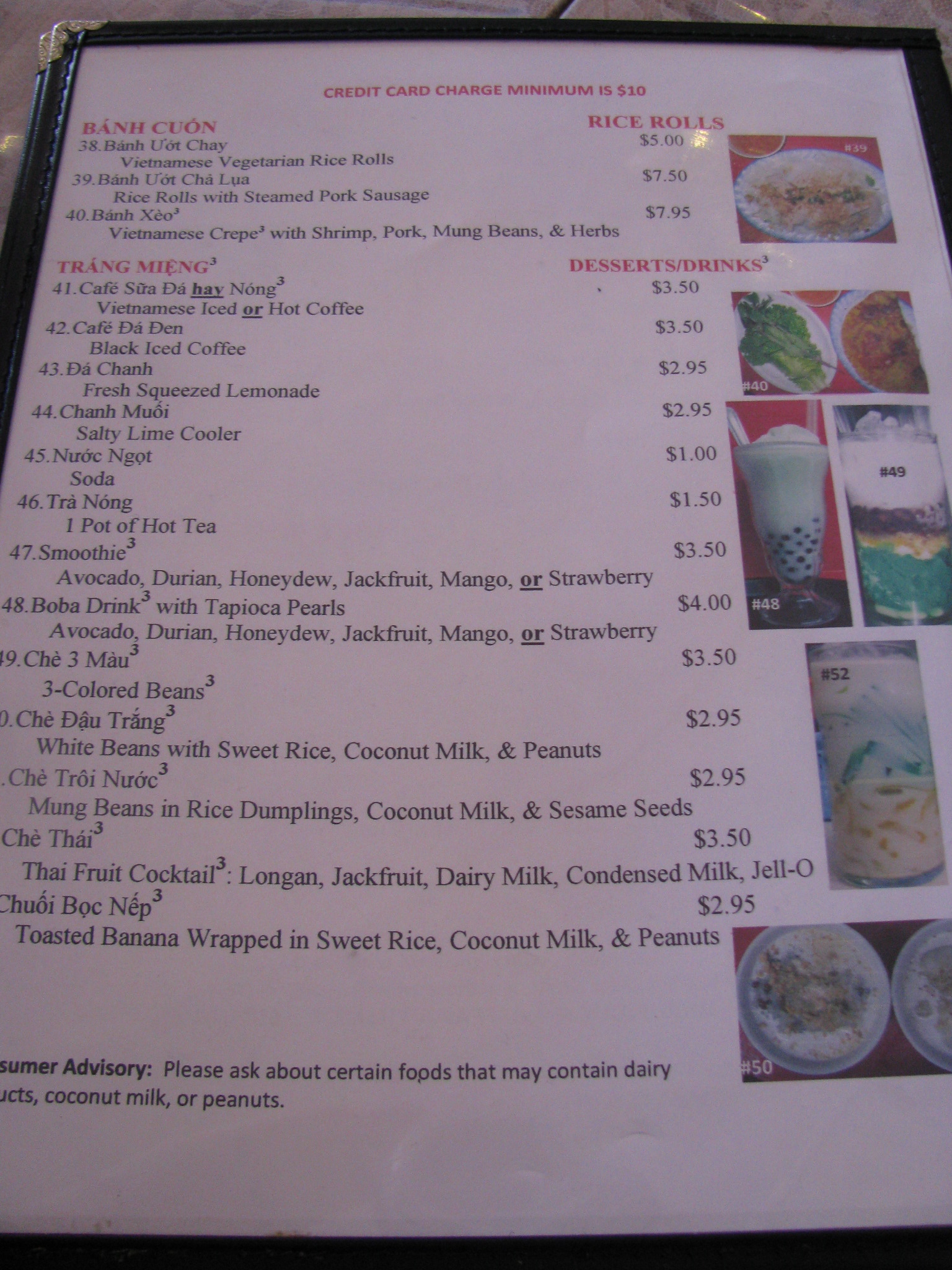
The menu is divided into appetizers, rice vermicelli, noodle soups, rice dishes and rice rolls. There is also an extensive selection of desserts, most of which are drinks and even include a durian smoothie. Banh mi sandwiches and congee (rice porridge), while not listed on the menu, are offered daily. They also have weekend specials that may include sticky rice, Vietnamese dumplings and Vietnamese baguettes. This is, so far, the only place in Columbus we have seen that serves congee.

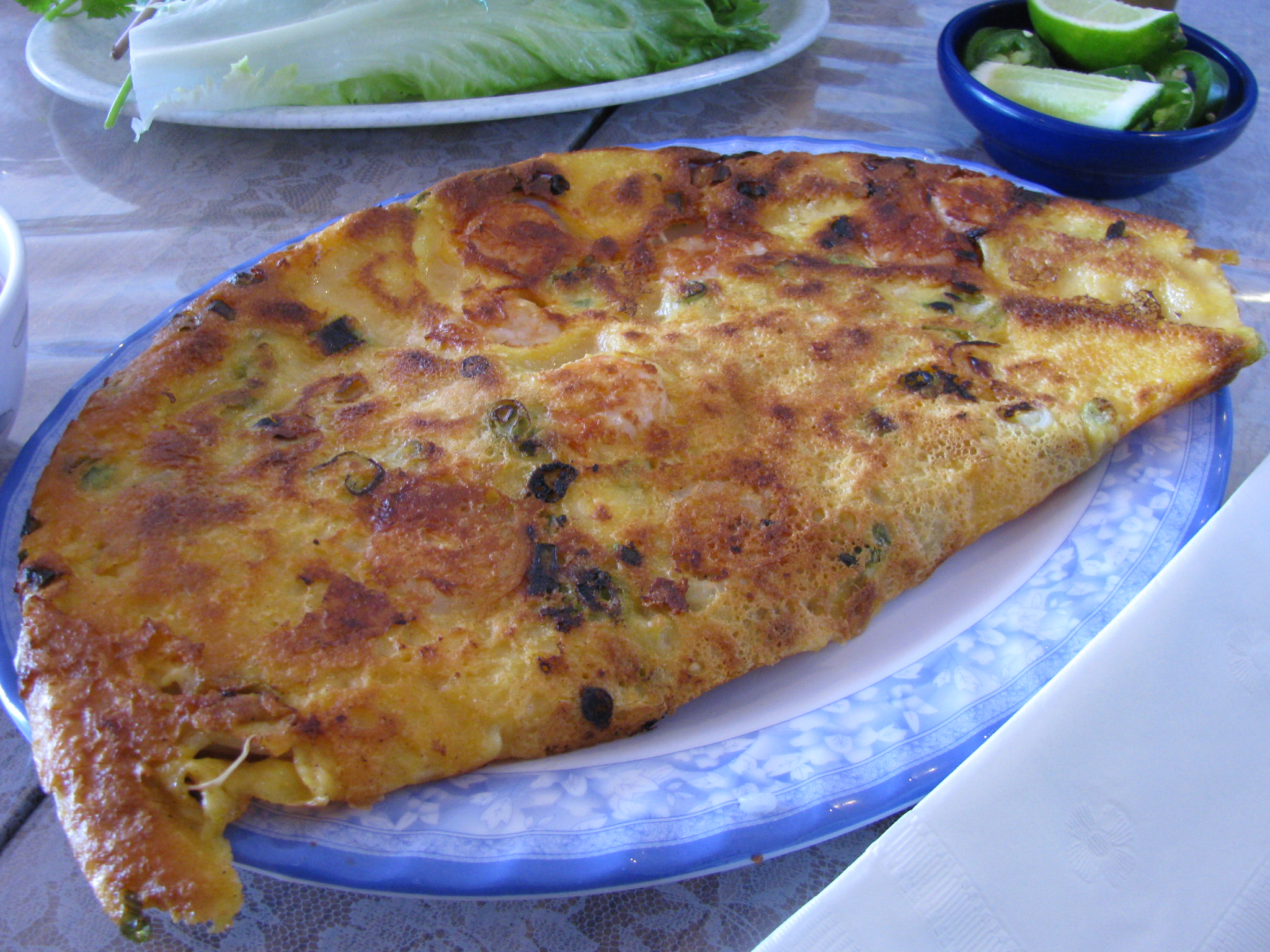
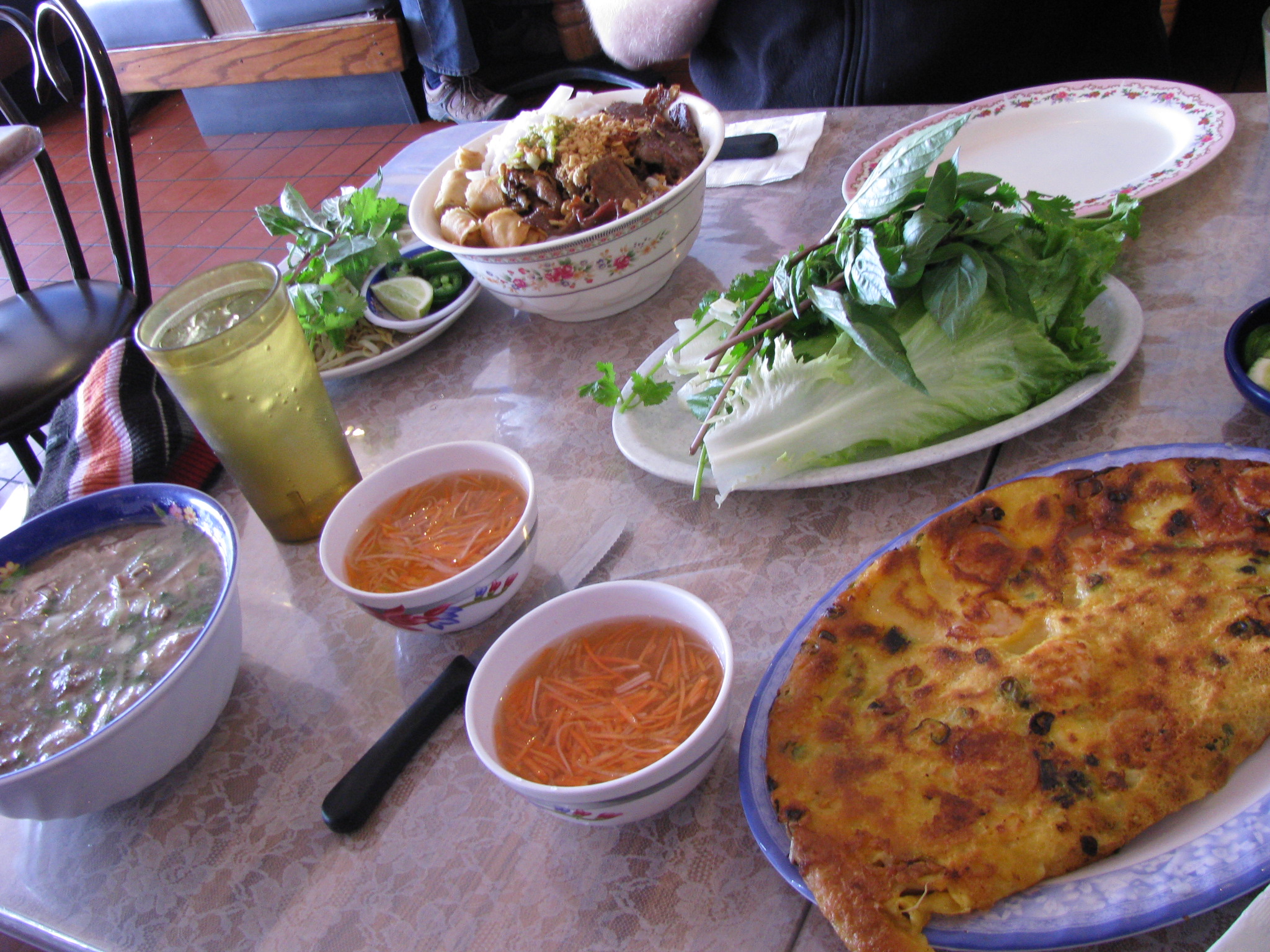
To start we shared a Vietnamese crepe with shrimp, pork, mung beans and herbs. This was pretty similar to the Korean pancake we have had at Arirang. What was different was that this was served with a different dipping sauce (the same as served with bun cha) and a plate of lettuce leaves and fresh herbs. The crepe was crisp, the fillings generous and the dish met with universal approval.

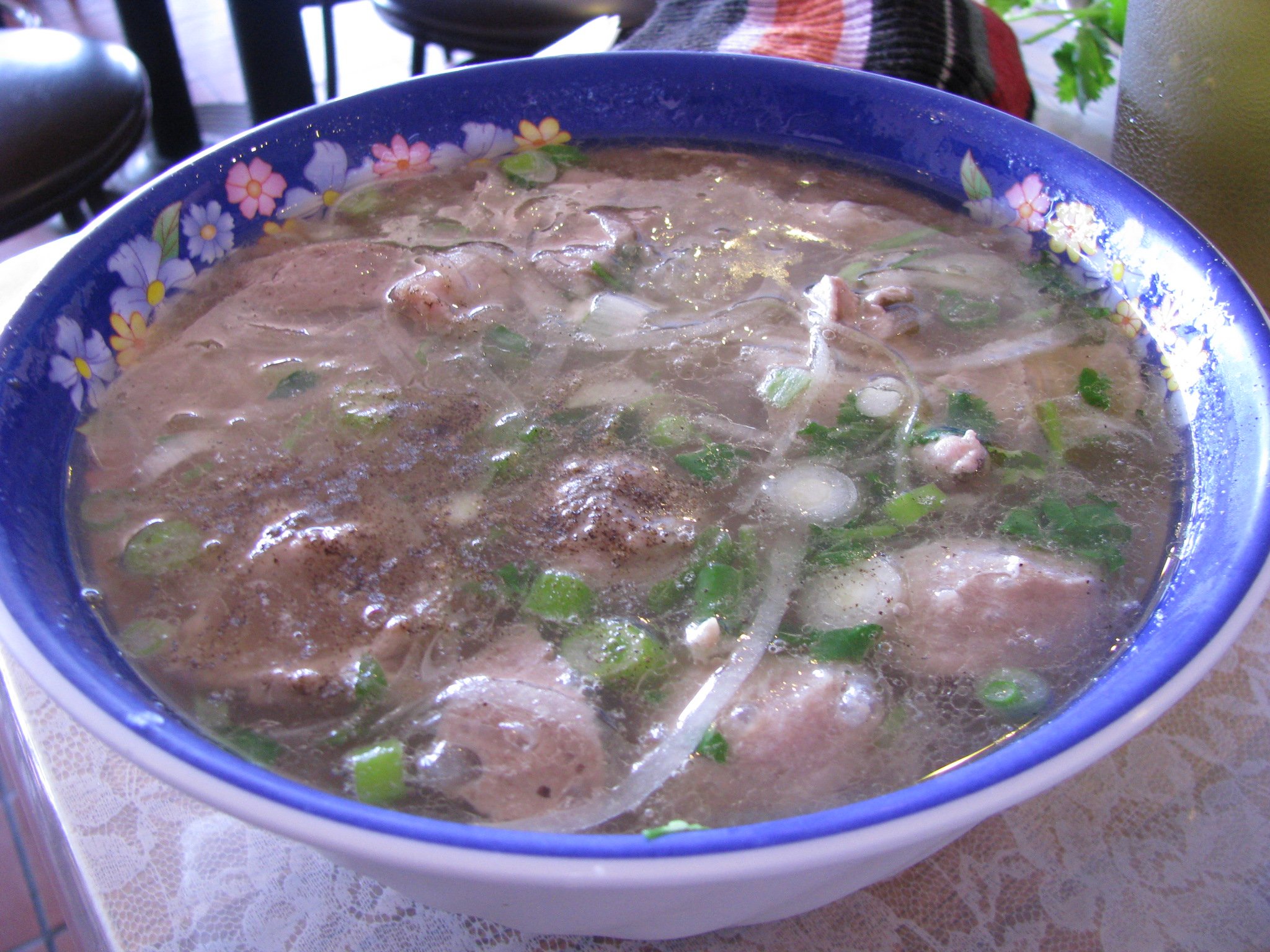
We also sampled a pho, pho tai bo vien (noodle soup with rare steak and beef ball). The broth was good, if a little greasy, and had a fairly strong star anise note.

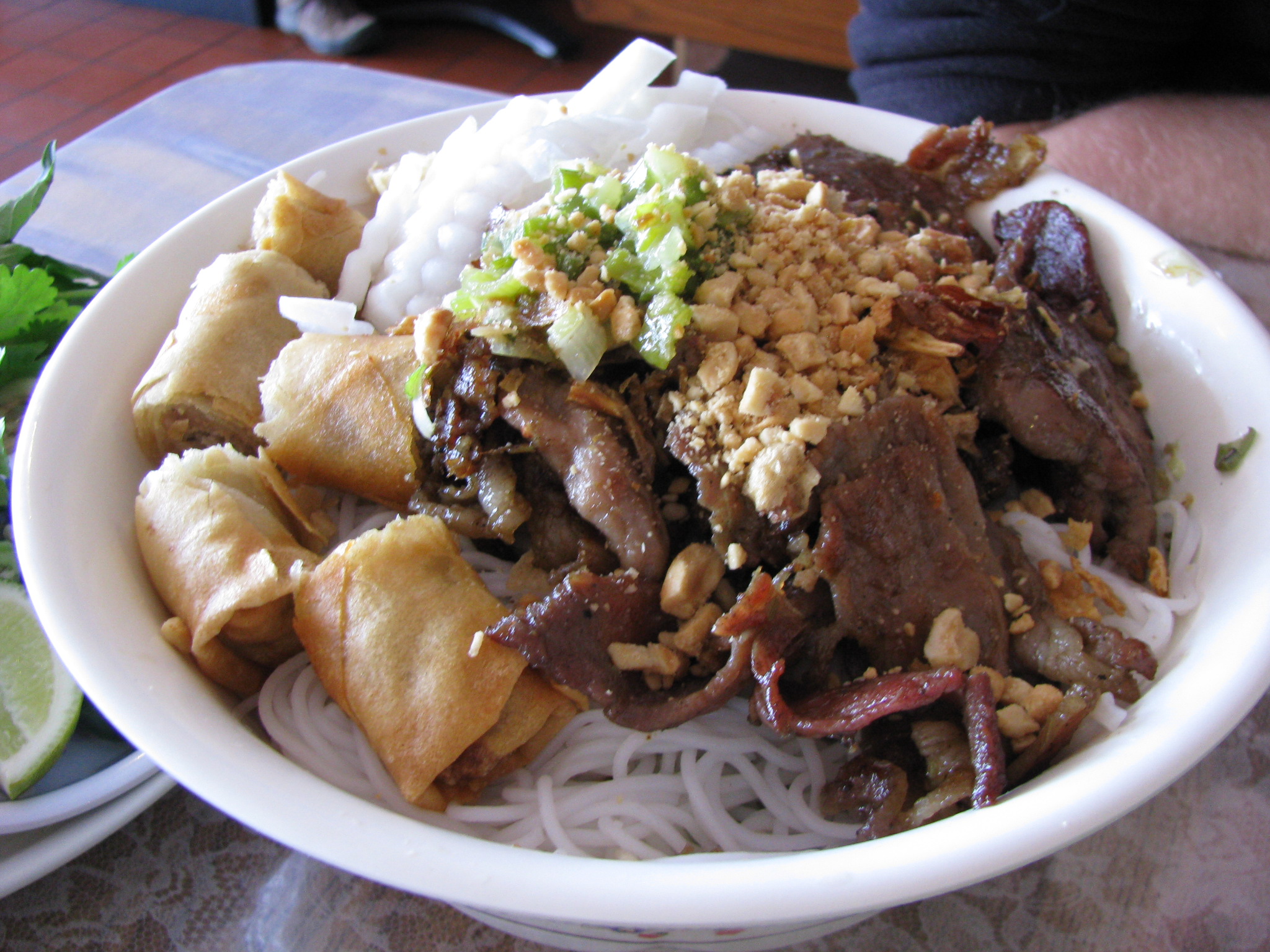
We ordered bun heo which was bun cha (rice vermicelli noodles on top of lettuce) with egg rolls and pork. This is a dish we order a lot and and serves as a useful comparison between restaurants. It was average, which is to say good, and the crinkle cut radish on top was a notable addition.  As you can see, it also comes with a generous topping of peanuts.

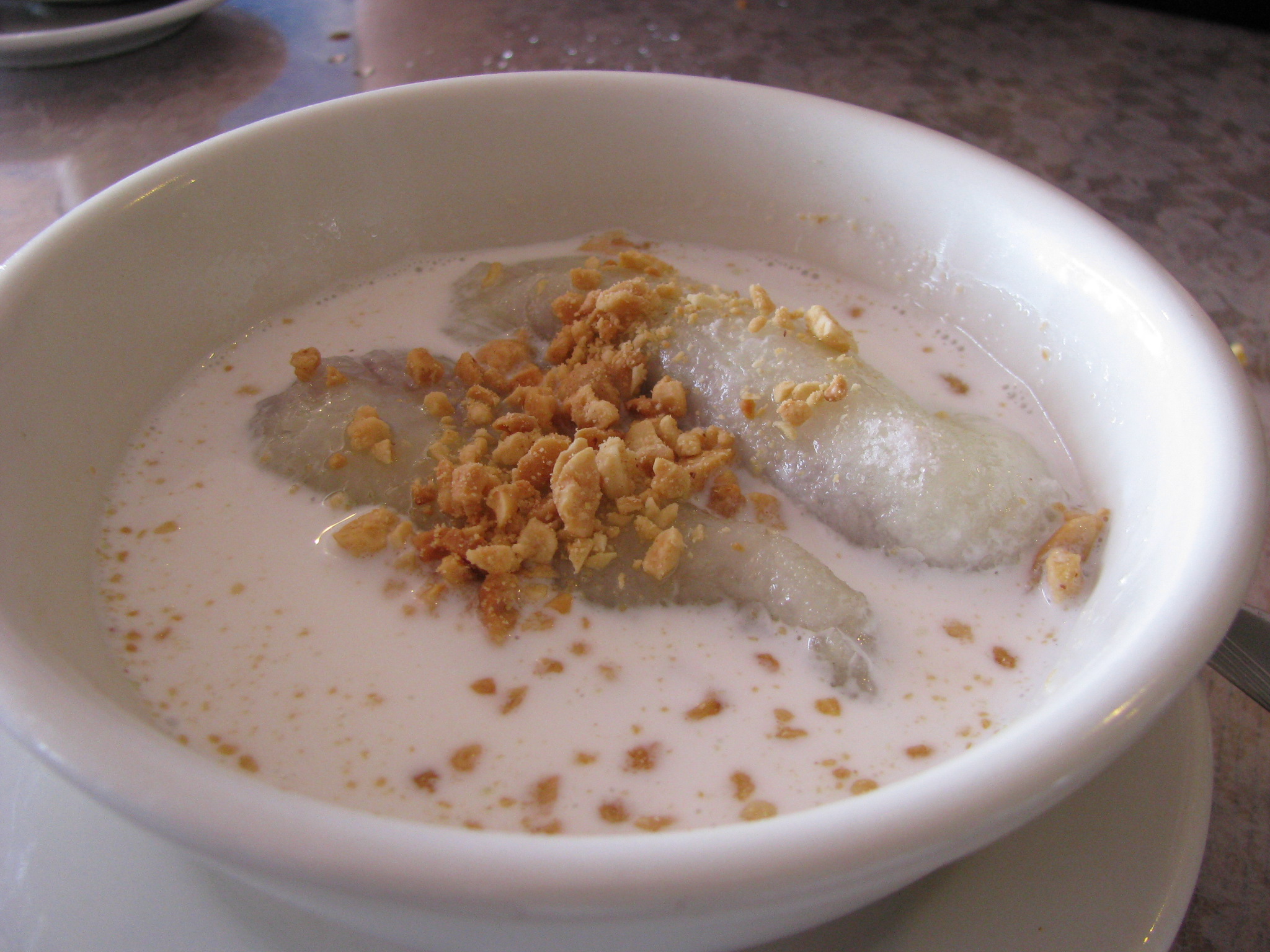
We tried one of the desserts, fried banana wrapped in sweet rice with coconut milk and peanuts. It was good but perhaps not overly exciting.

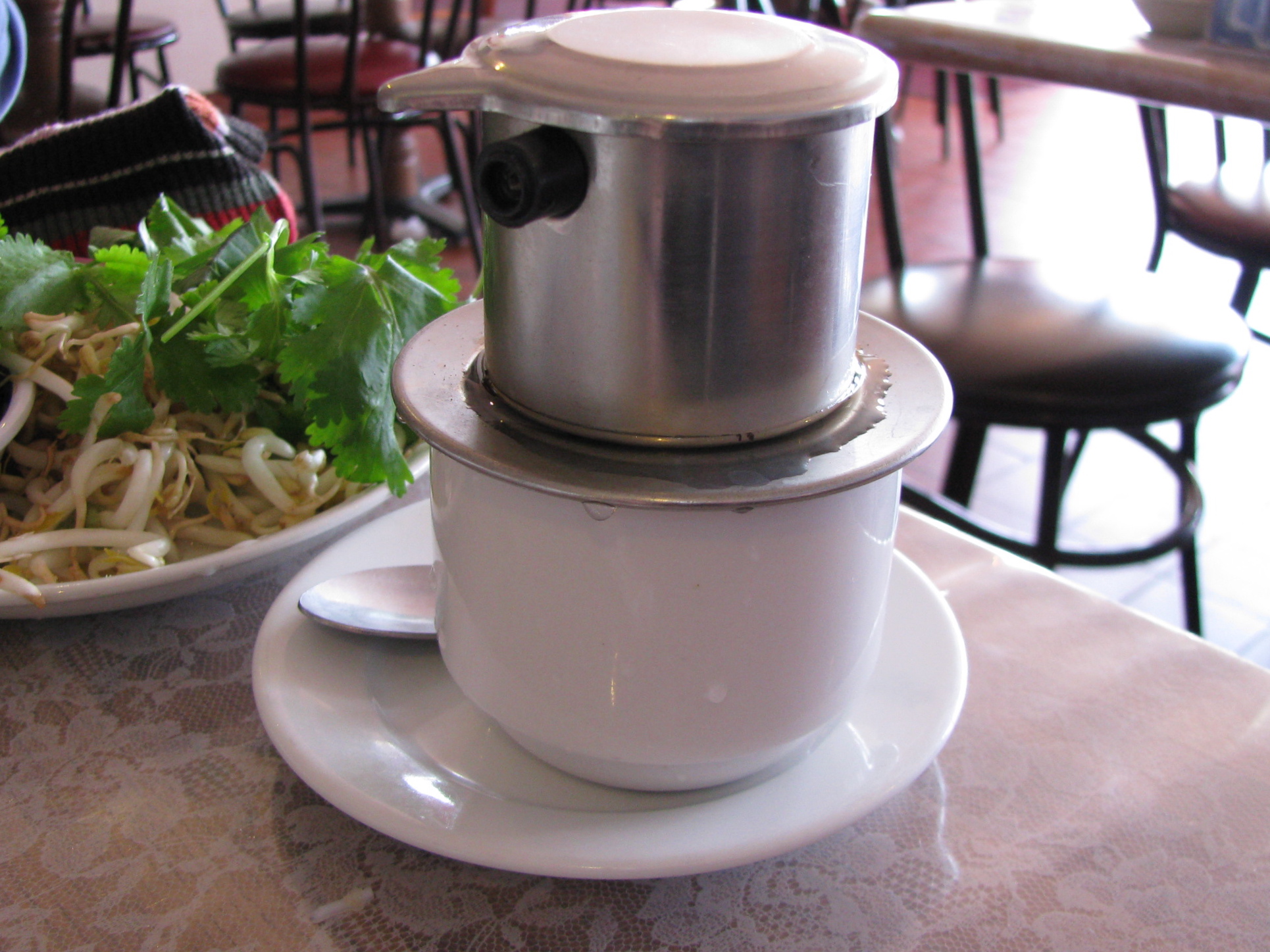
Vietnamese coffee is available iced or hot. The hot coffee is served as shown below, brewed at the table with a Vietnamese-style ‘over the cup’ drip coffee maker which dispenses coffee into a dollop of sweetened condensed milk at the bottom of the mug below.

It felt like we barely scratched the surface and will definitely return to Huong to try some of their other menu items and weekend specials.