Author Archives: tacodrew

Lalibela

Cuisine: Ethiopian
1111 South Hamilton Road
614.235.5355

Click here to map it!

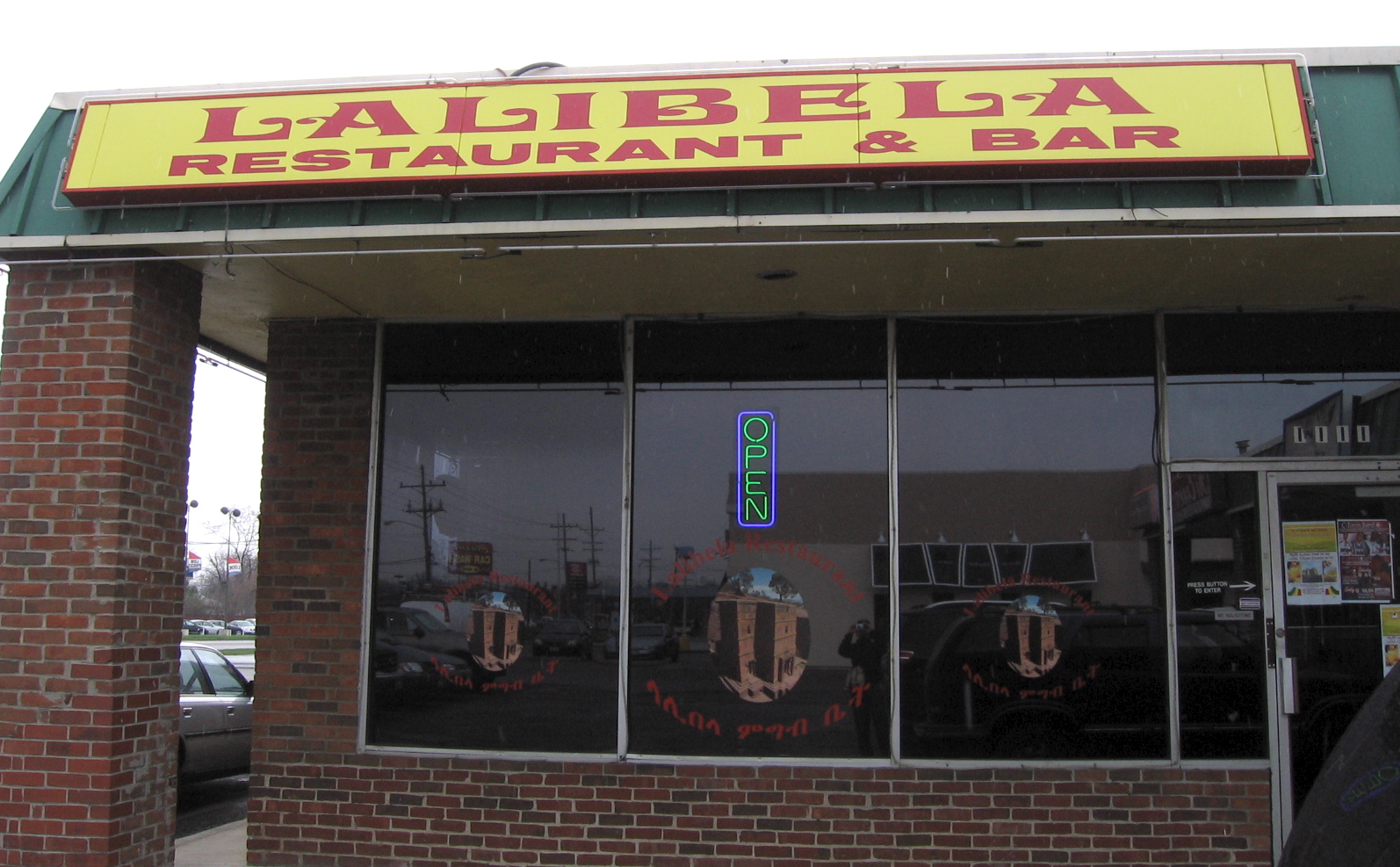
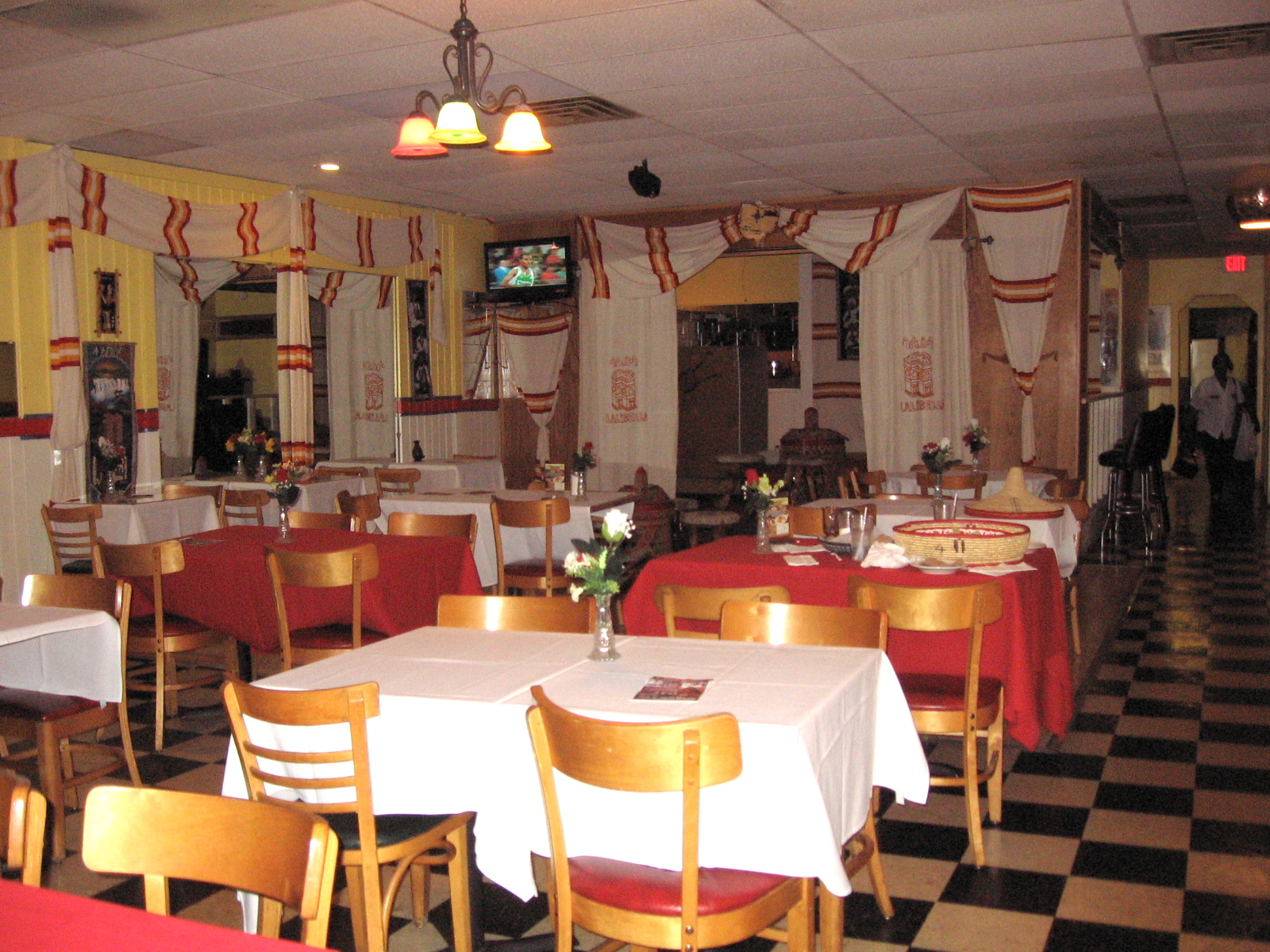
You might, at first glance, take Lalibela for a Mexican cantina based on the exterior decor. Upon entering, pool tables and a large bar suggest little more than neighborhood watering hole.  Look (waaay) back to the right, though, and you’ll see a fairly large and ornately decorated dining area.  Beyond that lies a performance stage.
If the above, and the flyers at the entrance promoting DJs and musicians performing there, are any indication, Lalibela is something of a small entertainment hub geared towards our city’s Ethiopian population.

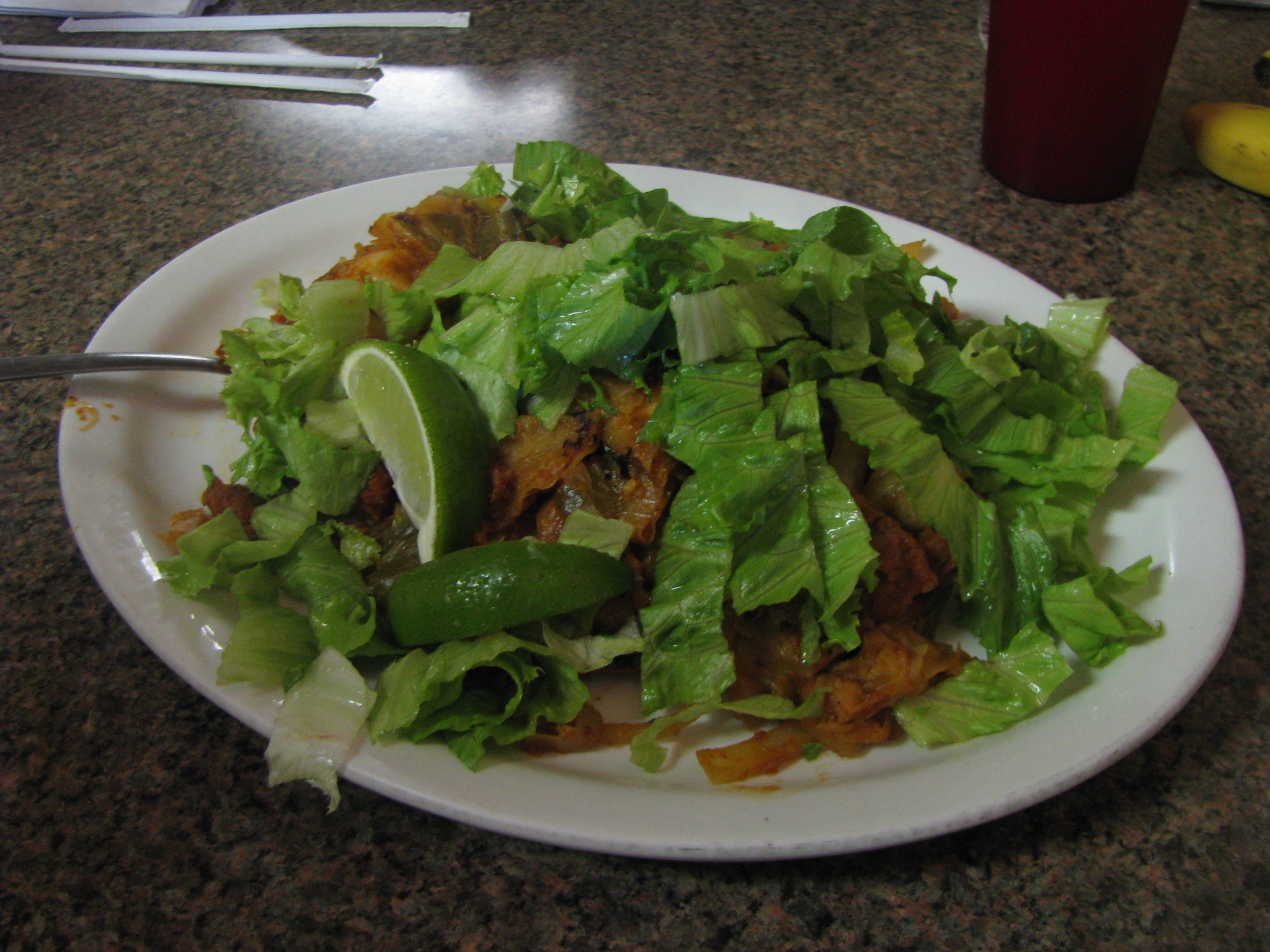
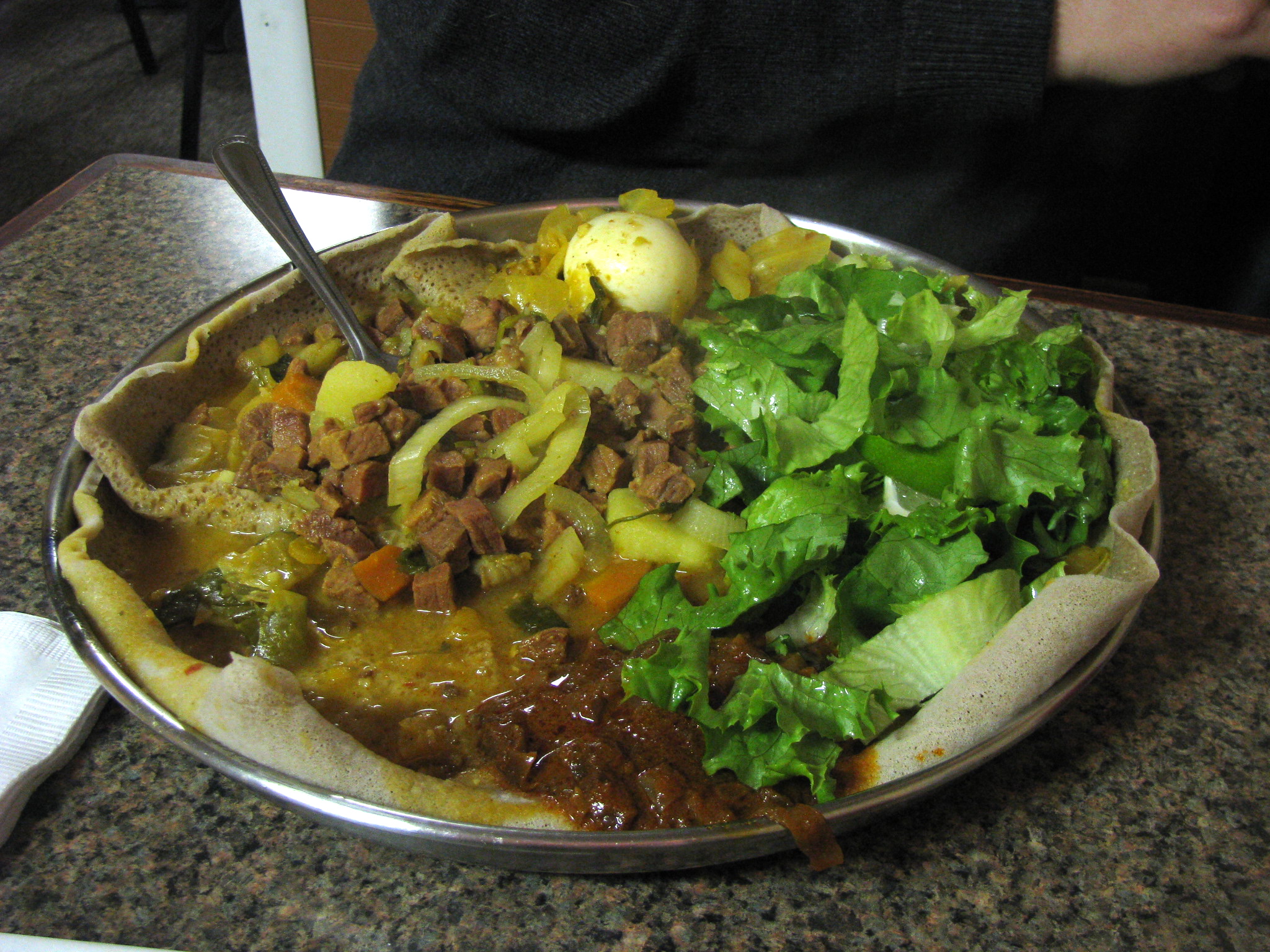
During lunch, though, it’s all about the food.  We settled on hot spicy lamb (lamb sauteed in jalapenos and spices) and quanta firfir (beef ‘jerky’ mixed with strips of injera in a sauce).

Every time we’ve had Ethiopian food, the presentation has never failed to impress.  Lalibela is no exception.  Both of our orders were served on a single large (probably close to 2′ in diameter) plate set within a covered woven basket.  The cover is removed (with a flourish) at the table by the server, and basket of injera strips is provided on the side.
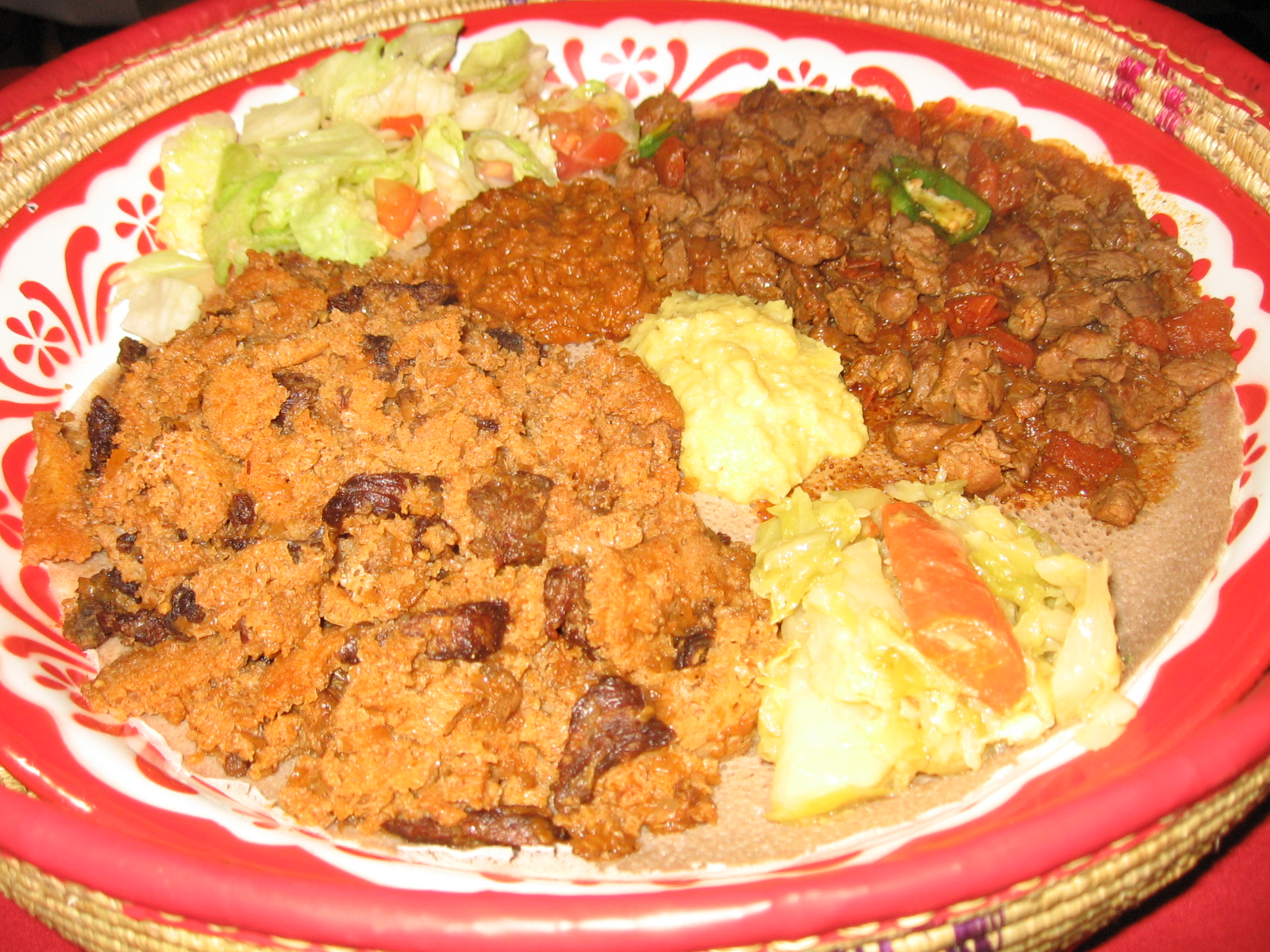
A little bit about injera -it’s unusual stuff, and is an essential part of Ethiopian cuisine. It’s very thin, curious in its spongy texture and appearance, and is made from a flour/water mix that has been left to ferment so it has a sourdough-like tang to it. Injera is used as a ‘plate liner’ for most dishes (to sop up sauces from saucy foods above), in lieu of utensils (use strips of it to pinch food from the plate and bring it to the mouth), and is even occasionally mixed in with the dishes themselves (as with the quanta firfir).

The hot spicy lamb was pleasant enough – the lamb cubes were tasty (though perhaps a bit overdone), and the peppers, sauce, and onions rounded it out nicely.  Don’t take the name too seriously, though.  Our server went to great lengths to verify that we were OK with hot spicy food when we ordered this, but only the most meager hint of heat made it into the dish.

The quanta firfir was difficult to parse.  It seemed to have two different components from two different worlds.  The beef ‘jerky’, while conspicuously cured and dried, wasn’t especially tough (our server told us they cure and dry it in-house).  The flavor was spectacular – beefy, ‘woodsy’, nutty, and mushroom-like were just a few of the words used to describe it.  The injera and sauce, though, were puzzling as they seemed to almost cancel each other out, flavor-wise.

Another oddity was the tanginess of the injera provided on the side – it was far beyond that of any other injera we’ve tried.  Since you get some of it with each bite, this is more important than it might seem.  Perhaps we just got a bad batch?

Lalibela gets good buzz from the people we’ve talked with, and in spite of a few of the hiccups we encountered it’s easy to see why that might be.  At under $10/dish, it’s worth checking out if you’re in the area.

Vegetarians should be happy at Lalibela as there’s a significant meat-free offering.
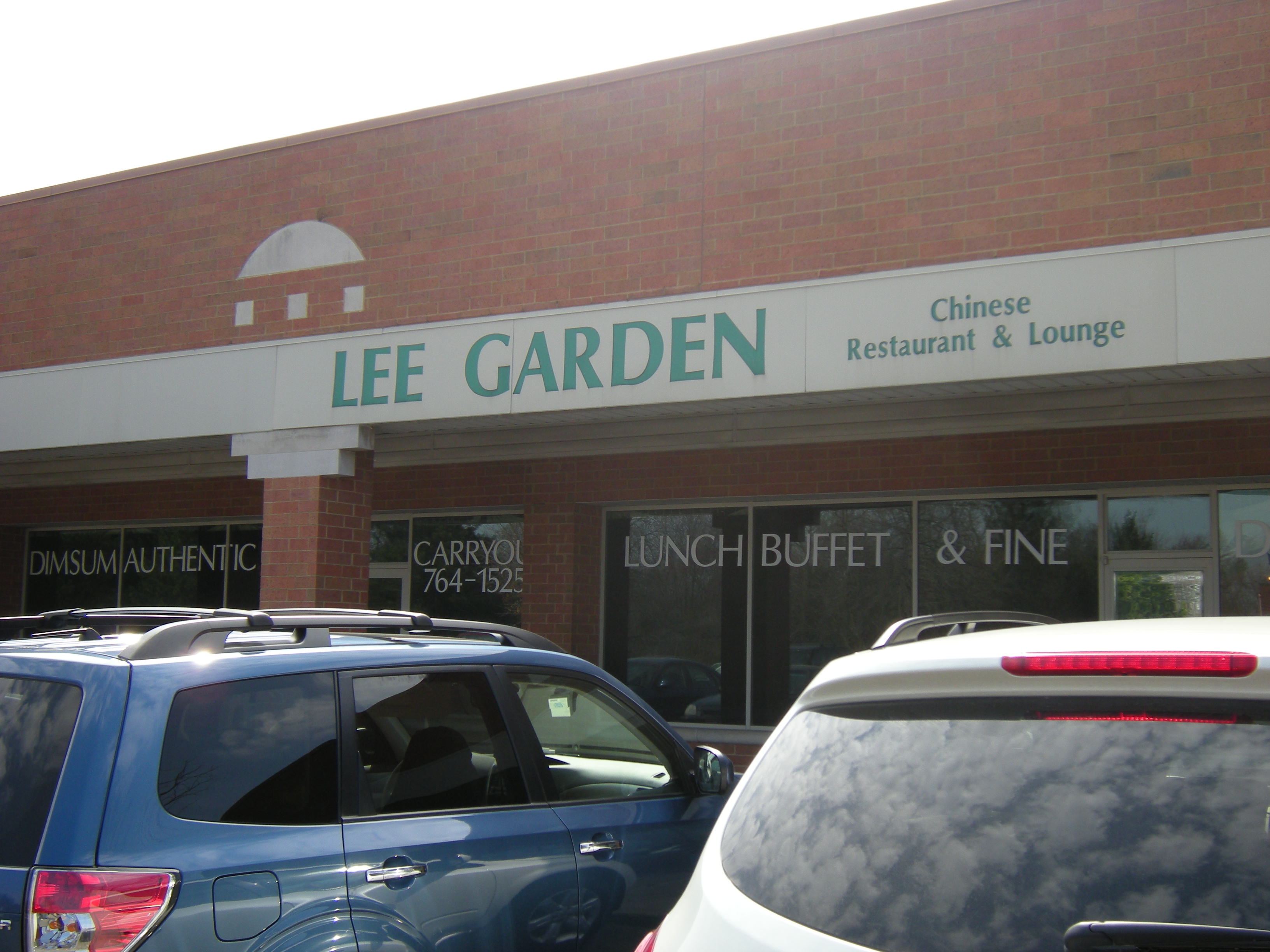
Lee Garden (Dim Sum)

This restaurant closed at the end of 2011.

Cuisine: Chinese
2685 Federated Boulevard
614.764.1525

Click here to map it!

When I caught wind of a group of Columbus Undergrounders plotting a trip to Lee Garden for dim sum, well… it didn’t take much arm twisting.  Dim sum is an exceptionally unique experience, and a regrettably rare offering in Columbus.

For those who are unfamiliar with it, there are (to my mind) two basic ideas to build on – brunch and selection.  Brunch, in that weekends between 11am and 2pm are the traditional time to take dim sum (some believe that the very concept of brunch in the US was derived from dim sum’s introduction here).  Selection, in that the format is small plates (think Chinese tapas) and there are something on the order of 50+ distinct options on offer.

I’m tempted to add ‘instant gratification’ to that list – these plates come out on a series of carts that circulate around the dining room.  When one comes to your table, the cover is lifted and you may choose as you please.  Each cart has around 4-8 options, and carts swing by frequently enough that you’ll rarely be left wanting.

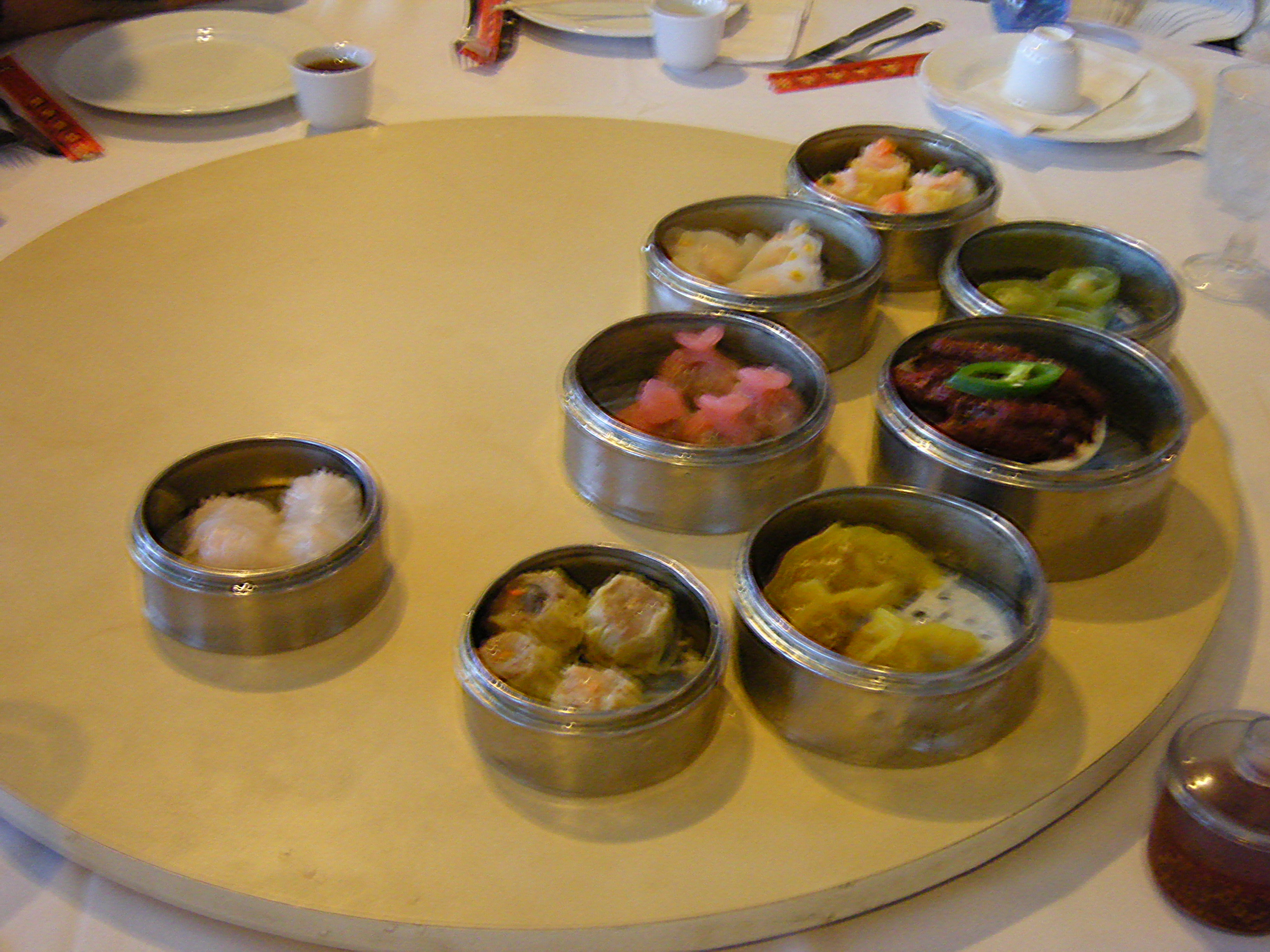
Our group of ten was seated at a large, round table conveniently topped with a lazy susan.

With guidance from DavidF (the trip organizer and a veteran dim sum enthusiast), we filled the lazy susan with a wide assortment of small dishes.

Pictured above is a portion of our meal, including pork and shrimp shu mai, potstickers, shrimp har gow, and chicken feet.  This represents perhaps a third of the total number of dished ordered.

From here, things become a bit of a blur… the lazy susan spinning, chopsticks snatching bites, people trying to reconcile their desire to share with wanting just one more taste of… that (or was that just me?)  To try to recount the whole experience is beyond me, so I’ll just hit on a few of the more memorable bites:

Pork shumai – A mix of pork, onions and mushrooms filling what is essentially an open-ended steamed dumpling.  That these are delicious is no surprise, as they’ve achieved such a level of popularity that they can even be found in the freezer section at the supermarket.  Skip those, and eat these.  You’ll be glad you did.

BBQ Pork Buns (char siu bao) – These are snow white steamed buns filled with a lurid red BBQ pork.  The bun texture is somewhat dense and chewy, and difficult to describe save to say that its entirely unlike anything you’d expect from a wheat based bread (which it is).  Get a bite of it with some of the sweet and garlicky BBQ filling, though, and it all makes sense.  This was the dish that DavidF craved the most, and it was easy to understand why.

Chicken Feet – a hell of a lot of work must’ve gone into turning the raw feet into what made it to my plate – these were the complete opposite of tough and chewy, almost unnervingly so.  Each bite, for me, equated to one ‘toe’, and became a mouth exercise in separating gelatinous flesh from bone.  The flavor of the black bean sauce was enjoyable, and… I guess I can say I did it.

———————-

Eventually, the ordering slowed down and the slump of satisfaction set in.  We ate a lot… what’s that going to set us back?

$9 and change per person.  All dishes cost between $2.95 and $3.95.  Quite a few of the dishes appear to be vegetarian, though I’d suggest asking about the sauces to make sure.  Pescetarians should be fine.

Bangkok

Cuisine: Thai
3277 Refugee Road
(614) 231-8787

Click here to map it!

Thais love food. A lot.

When amongst a group of Thais who find themselves in Columbus, try asking about their favorite place for (insert non-Thai Asian dish here). Don’t be surprised if this spurs a passionate 20 minute discussion of the pros and cons of any of a variety of options.

Now, try this – ask about their favorite place to go when they’re homesick.  Odds are, discussion will begin and end with a single word: Bangkok.

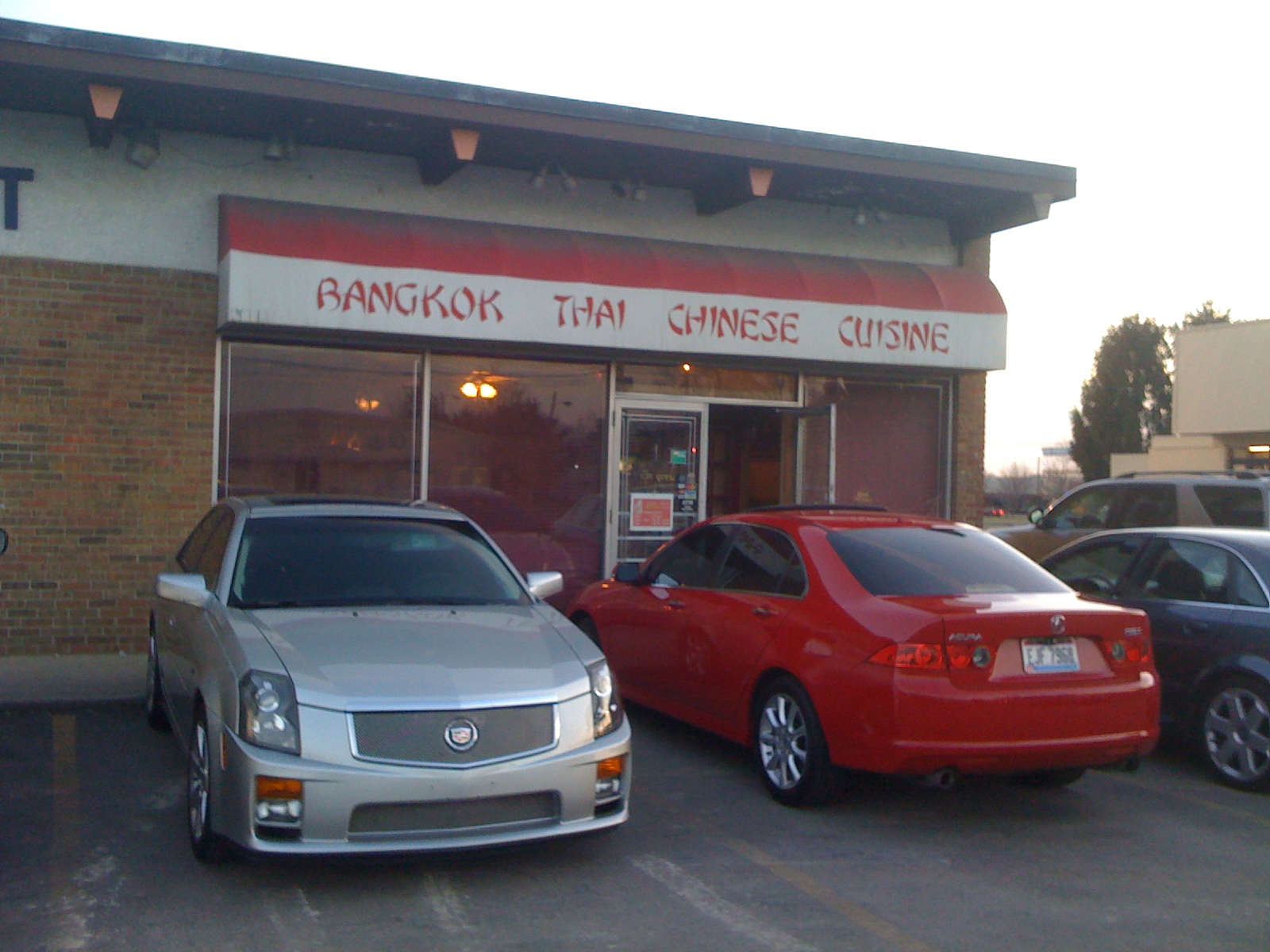
This is not surprising, since Bangkok (the restaurant) is nothing less than a slice of Bangkok (the city), that’s been picked up and plonked down on Refugee Rd. in our fair city.  A place where decor is reserved for expressions of respect for Buddha, king, and country, and service is leisurely and charming… Bangkok is pure Thai through and through.

This, of course, extends to the menu offering.  While Bangkok carries an abbreviated menu of Chinese-American dishes, to order one is, at least in my opinion, to entirely miss the point.  Who orders Tex-Mex in Rome?

Certainly not Warren Taylor*, owner of Snowville Creamery, who we (purely by chance) ran into during our visit.  As soon as the wait staff saw him, a series of nods back and forth indicated that he’d be having ‘the usual’.

In his case, this meant pad hoi (mussels in red sauce) and pad puck boong (watercress in a garlic sauce).  When this arrived, along with our pork pad ka pow (ground pork with basil and garlic) and pad thai, Warren suggested eating ‘family style’.

Our kind of guy, that Warren.

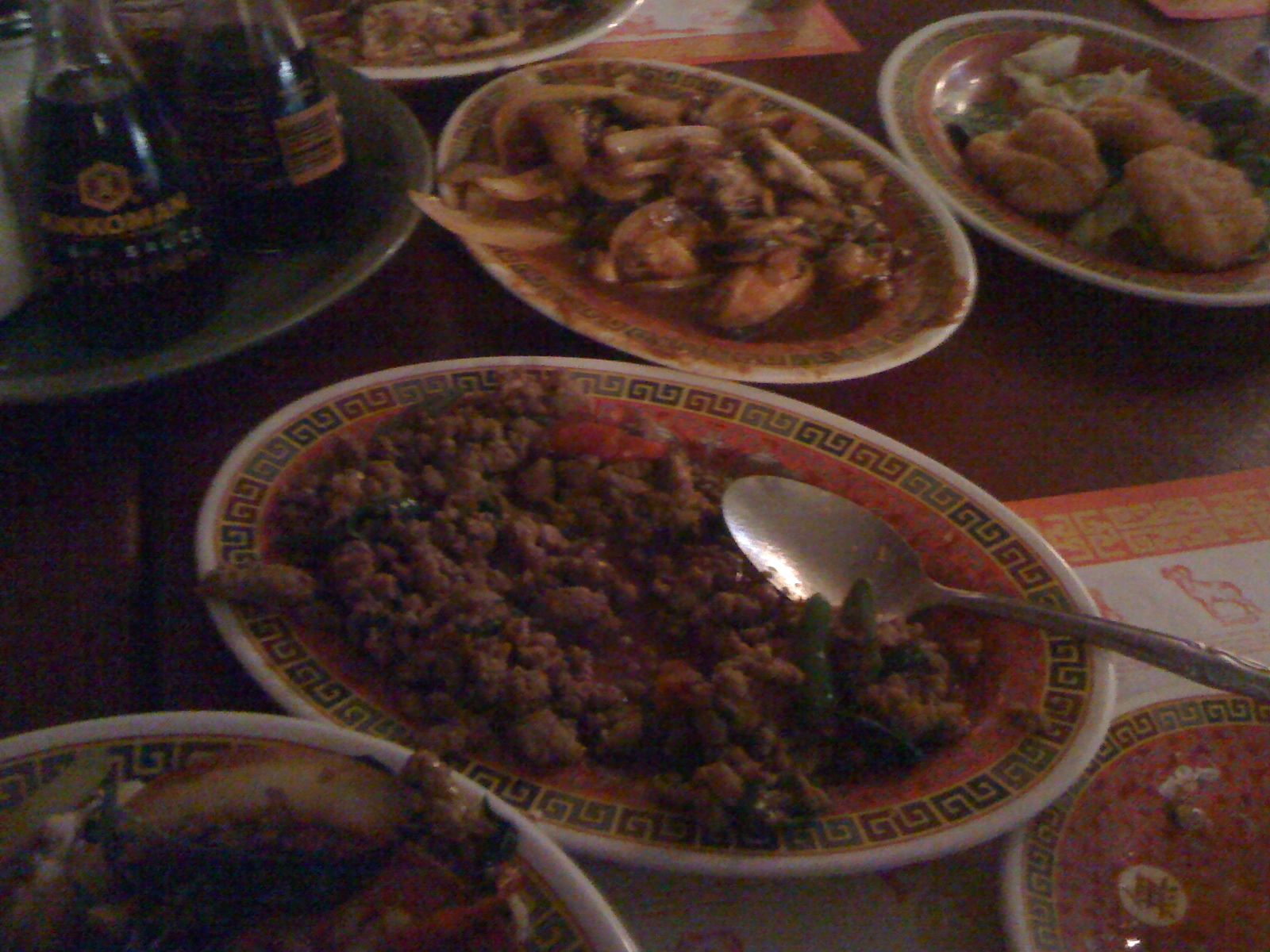
I tried the pad hoi first.  This was something special – a generous portion of some of the plumpest mussels I’ve ever seen, served with vegetables in a red sauce.  The red sauce was fascinating – almost everyone at the table thought tasted like a Thai interpretation of a tomatoey marinara sauce that had been pureed.  Delighted but slightly confused, we asked the waitress about this. Turns out, we were comically off – the red color came from a mild chili paste (no tomatoes whatsoever). Fish sauce, garlic, and basil rounded it out.  A dish worth plotting a return trip around.

pad ka pow (front) and pad hoi (back)

The pad ka pow was also very well received.  The ground pork hit the sweet spot between too lean and too fatty, and the sweet basil, garlic, and chiles asserted themselves in no uncertain terms.  A great dish that effortlessly balances big flavors, pad ka pow is often eaten by Thais with kai dao (a fried egg).

The pad thai – I almost hesitate to even mention it.  Not because it wasn’t good (it absolutely was), but because people’s opinions about it are almost as divergent as their take on, say, pizza.  Suffice it to say that everyone at our table enjoyed it, with several suggesting it was their favorite.

Beyond what we tried, Bangkok’s Thai selection is substantial – from yum nuea to tom yum to curries, they hit all of the high points and then some. They also have a reasonable selection of vegetable dishes, though strict vegetarians may want to inquire about their use of fish sauce.

Regrettably, the majority of the photos from the evening were lost to faulty technology.  Guess we’ll just have to go back sometime soon (such a hardship!).

*Warren Taylor, aside from being a hell of an interesting character, oversees the production of a product is perhaps worthy of an alt.eats post of its own. For the time being, though, if you haven’t tried Snowville’s milk or cream I highly recommend you do.

Azteca De Oro

CLOSED
Cuisine: Mexican

Industrial Mile Rd., just off Georgesville (address not posted)

Click here to map it!

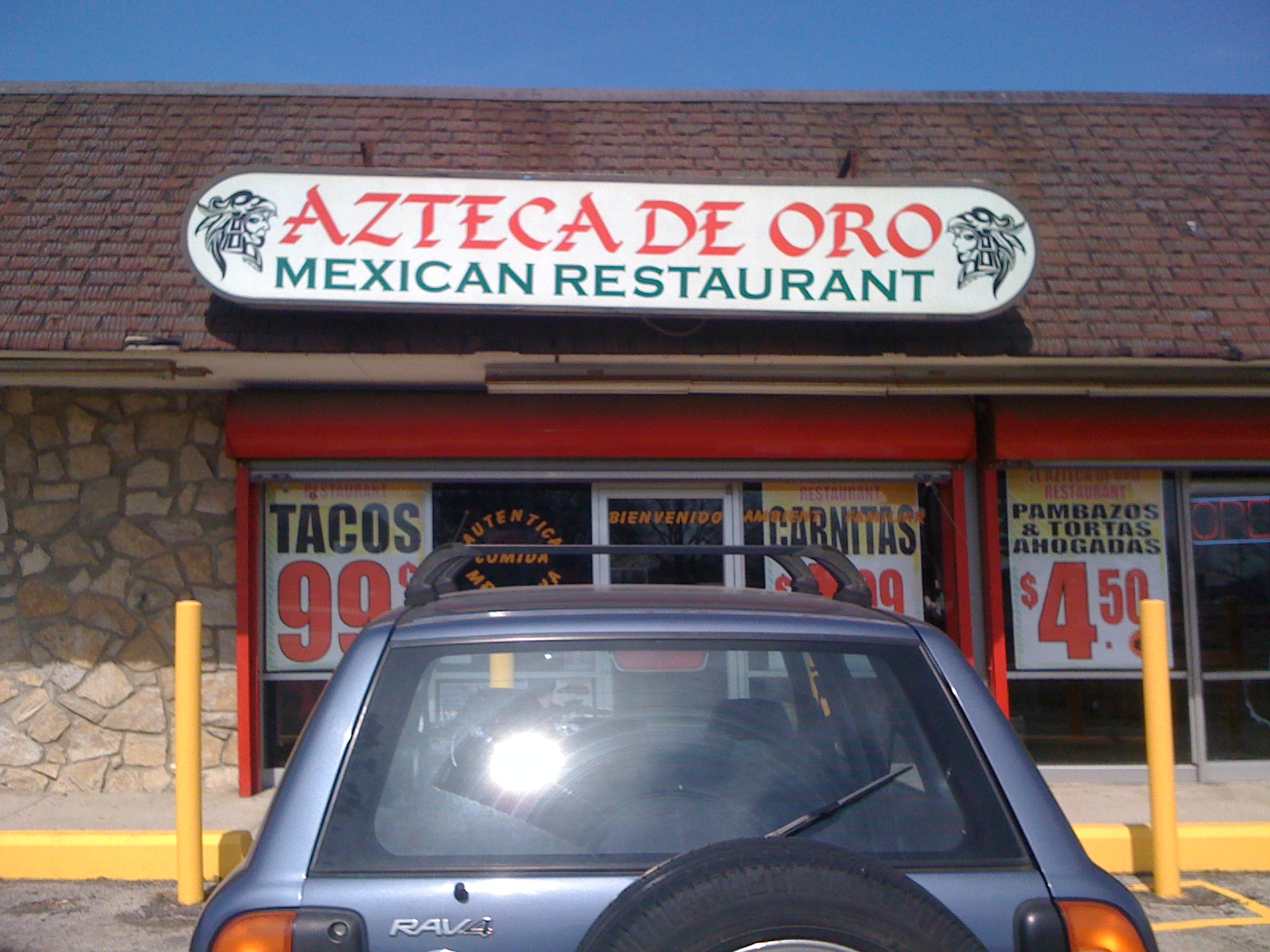
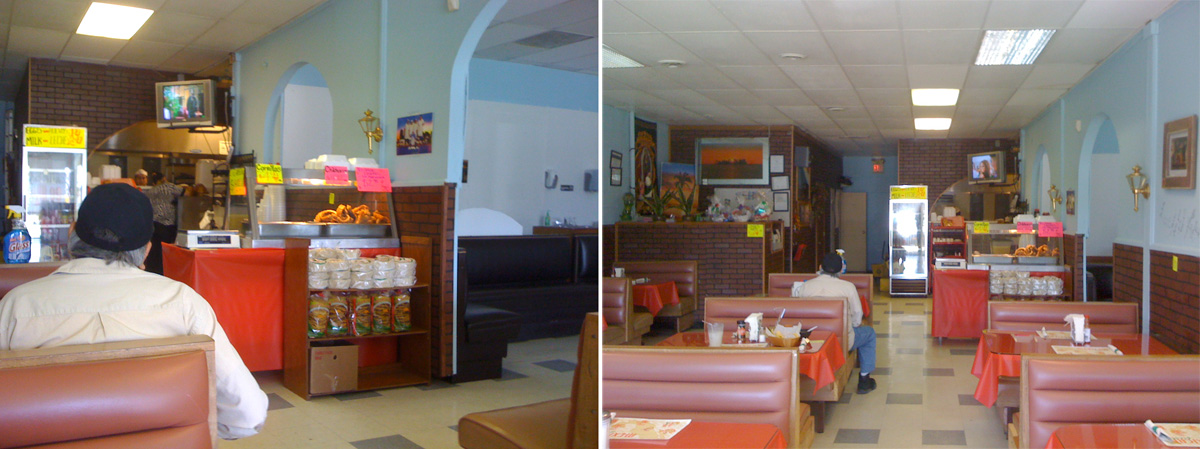
I don’t know that I’ve ever said this about a restaurant before, but Azteca De Oro is, well… cute.  Not unlike most of the restaurants we’re reviewing here, it’s an assemblage of the second-hand: start with the bones of an old restaurant, add tables, chairs, and whatever else you can scrounge up, maybe hit a few walls with paint.  Sometimes this approach adds up to something more than the sum of its parts, other times… not so much.  In ADO’s case, it comes together with an unaffected, well worn, cheerful charm (that the photos, unfortunately, do a bad job of conveying).

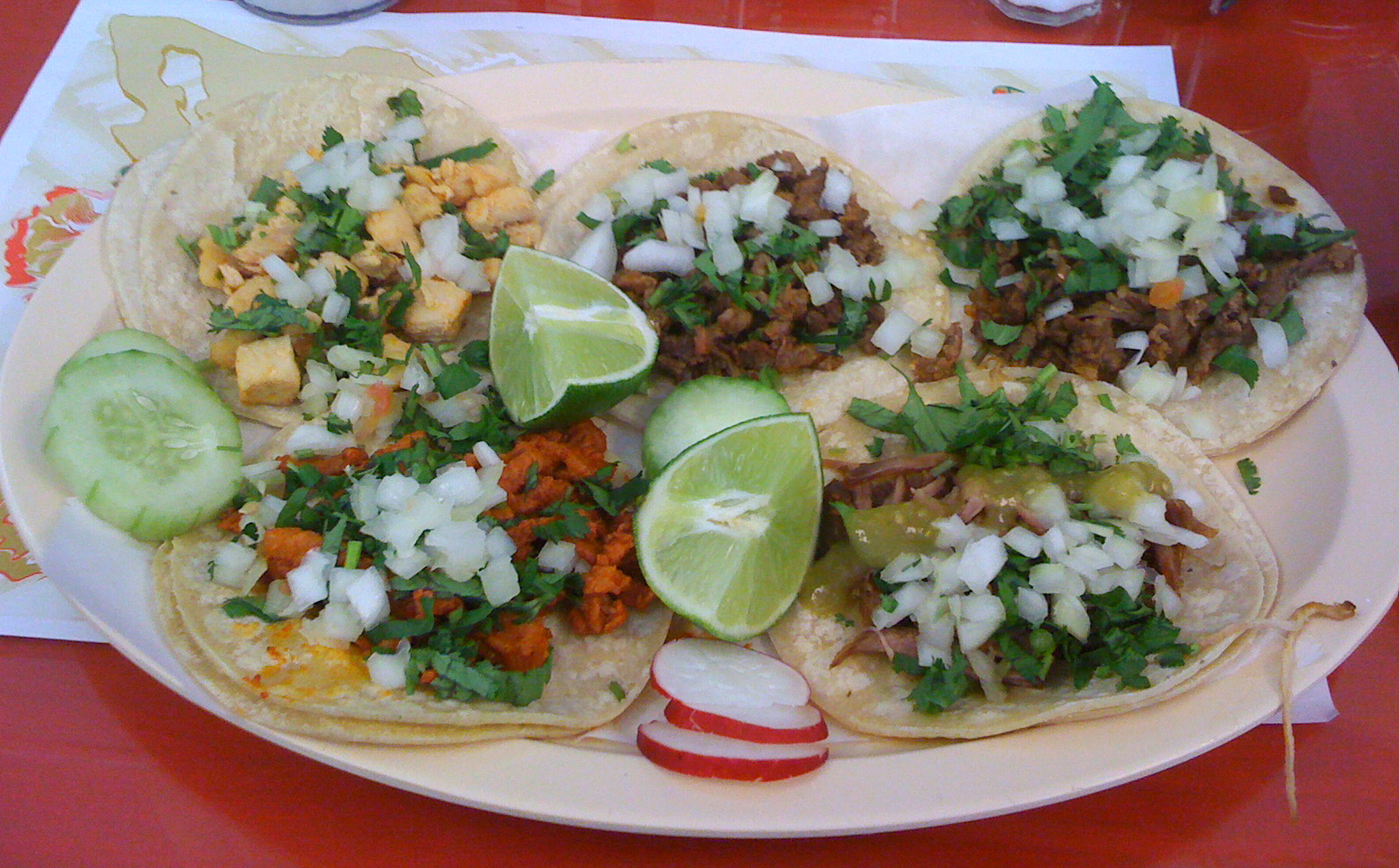
ADO’s menu is extensive and clearly oriented towards a Mexican customer base.  With offerings like huaraches, gorditas, menudo and pambazos, these guys operate as though their competition is the taco trucks (which, as far as their Mexican clientele are concerned, they probably are).  This felt like familiar territory, so I figured I’d put them to the test by ordering the tacos campechanos – a plate of 5 tacos, each with a different meat inside – and washing it down with some horchata.

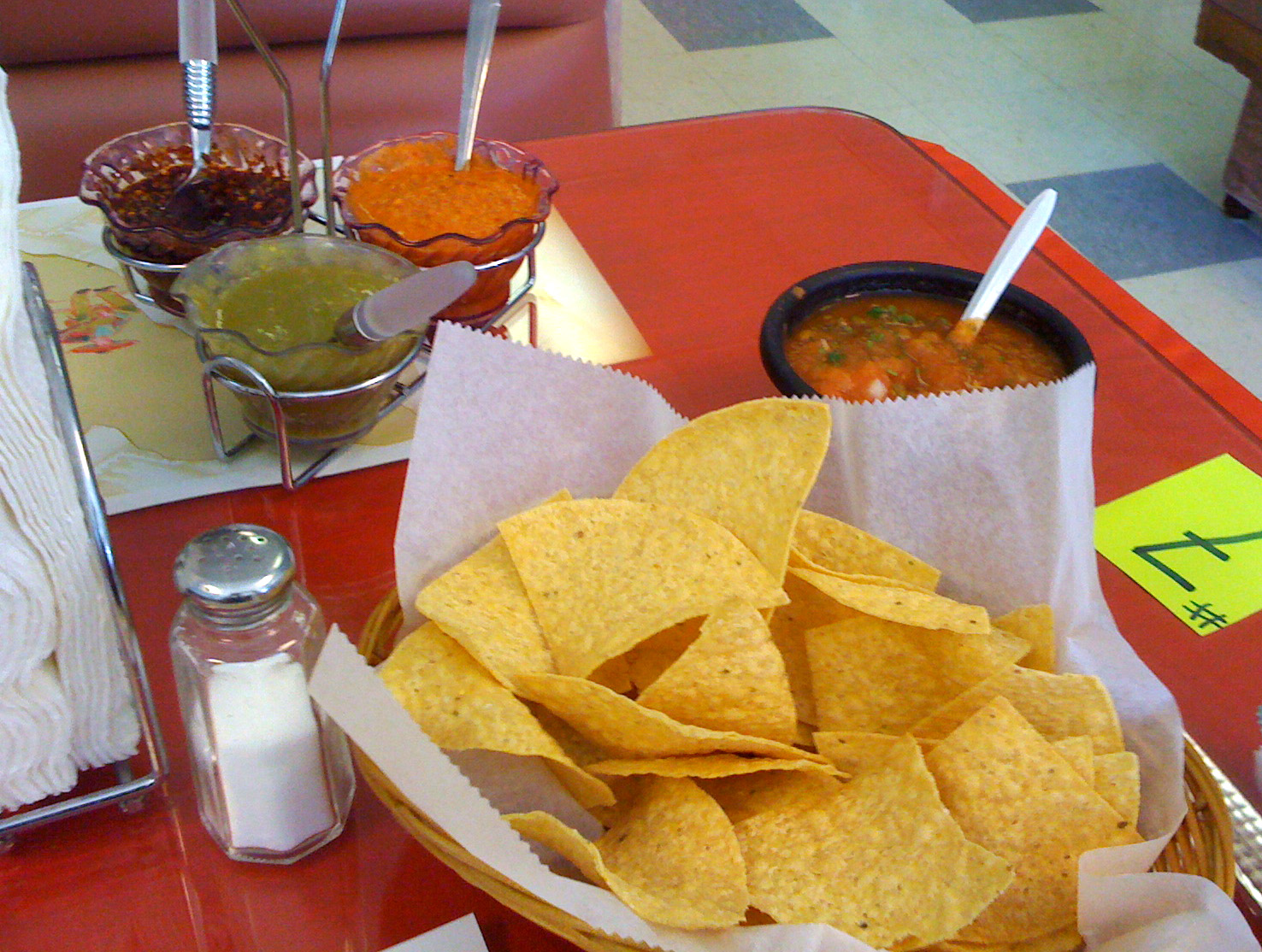
Chips and a nice selection of salsas came out.  The tortilla chips were fine, but the salsas were the star – conspicuously fresh and flavorful.  The lighter red-orangeish salsa was a standout – smoky, garlicky, and with a nice hot kick.  The deep red stuff packed a searing spicy heat punch.  The horchata, a sweet rice milk beverage flavored with cinnamon and vanilla, was there to help take the edge off.

My taco selection arrived quickly, and as expected, was prepared Mexican style (two small corn tortillas each, cilantro and onions on top).  Going through the list by meat selection:

  • Al pastor (seasoned pork) – About as good as al pastor gets without being spit-roasted.  A satisfying, big-flavored option.
  • Asada (seasoned roast beef) – A little on the tame side, flavor-wise, but a willing companion to the smoky salsa
  • Cecina (cured beef) – Nice flavor, expectedly chewy.  Great with the smoky salsa.
  • Pollo (chicken) – excellent seasoning, but a bit on the tough side.
  • Cochinita (marinated shredded pork) – Very tender, subtle flavor, best with the green sauce.

Overall, the tacos were solid, authentic, and certainly taco truck worthy.  Vegetarian options were scant to non-existant.

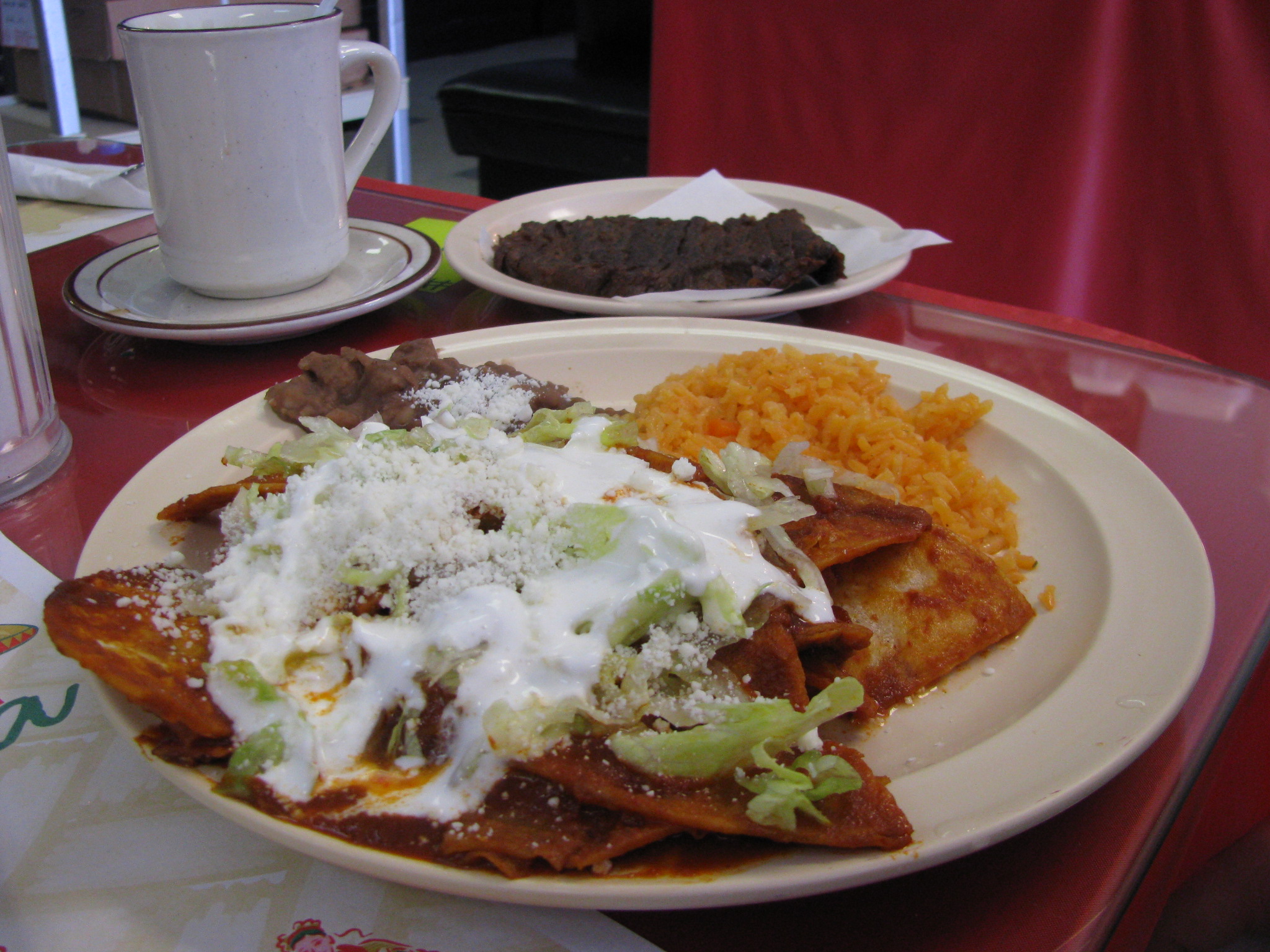
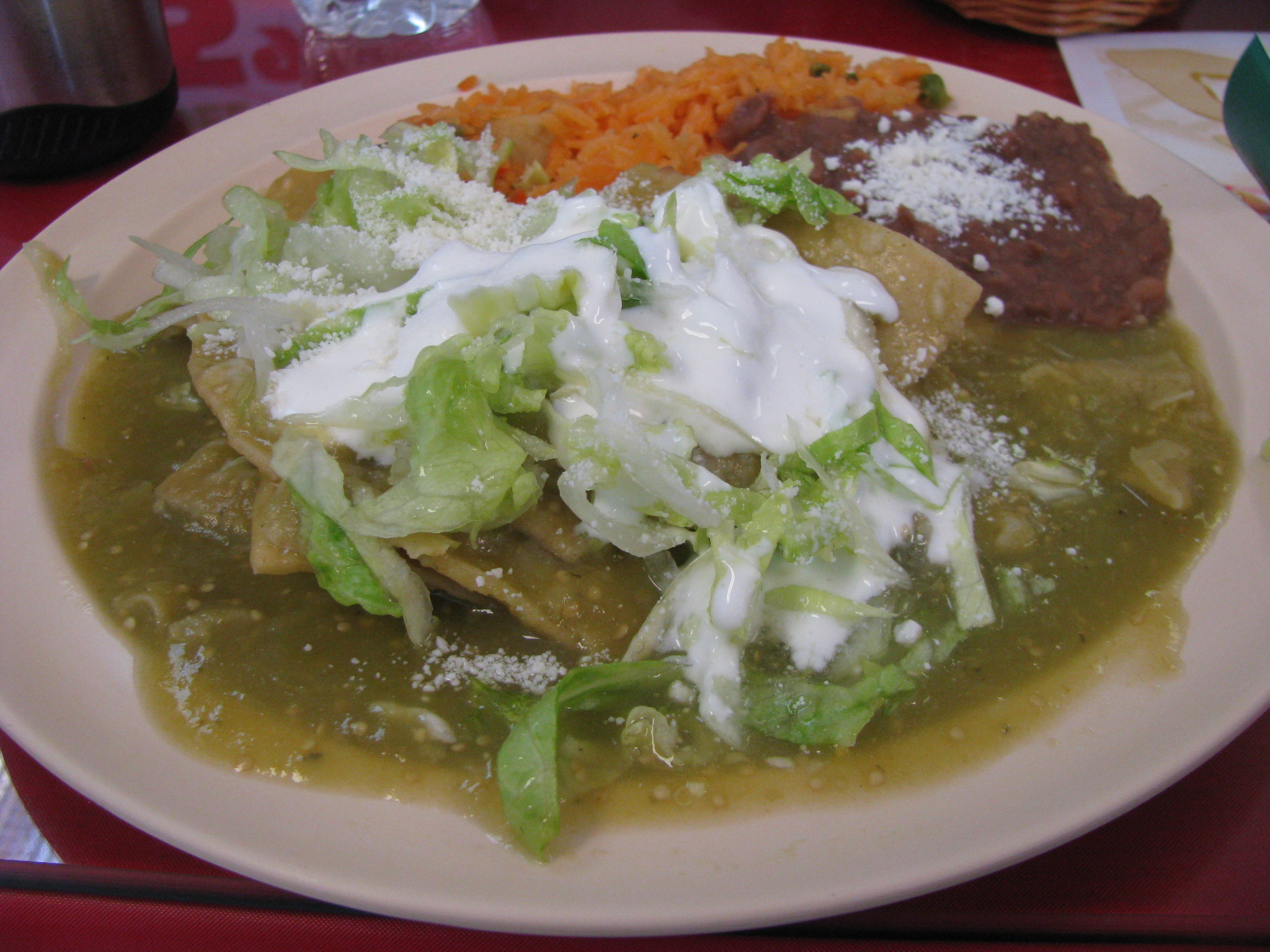
ADO also serves breakfast, and with huevos rancheros, chilaquiles, tamales as well as other egg options. It’s feels slightly odd having chips and salsa at breakfast time, but once they’re there it’s hard to resist.   We sampled both the rojo and verde chilaquiles and preferred the red. The verde option was too acidic (lime and tomatillo heavy) for our taste.

Chilaquiles are cut up corn tortillas fried and served with chili sauce. They are served to use up leftover tortillas and as a hangover cure. At Azteca de Oro they are topped with lettuce, sour cream and cheese and served with rice and beans.

Calanley Restaurant

Cuisine: Somali
3149 Cleveland Ave.
263-3530

Click here to map it!

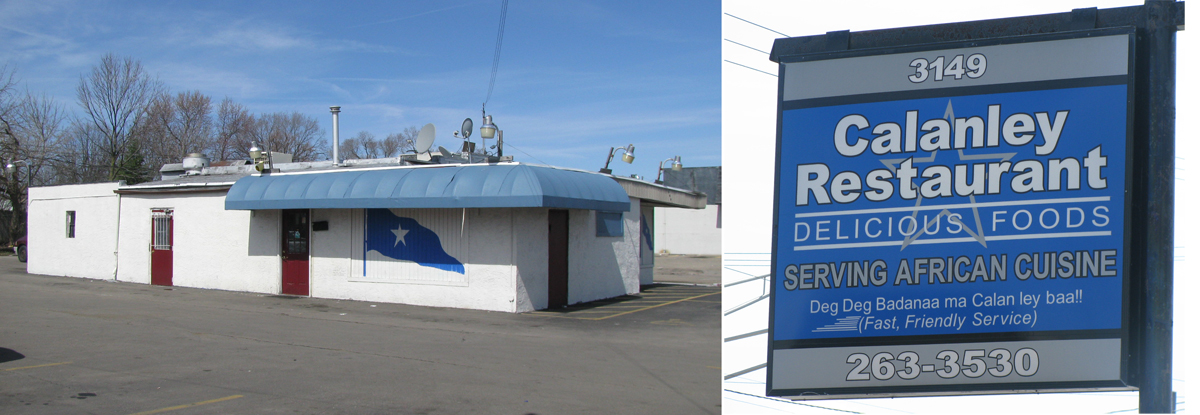
Having driven past Calanley quite a few times, we’ve always felt a vague sense of unease about the place based upon its exterior appearance – there’s just something foreboding about the windowless building.

This unease appeared to be mutual, at least at first – it seemed as though Calanley may have never served non-Somalis prior to our visit. We definitely sensed a bit of anxiousness initially.

Especially from the poor man at the counter… our presence seemed to completely blindside him. His job was to take our order, and he seemed frustrated by, at minimum, our shared inability to bridge the language divide.

Thankfully, frustration led to resourcefulness.  He tapped an English-speaking Somali customer for assistance, and called on an English speaking employee from the kitchen. With their help, everything came into focus.

Turns out that Calanley is primarily frequented by regulars – unsurprisingly, almost all Somali. These customers know the offering (and the language), so there is little use for a menu. An out-of-date English-language menu was searched for and found, though, and after a few tries we managed to select items off of it that were still currently being served.

We ordered the ‘chicken steak’, KK (kimis & kalaankal), and Ethiopian anjera with beef stew, and took our seat.  Complimentary bananas, juice, and bottled water came out shortly thereafter.

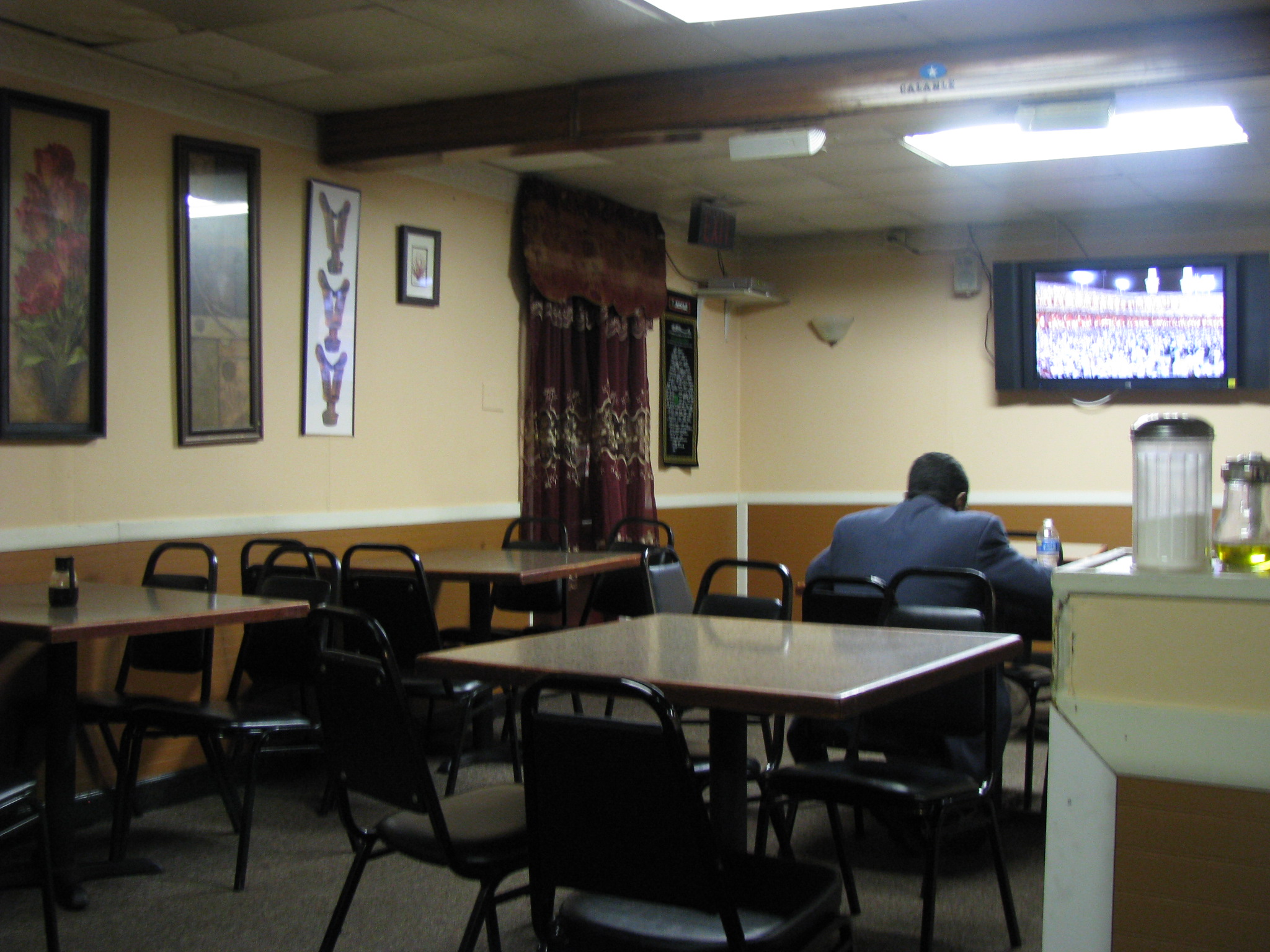
Calanley’s interior is basic, and the ambience was based largely around a television playing what appeared to be recordings of prayer ceremonies during the hajj.  This led us to recall that there was a separate exterior entrance for ‘families and ladies’ that opened into another smaller (closed off) dining room… we wondered if our female dining companion’s presence in the larger dining room might be causing distress.  We concluded that it probably wasn’t, at least if the remainder of our time there was any indication.

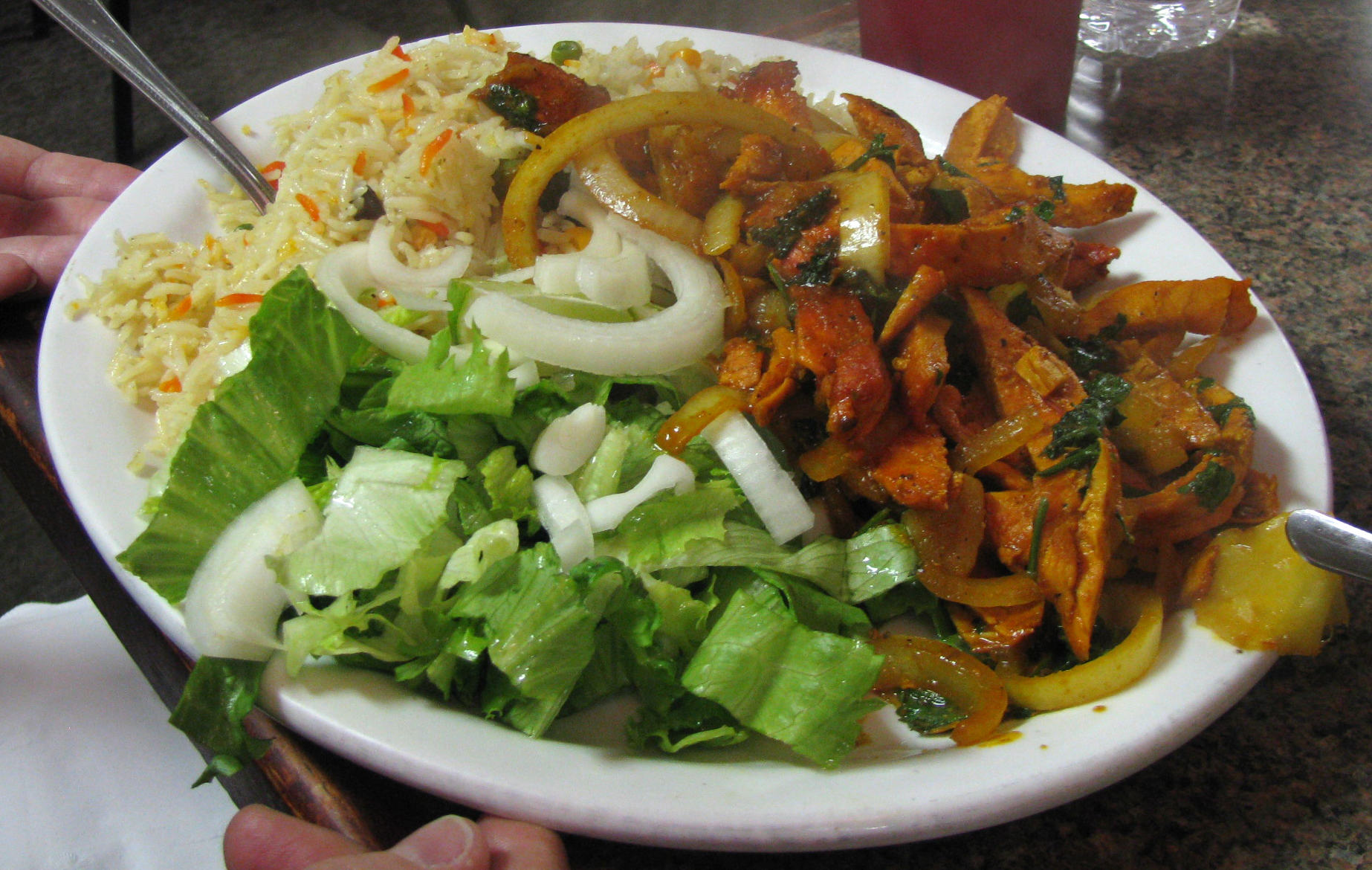
Our meals arrived quickly, and as seems to be the norm with Somali restaurants, portions were generous.  We tried the ‘chicken steak’ with rice first. This was very similar to African Paradise’s chicken preparation, which is to say it was cut into strips and similar to an Indian tandoori mixed with sauteed onions.  Roundly enjoyed.

Next, the KK.  In some of our early research, we came across a thread on a Somali web forum that discussed Somali food/restaurants in Columbus.  In it, Calanley was widely thought to be *the* place for KK.  Underneath the lettuce was kimis (thin strips of flat bread) and kalankaal (seasoned cubed beef) mixed together in a thick, tomatoey sauce. We found it to be enjoyable, but perhaps a bit less so than the chicken.

Finally, we tried the anjera with beef stew.  This was quite a spread – stew, salad, a wickedly spicy hot sauce, and a hard boiled egg, all atop a massive piece of anjera (also known as injera, a spongy Ethiopian flat bread).  The anjera seemed a bit on the mushy side, and the stew was fine if unexceptional… we probably wouldn’t build a return trip around it.

While we walked in to an atmosphere of concern at Calanley, we left to smiles.  We liked the place, and appreciated the efforts they went to in accommodating us.  Once we were able to express our interest in their food, everything else fell into place.  Suffice it to say that any cultural observations above (as with all cultural observations on this blog) are recounted solely for the purpose of providing practical insights for the uninitiated.

We were unable to evaluate the vegetarian friendliness of the offering due to the menu situation, but all dishes discussed contained meat, as seems to be the case with Somali cuisine more generally.  There was nothing posted to indicate halal preparations, but we’d wager it probably all is.