Kihachi (on the cheap!)

Cuisine: Japanese

2667 Federated Blvd
614.764.9040

Click here to map it!

We’re well documented when it comes to our abiding affection for Kihachi, and indeed find it to be one of the crown jewels of our local immigrant kitchen restaurant scene. That said, given the cost of entry, we’ve been a bit apprehensive about including such a high-end restaurant among the roster of the usual bang-for-the-buck dynamos here at alt.eats.

That’s not to say that Kihachi is a bad value. Given the uncompromising quality of the ingredients and the exceptional technical skills put to use in preparing them, it could even be considered a bargain. But, still, a conspicuously costly bargain.

Or at least that’s the perception. In previous visits, we’ve been repeatedly seduced by the siren song of Chef Kimura’s more exotic offerings, and though we’ve felt entirely rewarded for doing so, the down side of that approach (aside from the overdraft fees) is that we’ve ignored some of the menu’s Japanese staple dishes, whose prices are often far less dear.

So with that in mind, we set out to see both a) if it was possible for a couple to eat a full and satisfying meal for $25/person (tax & tip excluded), and b) if the food in that range was similar, in quality of execution, to the higher priced items.

There are essentially three menus to choose from – dinner, small plates, and daily small plate specials (which are written in Japanese, affixed to the regular small plates menu, and translated by the server).  Our usual approach has been to order a variety of small dishes from both of the small plates menus. This can get expensive if you intend to eat till full, so on this visit we ordered a dinner menu item each (most of which are less expensive than some of the small plates and larger in portions) and then augmented as our budget allowed.

First up, apps, starting with agedashi tofu ($6.00):

Simply put, this is the most compelling case I’ve seen made for why tofu can be delicious: four lightly battered cubes of fried tofu sit in a mix of dashi, soy, and mirin, and topped with seaweed, green onion, grated daikon and bonito flakes. The textures, flavors, and appearance all delight.

Next, fried burdock root (also called gobo, $5.00):

This is the root of the plant that leaves burrs on your clothes as you walk through the woods (burdock), sliced into thin sticks, lightly floured and fried, and presented with a side of seasoned salt. It’s as comforting as a french fry, but far more interesting with its potato-meets-artichoke flavor and slight snap to the bite.

Grilled capelin ($6.00):

That’s right, four little whole fish (capelin are members of the smelt family), mouths agape in expressions of abject terror. They shouldn’t act so surprised – they had to realize that they’re richly flavorful bites of ocean-tinged goodness.

Finally, for the apps, steamed clams in broth ($6.95):

Beautiful in its simplicity, this dish consists of a trio of beautifully plump and surprisingly chewy clams in a lovely broth, and a great garnish of unidentified but flavorful greens.

Now for the mains… first up, udon with duck ($13.00):

We’ve often remarked on how many of our favorite Japanese dishes can have a somewhat comfort food-y component to them. This dish epitomizes the sentiment with plenty of fat udon noodles bathed in a rich, meaty broth, topped off with a generous portion of exceptionally flavorful duck meat and scallions. I don’t believe I’ve ever seen proteins so carefully considered in the context of a soup – perfectly cooked (read – tender) poultry is truly the exception, and is indicative of masterful temperature control in the kitchen.

Next, nabeyaki udon ($12.00):
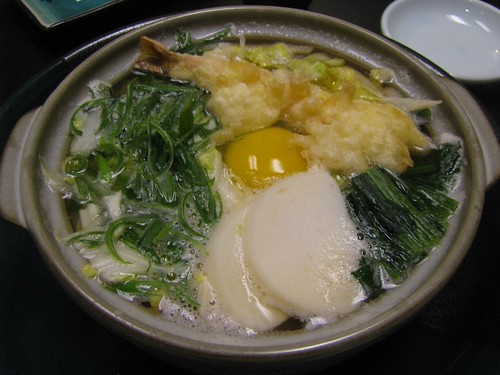
This contained the same udon noodles as in the last dish, but was topped with raw egg yolk, shrimp tempura, fish cakes slices, scallions, and more… and came in a bowl that retained enough heat to keep the broth boiling for at least a couple of minutes after serving. With the egg yolk mixed in, this broth was perhaps even richer than the previous, and among our extended group of 5 it was preferred by all except for one (your humbled author).As meals in a bowl go, you’d be hard pressed to find one more complete (or more satisfying).

With that, our meal for two is complete. Total cost: $48.95, green tea included. With one less app, we could’ve done it for $20/person, and we still would’ve left full and, really, just about as happy as if we’d spent 2 or 3 times as much. Needless to say, we highly recommend you to check Kihachi out, and if you go we’d love to hear about your experiences in the comments.

Intercontinental Restaurant

Cuisine – Nigerian

5777 Cleveland Ave
614.843.5665
Open 11am – 9pm daily, 1pm – 7pm on Sunday

Click here to map it!

As we drove towards Intercontinental, the normally indefatigable food adventurer, Bethia Woolf, was looking a bit pallid. “What’s wrong?”, I ask.

“You know!”, was the curt reply.

You see, sometime during her formative years in the UK, Bethia was invited to a dinner put on by Nigerian friends of her family. This meal left scars that persist to this day – memories of flavors and textures so vividly disagreeable at the time that they can’t help but cast something of a shadow over what’s to come.

As we perused the fully (and helpfully) photo-illustrated menu, though, tensions began to subside somewhat. It certainly didn’t look too scary, and, by and large, struck me as quite appetizing. Co-owner and all around pleasant guy Olawale Ajiboye (“call me Wally”, he says) eagerly explained unfamiliar items to us.

With Olawale’s help we quickly made our selections, and the wait for our dishes was notably short.

First up was a plate of moi moi, goat meat, and jollof rice. This moi moi (also known as moinmoin) was roundly thought to be fascinating and tasty stuff – essentially slices of a bean loaf studded with hard boiled eggs and beef, the texture was light and the flavor was surprisingly complex and umami forward. It disappeared quickly. The jollof rice was similarly easy to appreciate, and this version struck us as being similar to a spicy Mexican rice with additional earthy, meaty undertones. We couldn’t argue with the flavor of the goat, but tenderness wasn’t in the cards.

Same could be said for what was, to my tastes, an (over)steamed whole fish. This came with rice and beans, which, if my eyes didn’t deceive, was actually rice and black eyed peas. Initially a somewhat unexciting side, Olawale brought out a savory, earthy red sauce for it that brought it all together swimmingly.

Our final dish, spinach and plantains, confirmed a long-held impression – African cuisines really know how to handle spinach. Solay Bistro and Taste of Zanzibar both have notable spinach dishes, and Intercontinental’s version is every bit their equal. The accompanying plantains were of the ripe, sweet, caramelized variety. If you’ve had them at any Caribbean restaurant, you’ve had this version… and that’s not a bad thing by any means. While a generous portion was a feature of this dish, it should be noted that there was a garnish of plantains on all of the dishes we tried.


Having struck up an easy rapport with Olawale, he reiterated several times his desire for honest feedback on the meal. We sheepishly inquired about the chewiness of the proteins, and he both thanked us for mentioning it and gently averred that the overt firmness was a widely held preference among West Africans. Experience with several other West African restaurants leads us to think it likely true.

We were then invited to try tastes of a couple of other menu items. Small bowls of the okra soup and egusi soup were presented.

Okra soup, we’ve come to find, is pretty consistently mucilaginous, and while the flavor was enjoyable that texture is still a tough sell. The egusi, normally eaten with pounded yam, is a curious mixture that includes melon seeds and smoked fish. Challenging in both flavor and aroma, we’ve concluded that egusi may well have been the source of Bethia’s childhood trauma.

Intercontinental’s space was a pleasant enough place to enjoy a meal, and the service was notably on the ball. While they’re no exception among African restaurants in offering dishes that can be challenging to the average American palate, our experience leads us to believe that they’ll also have something satisfying for just about everyone (including vegetarians).

Pepper soup is a weekend specialty, and something we look forward to trying out.

Yummy Bakery

Cuisine: Persian
6325 Sawmill Road (near Trader Joe’s)
http://yummy-bakery.com
614-389-2236
Hours: Tues-Fri 10 a.m. – 6 p.m., Sat 9 a.m. – 6 p.m., Sun 12 p.m. – 5 p.m. (Closed Mon)

Click here to map it!

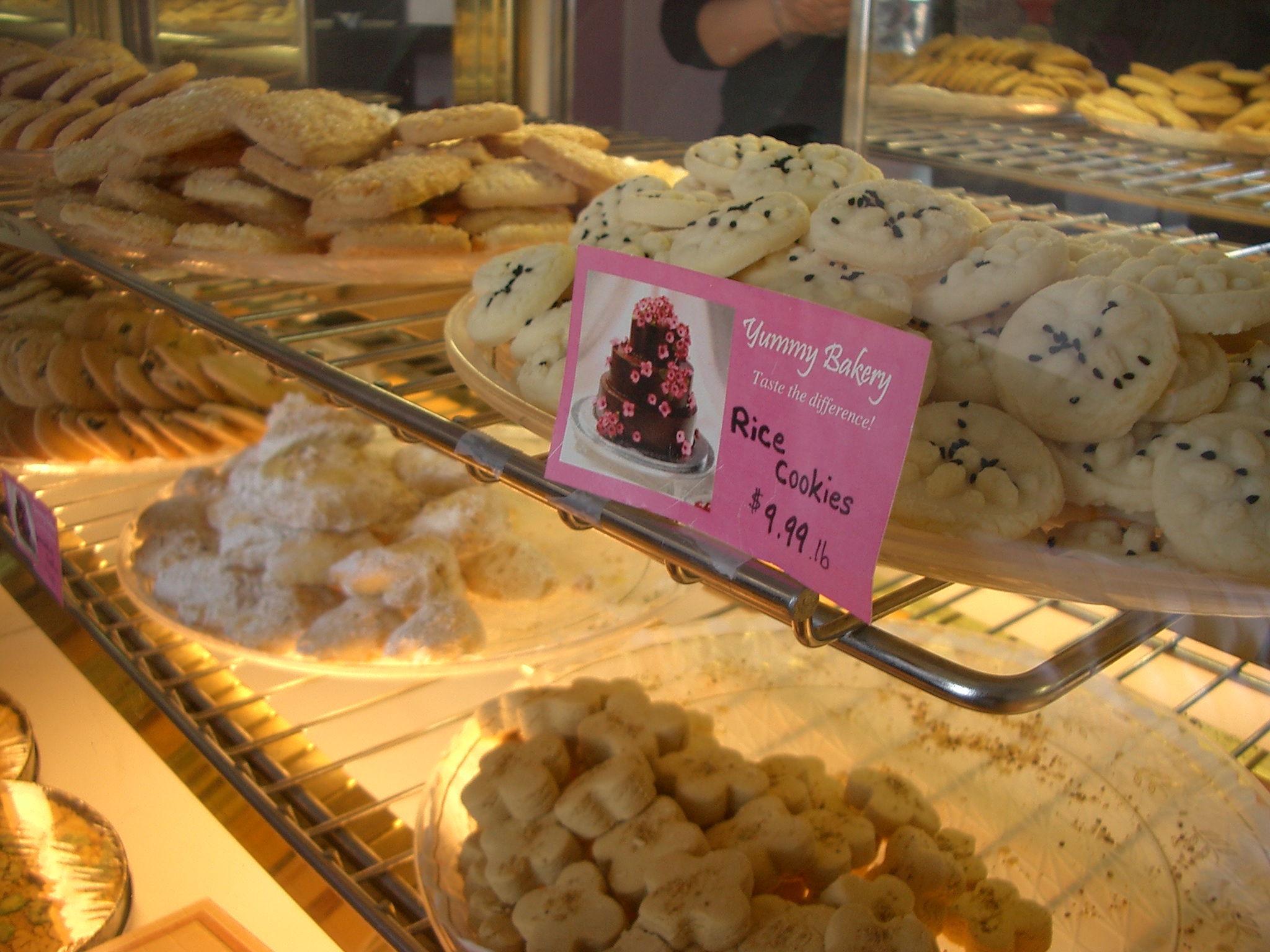
Yummy Bakery may be known for their special occasion cakes (graduation, showers, and birthdays), but they also offer quite the variety of Persian sweets including cookies and donuts. When we visited, it was just days before the Iranian New Year (Nowrūz), March 20th, and the kitchen was abuzz with preparations. There were several specialties available such as Sohan, a crunchy nut and/or seed based candy that can contain pistachios, almonds, sesame and/or flax seeds; and senjed, a ceremonial dried fruit placed on the traditional new year table setting.

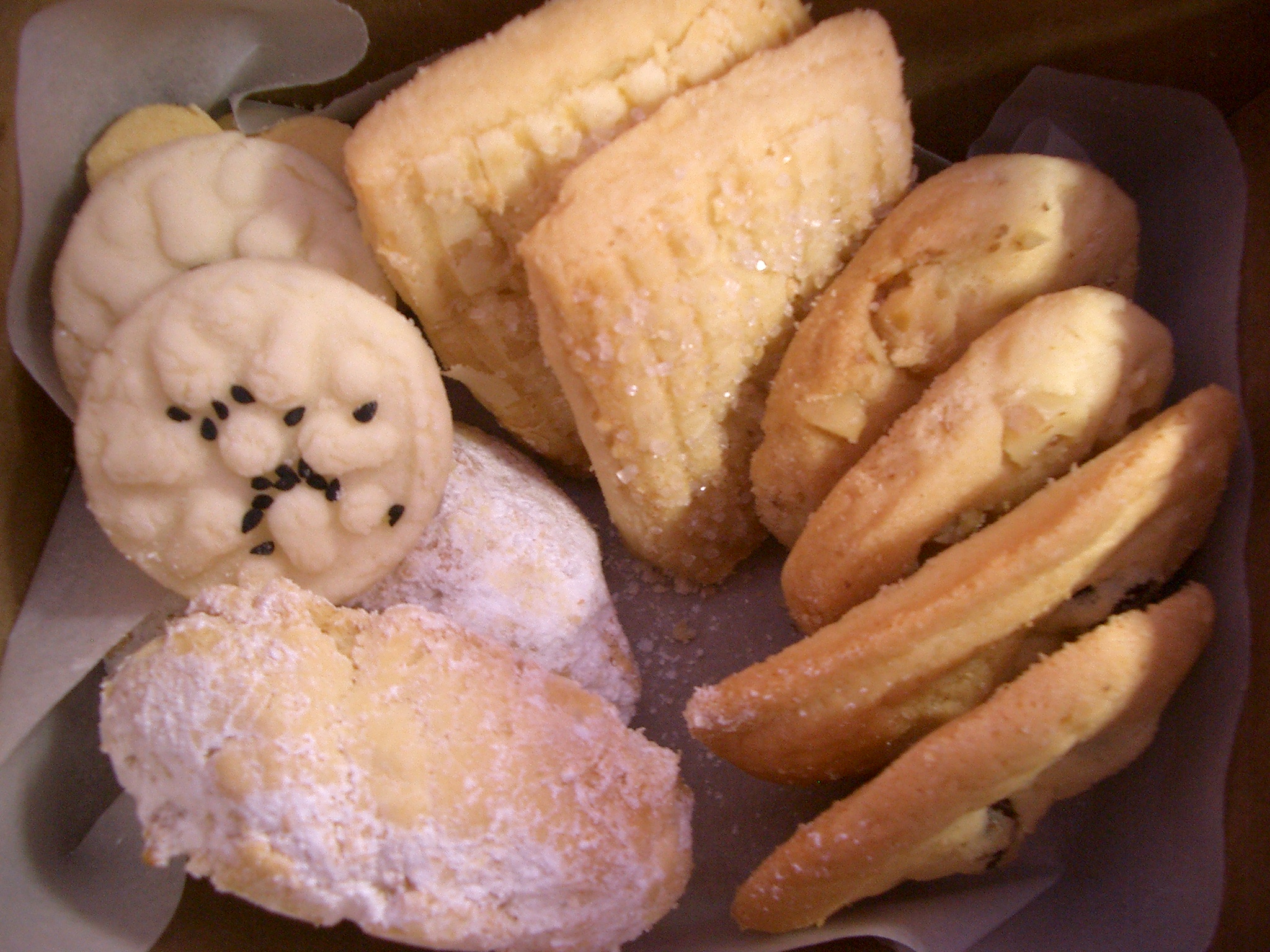
We were able to try every Persian cookie offered and were bowled over by how delicious they were. It is no coincidence that the Persian tradition of afternoon tea includes these melt-in-mouth morsels. A dozen cookies came up to just under $6 and we considered buying more to share with our friends.

Our favorite by were the Naan e Nokhodchi (above, lower right), chickpea flour shaped into rounded crosses, followed closely by the Naan e Berenji (above, upper right), rice flour cookies with rose water and topped with poppy seeds or black sesame seed.

We also tried the walnut, raisin, sugar cookies and the crescent shaped, powder sugar dusted, wedding cookies. All of these cookies were buttery and very rich. We’re looking forward to trying other Persian goodies from Yummy Bakery!

Tea Zone

korean food columbus, korean bakery, tea, shaved ice
Cuisine: Korean
5025 Olentangy River Rd
http://www.teazonebakery.com
614.326.0489 or 614.582.2409
Hours: 10am-8pm (9pm on weekends)

Click here to map it!

It may be Tea Zone by name, but it’s a bakery/cafe/restaurant/tea shop by nature. The address is also a little confusing – they’re tucked away deep in a strip mall, between Gallo’s Tap Room and Micro Center off Bethel Road.

Tea Zone’s offerings struck us as largely bakery-centric with Korean-style bread and pastries as well as cakes to order. The pastries range from kimchi rolls (surprisingly sweet and very good) to piggies in blanket (a hot dog in a slightly sweet bread base) to sweet pea and red bean paste (both enjoyed). There is a large variety, especially earlier in the day.

korean bakery columbus

There are three traditional low tea tables, set on a raised wooden platform with a submerged area for your legs to dangle. Not unlike a Japanese tatami room, you must take off your shoes. There are also some regular tables and chairs and a brisk take out business.

Tea Zone’s food menu is limited and includes popular Korean dishes such as bulgogi and bibimbap (not stone pot). While the bibimbap was fine, the bulgogi was far from the best in town. Each came with soup, salad and kimchi. You can also order udon, cold noodles, spicy seafood with rice even spaghetti with garlic toast.

korean food in columbus, tea zone

A pot of tea (shared between two) is $4.25 and comes with some little Pocky-esque cookie sticks. There are over 20 teas to choose from and Tea Zone also serves bubble tea, smoothies, hot chocolate, juice and coffee. Most of the teas are loose leaf, although I did notice some herbal tea bags. Our Pu-er tea came in a scoop accompanied by a flask of hot water and a 3 minute timer.

korean tea columbus
Perhaps one of the best reasons to go to Tea Zone is for the bing soo, a Korean shaved ice dessert (although it is listed on the drinks menu). Tea Zone offers 3 varieties: fruit, regular and green tea. We opted for the regular. It is a large dish of shaved ice topped with condensed milk, sweet red bean paste, tapioca pearls, fresh and canned fruits, and ice cream. The fruit option has less red bean paste and the green tea option has green tea ice cream.

Korean shaved ice, tea zone, columbus

Bing soo is similar to other shaved ice desserts found in Asia. Tea Zone’s version is definitely large enough to share. It is quite sweet but refreshing and would be wonderful on a hot afternoon.

Imperial Garden, Weekend Buffet


2950 Hayden Road
Columbus, OH 43235
614-799-8655
www.imperialgardenoh.com
Buffet available Saturdays and Sundays 11:30am to 2:00pm

Click here to map it!

The folks here at alt.eats would like to issue a formal apology to our readers: we’ve been holding out on you and we’re really sorry. The weekend buffet at Imperial Garden is so extensive, it required several repeat visits before we could coherently write about it. Every time we go, we spend too much time eating, and too little time taking pictures and notes. For a comprehensive list of buffet offerings, take a look at, our friend, ChoosyGourmand’s blog post.

We like to start in the back room, where the spread consists of soups, snacks, and desserts. There are always three soup options, a salty soup of the day (such as fish with pickled mustard greens), an unsweetened fresh soy milk, and a sweet red bean soup. There are also a dim sum items like sesame balls, noodles, dumplings, and fried crullers. We like to save the sweet red bean soup and fried mochi sesame balls filled with peanut paste for the end of our meal. A note for the uninitiated: the sesame balls are very popular so keep an eye out for them or they will be gone before you blink!

Don’t fill up in the back room because the double steam tables in the front room is where all the goodies are! Since Rod has done such a great job documenting each dish, we’re just going to highlight our favorites. Above, clockwise from top: braised beef tendon with bamboo shoots, roast duck, julienne pressed tofu with bamboo shoots and pork, braised beef with turnips.

Salt and pepper crispy shrimp. “Salt and pepper” is a common preparation method for fried squid and pork chops. These shrimp are excellent and can be eaten whole or peeled.

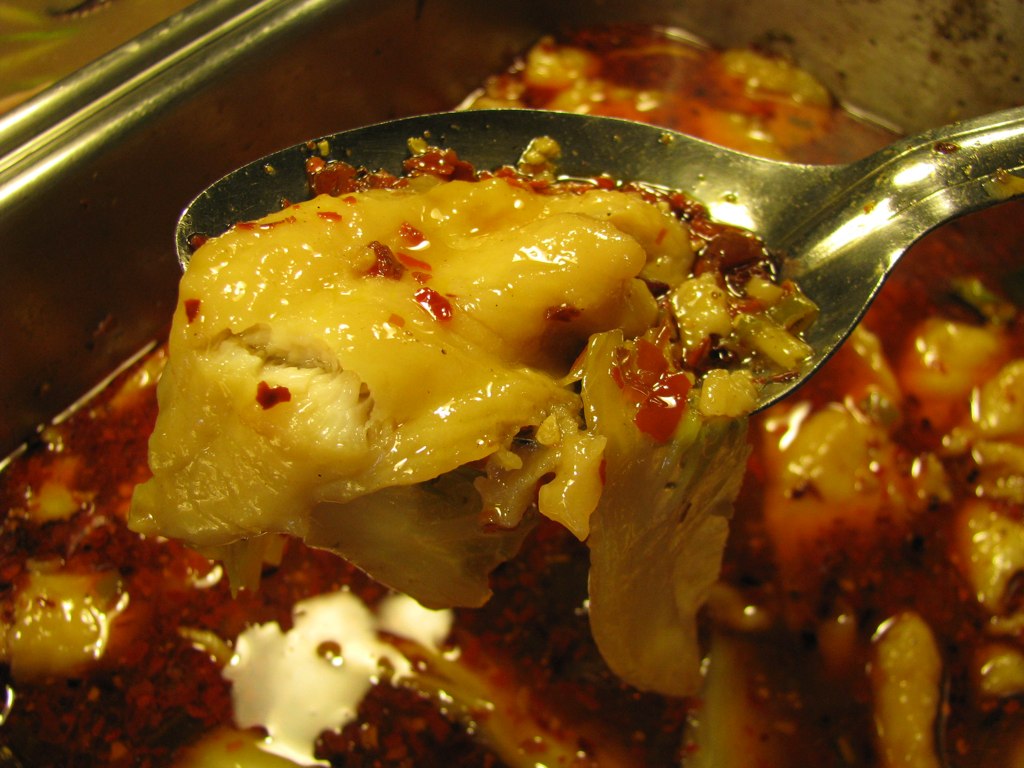
Perhaps my favorite item of the entire buffet is this Sichuan peppercorn fish filet. It’s made with chili oil and Sichuan peppercorns which gives two layers of heat, front end spiciness from the chili oil and tongue numbing spiciness from the Sichuan peppercorns.

Pig ear and wilted romaine salad dressed in a delicious sesame and chili oil sauce.

Mapo tofu with pork intestine. This is an unconventional take on mapo tofu which is usually ground pork stir fried with cubed silken tofu and chili oil sauce.

Tender baby octopus (or squid) stir fried with celery.

The buffet offerings at Imperial Garden are not for the faint of heart but less adventurous eaters can eat very well. There is always white rice, rice vermicelli, stir fried bok choy, and two soups at the front of the buffet. In addition, the salt and pepper chicken wings, Japanese eggplant, and northern styled julienne potato (naturally crispy) are delicious alternatives to the more unfamiliar dishes. Most menu items are in the buffet and at about $13 per person, the buffet pricing is a bargain for its variety and quality.