Author Archives: tacodrew

Kihachi (on the cheap!)

Cuisine: Japanese

2667 Federated Blvd
614.764.9040

Click here to map it!

We’re well documented when it comes to our abiding affection for Kihachi, and indeed find it to be one of the crown jewels of our local immigrant kitchen restaurant scene. That said, given the cost of entry, we’ve been a bit apprehensive about including such a high-end restaurant among the roster of the usual bang-for-the-buck dynamos here at alt.eats.

That’s not to say that Kihachi is a bad value. Given the uncompromising quality of the ingredients and the exceptional technical skills put to use in preparing them, it could even be considered a bargain. But, still, a conspicuously costly bargain.

Or at least that’s the perception. In previous visits, we’ve been repeatedly seduced by the siren song of Chef Kimura’s more exotic offerings, and though we’ve felt entirely rewarded for doing so, the down side of that approach (aside from the overdraft fees) is that we’ve ignored some of the menu’s Japanese staple dishes, whose prices are often far less dear.

So with that in mind, we set out to see both a) if it was possible for a couple to eat a full and satisfying meal for $25/person (tax & tip excluded), and b) if the food in that range was similar, in quality of execution, to the higher priced items.

There are essentially three menus to choose from – dinner, small plates, and daily small plate specials (which are written in Japanese, affixed to the regular small plates menu, and translated by the server).  Our usual approach has been to order a variety of small dishes from both of the small plates menus. This can get expensive if you intend to eat till full, so on this visit we ordered a dinner menu item each (most of which are less expensive than some of the small plates and larger in portions) and then augmented as our budget allowed.

First up, apps, starting with agedashi tofu ($6.00):

Simply put, this is the most compelling case I’ve seen made for why tofu can be delicious: four lightly battered cubes of fried tofu sit in a mix of dashi, soy, and mirin, and topped with seaweed, green onion, grated daikon and bonito flakes. The textures, flavors, and appearance all delight.

Next, fried burdock root (also called gobo, $5.00):

This is the root of the plant that leaves burrs on your clothes as you walk through the woods (burdock), sliced into thin sticks, lightly floured and fried, and presented with a side of seasoned salt. It’s as comforting as a french fry, but far more interesting with its potato-meets-artichoke flavor and slight snap to the bite.

Grilled capelin ($6.00):

That’s right, four little whole fish (capelin are members of the smelt family), mouths agape in expressions of abject terror. They shouldn’t act so surprised – they had to realize that they’re richly flavorful bites of ocean-tinged goodness.

Finally, for the apps, steamed clams in broth ($6.95):

Beautiful in its simplicity, this dish consists of a trio of beautifully plump and surprisingly chewy clams in a lovely broth, and a great garnish of unidentified but flavorful greens.

Now for the mains… first up, udon with duck ($13.00):

We’ve often remarked on how many of our favorite Japanese dishes can have a somewhat comfort food-y component to them. This dish epitomizes the sentiment with plenty of fat udon noodles bathed in a rich, meaty broth, topped off with a generous portion of exceptionally flavorful duck meat and scallions. I don’t believe I’ve ever seen proteins so carefully considered in the context of a soup – perfectly cooked (read – tender) poultry is truly the exception, and is indicative of masterful temperature control in the kitchen.

Next, nabeyaki udon ($12.00):
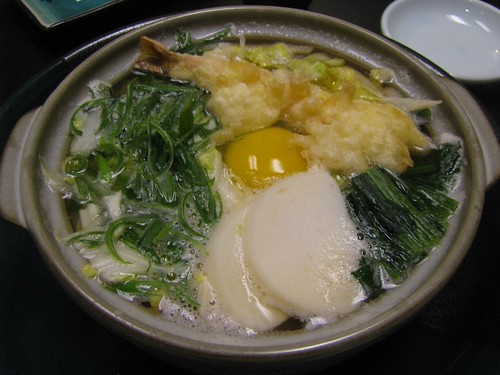
This contained the same udon noodles as in the last dish, but was topped with raw egg yolk, shrimp tempura, fish cakes slices, scallions, and more… and came in a bowl that retained enough heat to keep the broth boiling for at least a couple of minutes after serving. With the egg yolk mixed in, this broth was perhaps even richer than the previous, and among our extended group of 5 it was preferred by all except for one (your humbled author).As meals in a bowl go, you’d be hard pressed to find one more complete (or more satisfying).

With that, our meal for two is complete. Total cost: $48.95, green tea included. With one less app, we could’ve done it for $20/person, and we still would’ve left full and, really, just about as happy as if we’d spent 2 or 3 times as much. Needless to say, we highly recommend you to check Kihachi out, and if you go we’d love to hear about your experiences in the comments.

Intercontinental Restaurant

Cuisine – Nigerian

5777 Cleveland Ave
614.843.5665
Open 11am – 9pm daily, 1pm – 7pm on Sunday

Click here to map it!

As we drove towards Intercontinental, the normally indefatigable food adventurer, Bethia Woolf, was looking a bit pallid. “What’s wrong?”, I ask.

“You know!”, was the curt reply.

You see, sometime during her formative years in the UK, Bethia was invited to a dinner put on by Nigerian friends of her family. This meal left scars that persist to this day – memories of flavors and textures so vividly disagreeable at the time that they can’t help but cast something of a shadow over what’s to come.

As we perused the fully (and helpfully) photo-illustrated menu, though, tensions began to subside somewhat. It certainly didn’t look too scary, and, by and large, struck me as quite appetizing. Co-owner and all around pleasant guy Olawale Ajiboye (“call me Wally”, he says) eagerly explained unfamiliar items to us.

With Olawale’s help we quickly made our selections, and the wait for our dishes was notably short.

First up was a plate of moi moi, goat meat, and jollof rice. This moi moi (also known as moinmoin) was roundly thought to be fascinating and tasty stuff – essentially slices of a bean loaf studded with hard boiled eggs and beef, the texture was light and the flavor was surprisingly complex and umami forward. It disappeared quickly. The jollof rice was similarly easy to appreciate, and this version struck us as being similar to a spicy Mexican rice with additional earthy, meaty undertones. We couldn’t argue with the flavor of the goat, but tenderness wasn’t in the cards.

Same could be said for what was, to my tastes, an (over)steamed whole fish. This came with rice and beans, which, if my eyes didn’t deceive, was actually rice and black eyed peas. Initially a somewhat unexciting side, Olawale brought out a savory, earthy red sauce for it that brought it all together swimmingly.

Our final dish, spinach and plantains, confirmed a long-held impression – African cuisines really know how to handle spinach. Solay Bistro and Taste of Zanzibar both have notable spinach dishes, and Intercontinental’s version is every bit their equal. The accompanying plantains were of the ripe, sweet, caramelized variety. If you’ve had them at any Caribbean restaurant, you’ve had this version… and that’s not a bad thing by any means. While a generous portion was a feature of this dish, it should be noted that there was a garnish of plantains on all of the dishes we tried.


Having struck up an easy rapport with Olawale, he reiterated several times his desire for honest feedback on the meal. We sheepishly inquired about the chewiness of the proteins, and he both thanked us for mentioning it and gently averred that the overt firmness was a widely held preference among West Africans. Experience with several other West African restaurants leads us to think it likely true.

We were then invited to try tastes of a couple of other menu items. Small bowls of the okra soup and egusi soup were presented.

Okra soup, we’ve come to find, is pretty consistently mucilaginous, and while the flavor was enjoyable that texture is still a tough sell. The egusi, normally eaten with pounded yam, is a curious mixture that includes melon seeds and smoked fish. Challenging in both flavor and aroma, we’ve concluded that egusi may well have been the source of Bethia’s childhood trauma.

Intercontinental’s space was a pleasant enough place to enjoy a meal, and the service was notably on the ball. While they’re no exception among African restaurants in offering dishes that can be challenging to the average American palate, our experience leads us to believe that they’ll also have something satisfying for just about everyone (including vegetarians).

Pepper soup is a weekend specialty, and something we look forward to trying out.

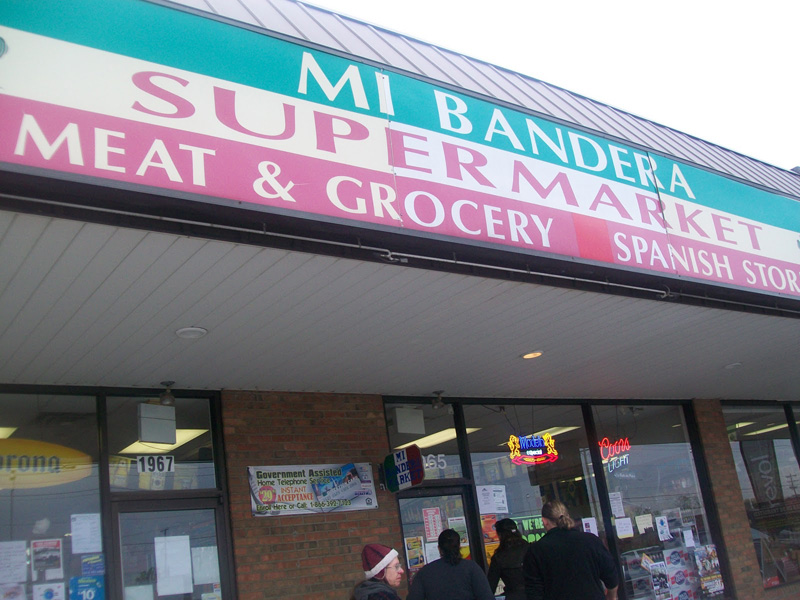
Mi Bandera

1965 East Dublin Granville Road
Columbus, OH 43229-3508
(614) 888-9510
Open 9am – 9pm

Click here to map it!

Mi Bandera, a Mexican/Dominican restaurant, is perhaps not the easiest place to go through the process of getting a meal. It’s of the ‘restaurant in a grocery store’ genre, which in this case means that the cook acts as server and basically otherwise fulfills all of the other roles (including bus boy and dishwasher) that one might expect in a restaurant. Consequently, service can be leisurely – and as far as we can tell they don’t speak a lick of English on the restaurant side.

Be that as it may, it’d be a shame to pass Mi Bandera by based upon these relatively superficial difficulties, so I’m going to suggest a path of action that requires no real knowledge of Spanish and should almost inevitably lead to contentment (if not outright devotion):

First, as you enter the front doors of the grocery, turn right and look for the seating area. When there, you should see a prep line (with a kitchen further back) and a long vegetable cooler on the opposite side. Go to the counter with the heated food case (in front of the prep line) and put on your best ‘I’d like to order’ face.

Then, wait for the cook to take notice. He’ll probably make eye contact well before he’ll take your order. This is how it goes here – at this point, faith in the deliciousness of the end experience may be useful. Once he comes to take your order, he’ll probably ask, “aqui o llevar?” This means ‘for here or to go’. If you’re eating there, respond ‘aqui’ (ah-KEY), and for ‘to go’, ‘llevar’ (yay-VAHR).

Now, place your order. We’re going to direct you towards one failsafe dish – ‘chuleta de puerco’. Say ‘chew-LAY-tuh day PWER-koh’, and follow with ‘por favor’ (pore FUH-vore, this means ‘please’).

Next, take a look at the beverages at the end of the heated food case in the cooler, or if the selection there seems too limited feel free to go to the grocery side and look at their more extended offering. I’m partial to the Foco coconut juice, but anything goes.

Once you’ve got your drink, find a seat on the restaurant side and take in some of Telemundo or similar being shown on the TV. Note how the cook might occasionally come out to the vegetable case to pluck a pepper or some onions for your dish.

As the dish comes out, you should expect 2-3 thin-cut pork chops (quantity depends on size of chops), beans, rice, lettuce, and avocado on a large platter, and a basket of tortillas on the side. Cut a few generous slices of pork (don’t remove the fatty edges – they’re the best part!) and put them on a tortilla. Add some beans, and really just about anything else on your plate you’d like. Fold the tortilla up like a taco, and enjoy.

The pork chops have a smoky, almost vaguely bacon-y flavor, and the beans are as rich and delicious as any we’ve ever tried. Upon first tasting it, one of our friends declared Mi Bandera to be her ‘new pork chop place’, and we’re pretty sure she’s been back weekly. Come to think of it, we probably have as well… they’re that good.

Hope you thought so as well. Having finished your meal, now go back to the food case and ask for the check. The word ‘check’ is usually understood, but a sign language pantomime of writing with a pen on a pad will work as well. Take this check to the check-out line in the grocery and pay there.

With that, you’re no longer a Mi Bandera rookie. Probably a good time to let you know that while Mi Bandera is heavy on Mexican offerings, they’re Dominican run and also serve island specialties such as maduros (ripe plantain), tostones (unripe plantain, smashed, fried, and salted), and Dominican empanadas.

Also worthy of attention are their chilaquiles (CHEE-lah-KEY-lays):

By and large, Mi Bandera is not a stop that caters to vegetarians, with the possible exception of a few side dishes such as the plantain preparations. Prices are reasonable, with all dishes we’ve tried coming in well under $10.

Foodie Cart

Cuisine: Japanese with myriad other influences

Location varies, see their Facebook page or Twitter stream for the latest

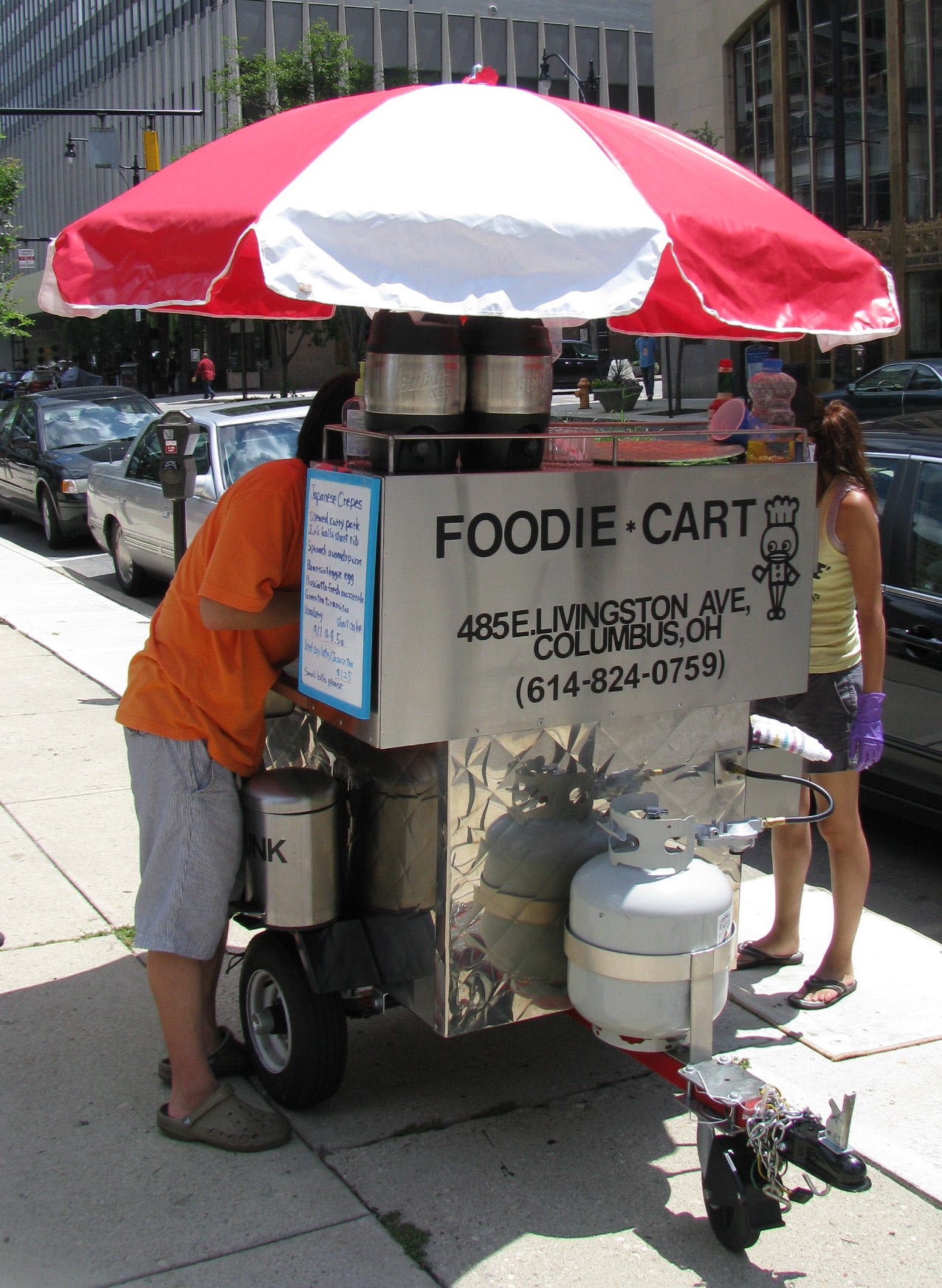
Driving around downtown on any weekday at lunchtime, you’ll inevitably see plenty of lunch carts.  Recognizable by their red & white umbrellas, they usually serve gyros, brats, hot dogs and the like… just as they did 5, 10, hell, even 15 years ago.

Almost lost amongst them today, though, was something completely outside of the norm.

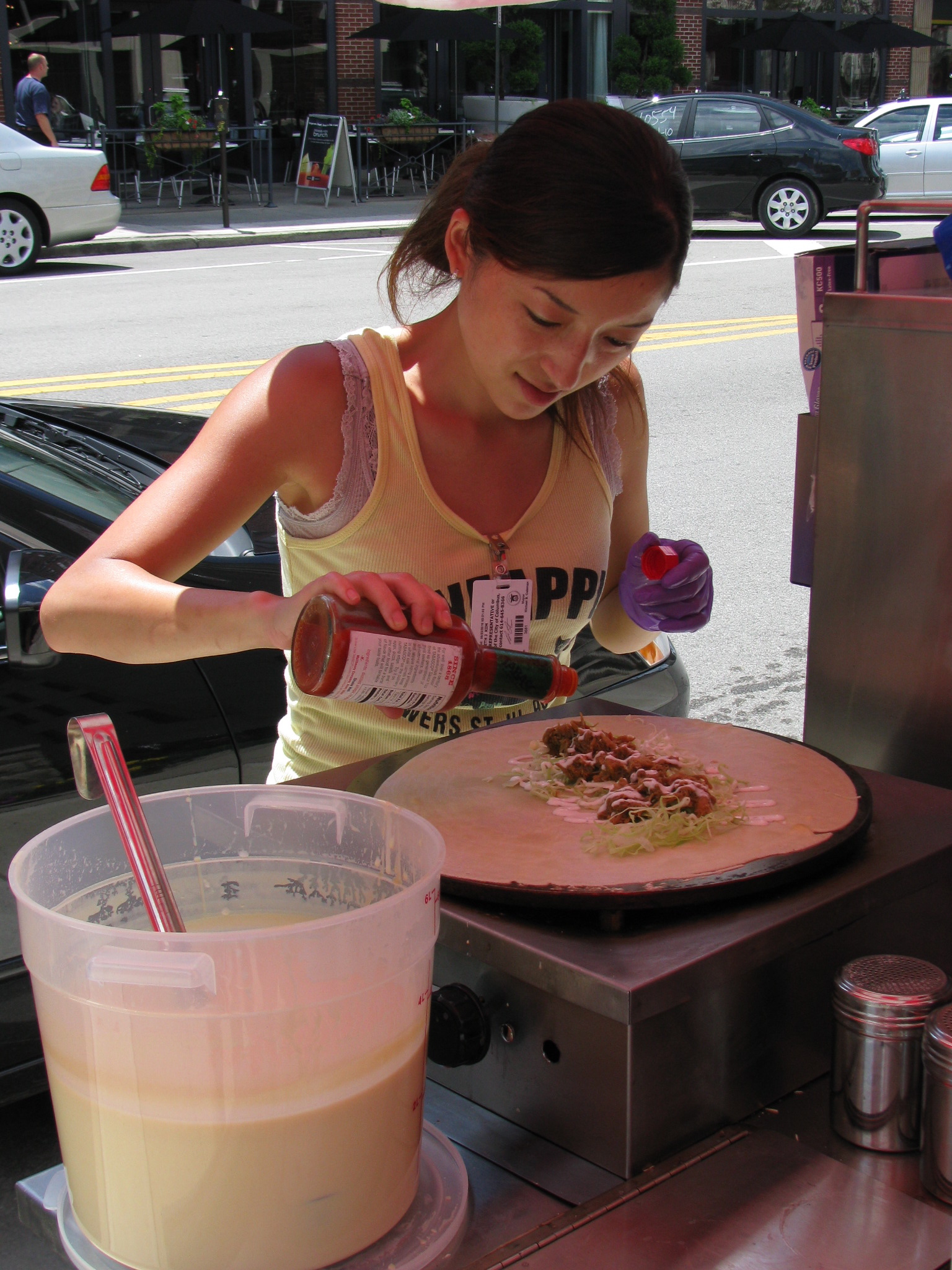
Instead of waterlogged brats, this renegade cart was hawking ‘steamed curry pork’.  In lieu of dry, shaved gyro loaf in stale pita bread, their menu teased with the promise of ‘jerk kalbi short rib’.  They’re called Foodie Cart, and they make extravagantly creative Japanese-style crepes.

Prior to visiting Foodie Cart, I had tried to talk several people into joining me in trying them out. Almost inevitably, the response was, “What is a Japanese crepe?!”, which seemed to indicate vague sense of distrust based upon the conflation of ‘Japanese’ with what is commonly considered to be a French preparation.

Odd though it might sound, crepes have long been a (delicious) part of the culinary landscape in Japan.  They’re distinguished from their continental cousins by a couple of traits – a thinner, somewhat crispy crepe shell that uses little to no butter, and a ‘the only rule is to break the rules’ approach to filling combinations. Well, that and the fact that they’re mostly found in Japan.

That’s where Misako Ohba comes in.  Trained as a pastry chef in Tokyo, she was recruited to ply her trade here in Columbus, where she met her husband and partner-in-crepes, Kenny.  Having paid their dues in the food service industry, they decided it was time to strike out on their own.

I’m emphatically glad they did, as this allowed us to try four of their crepes – the stewed curry pork, jerk kalbi short rib, Boursin veggie egg, and the green tea tiramisu.

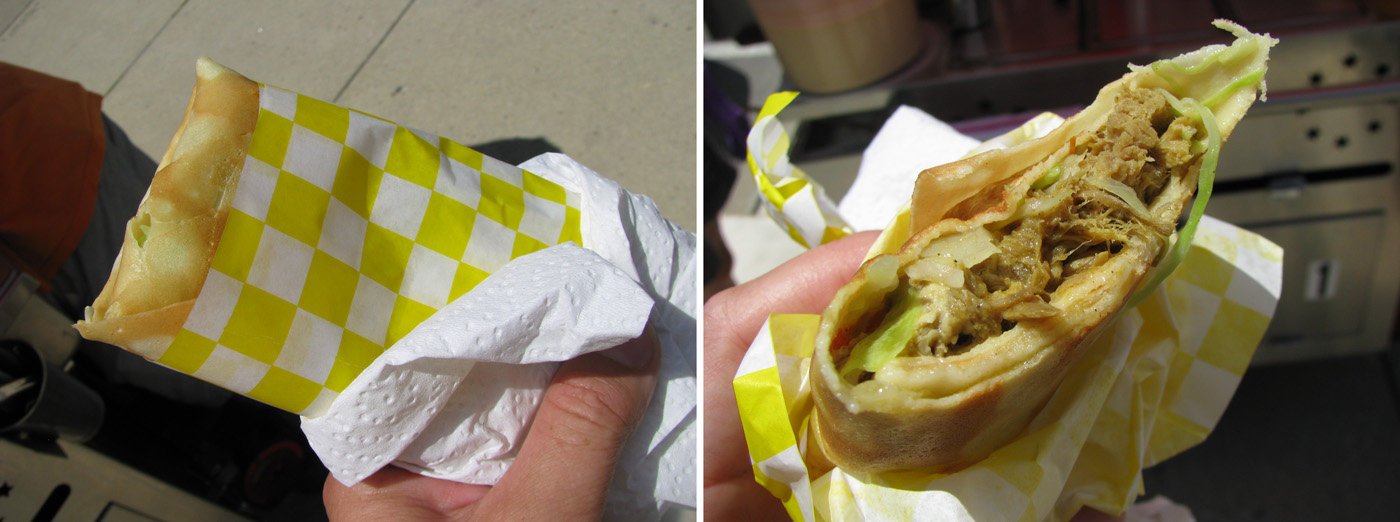
All of the savory crepes were folded into a package not unlike that of a burrito.  The light and flaky exterior of the pork curry crepe (above) yielded to reveal nicely seasoned and tender pig flesh, shredded cabbage, and a few dabs of tabasco.  A beautiful combination, both in flavor and texture.

The jerk kalbi – strips of marinated short rib meat, spinach, and an unusual sauce that, if I recall correctly, included kiwifruit – was similarly successful. I’ve long loved the big beef taste of the traditional Korean kalbi preparation, and it’s been a dish that has translated well into myriad ‘fusion’ interpretations (it’s a mainstay of the famous Kogi ‘taco’ truck in LA).  So… hey, why not in a crepe?

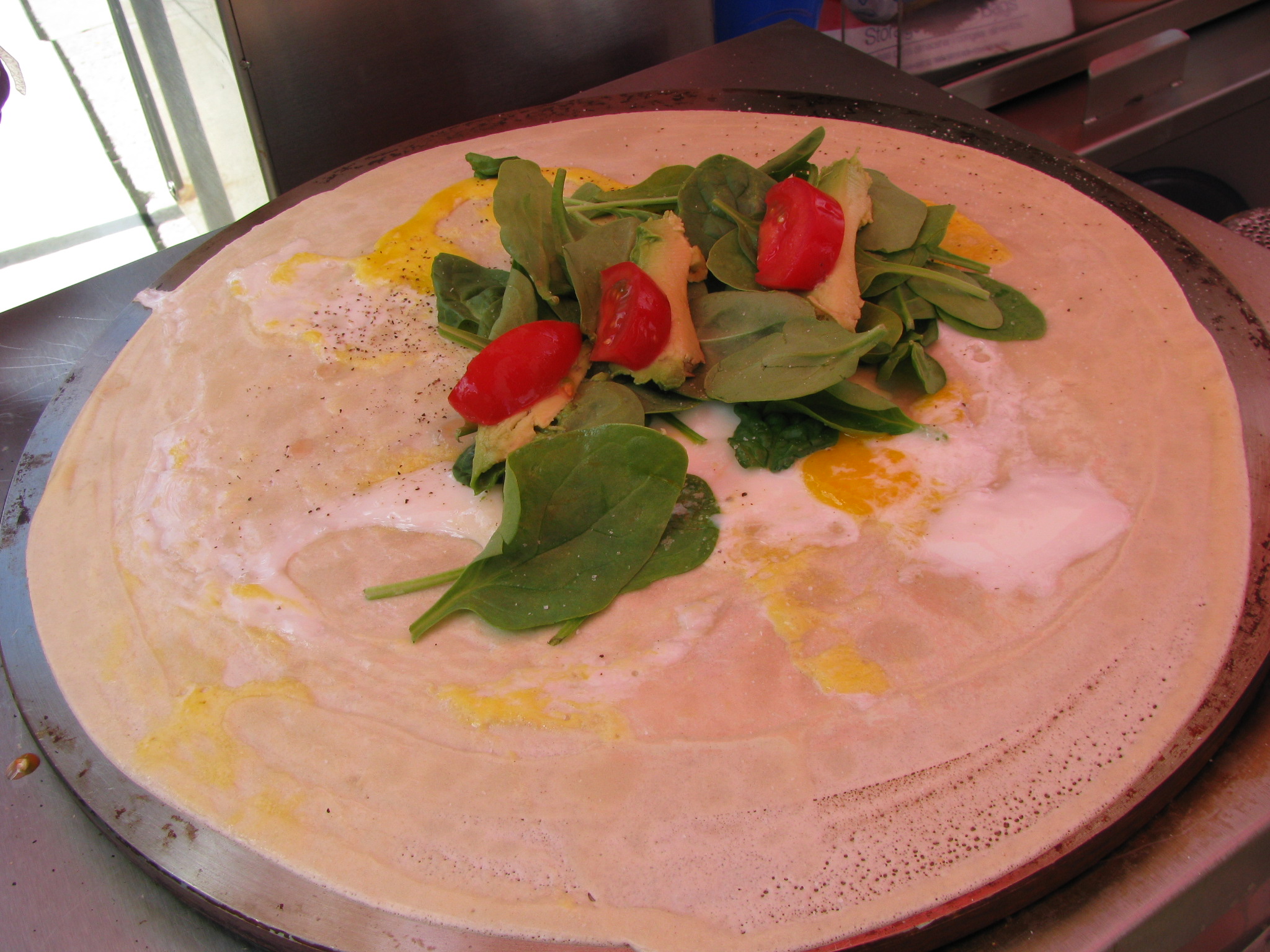
The last of our savory crepes was the Boursin, veggie, and egg (above), which included spinach, avocado and tomatoes.  Though the ingredients couldn’t be more different, this struck me as having qualities similar to that of a good banh mi sandwich in that it hits the palate as both rich and light/vegetal simultaneously.  Quite a trick to pull off, and an exceptional savory treat.

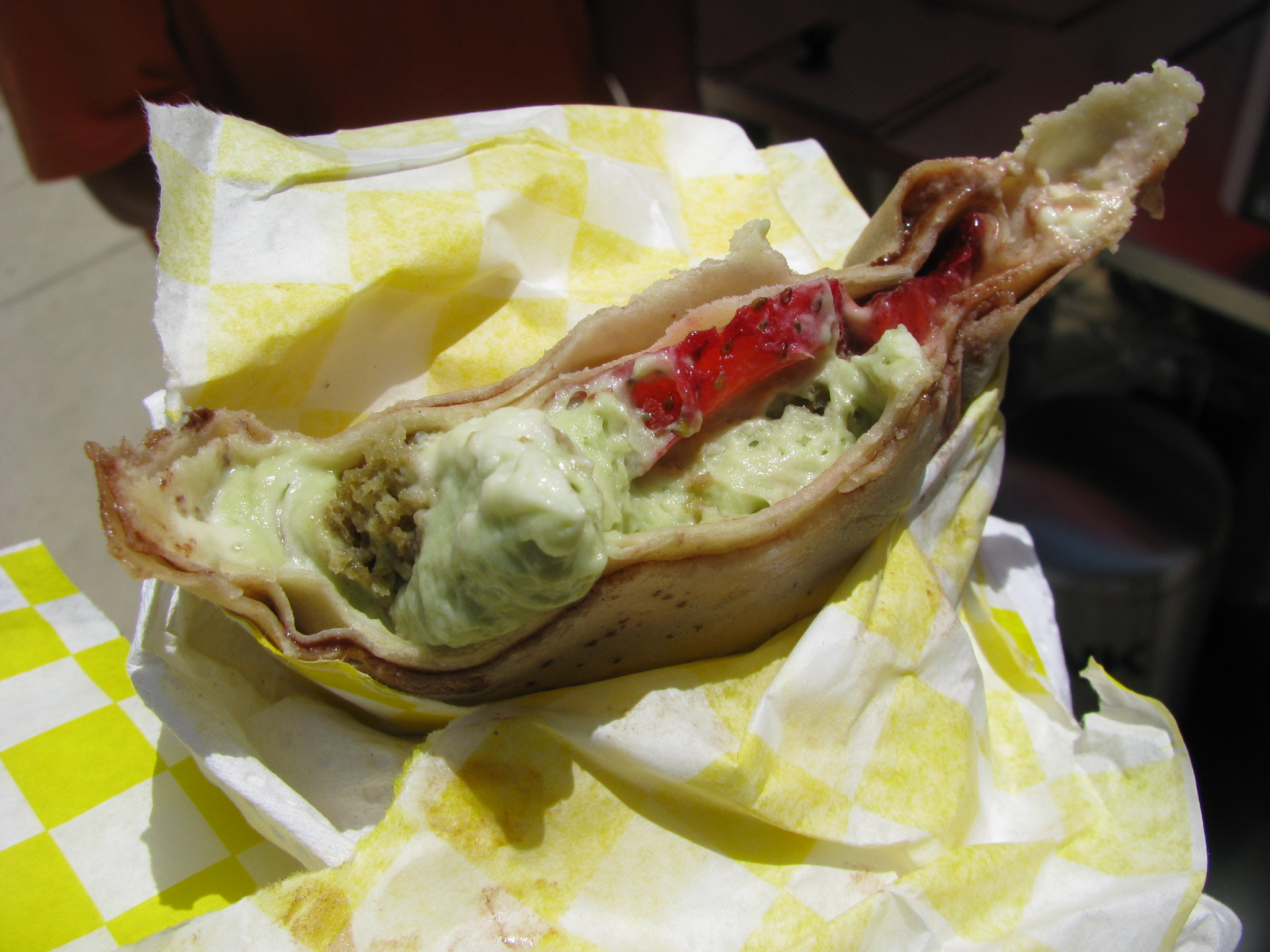
Did we mention that Misako is a pastry chef? She makes a complete green tea tiramisu, and then puts dollops of it into a crepe along with fresh strawberries and chocolate sauce. If that sounds good, know that it tasted better.

At this point, Foodie Cart’s menu changes quite frequently. Other items in the rotation include ahi tuna, salmon & avocado, and lemon pork belly… all of which will ensure our speedy return.  They’re also keen to include at least one vegetarian item on the menu at any given time.  Beverage options include iced jasmine tea and a soy iced tea latte, and both were great.

One last thought. Operations like Foodie Cart and Fusion Cafe represent the growth of something that is both important and special to our food scene – namely the emergence of seriously high-quality, innovative food that budding restauranteurs can only share with us thanks to this low investment approach. Mobile food also allows the small guy with big ideas the opportunity to take risks with their menu that most restaurants would shy away from, as well as serving as something of an incubator for the leap into restaurant ownership.

In short, guys like this are a big good thing, and I’d like to encourage our readership to frequent them.  Did I mention that Foodie Cart’s crepes cost all of $4.50?  Yeah, low overhead also means low prices.

Fusion Cafe

columbus food trucks, mobile food vendor

Cuisine: Fusion

Location and hours: Check their Facebook page, or follow them on Twitter
614.581.5413

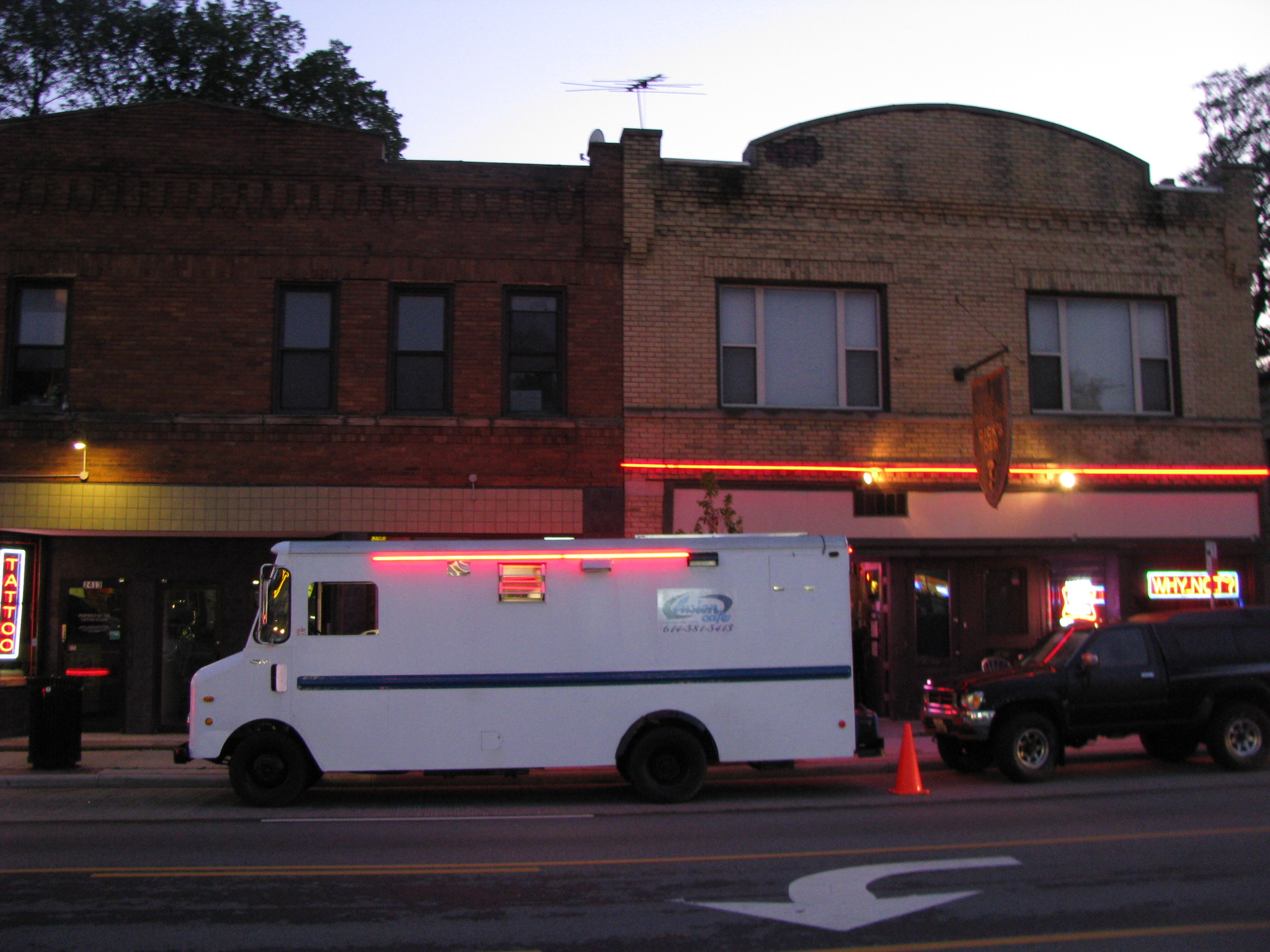
If, over the past week or so, you’ve been on High St. around Dick’s Den in the evening, or on Broad near the Columbus Museum of Art during the day, you’ve probably seen a relatively non-descript delivery truck parked along the side of the road. Perhaps the more perceptive among you even recognized its shape as that of a converted Wonder Bread delivery van.

Actually, to call it ‘converted’, is something of an understatement. While Fusion Cafe’s rolling kitchen is recognizable by its white paint job with blue accents on the outside, it’s most notable for being green through-and-through.  A partial list of their eco-bonafides include:

•They have a 45 watt solar panel array on the roof feeding 4 deep cycle RV batteries, which in turn provide for the majority of their electric needs.

•They use recycled packaging for their to-go orders, and word is that they’ll even keep your utensils for you, wash ’em up, and have them ready for you on your next visit.

•They’re proud to source many of their raw ingredients locally, sometimes from their own back yard.

•They’re fastidious about the eco-friendliness of their cleaning products.

Fusion Cafe is the brainchild of the personable Chef ‘JP’ Potter, and his charming wife, Marie. Potter is a graduate of the ECDI’s business training program, and participated in it alongside the folks who run the ‘3 Babes and a Baker’ cupcake truck as well as Michael Hemrick, the man behind ‘Zapico Foods’ (a local producer of pasta sauces).

Fusion Cafe’s menu rotates daily and is ambitiously wide-ranging, though on any given day there are 2-4 menu items being prepared and served. As being a good neighbor is particularly important for mobile vendors, beverages (smoothies seem to feature prominently among them) are only offered when the truck is not parked near other establishments that carry them.

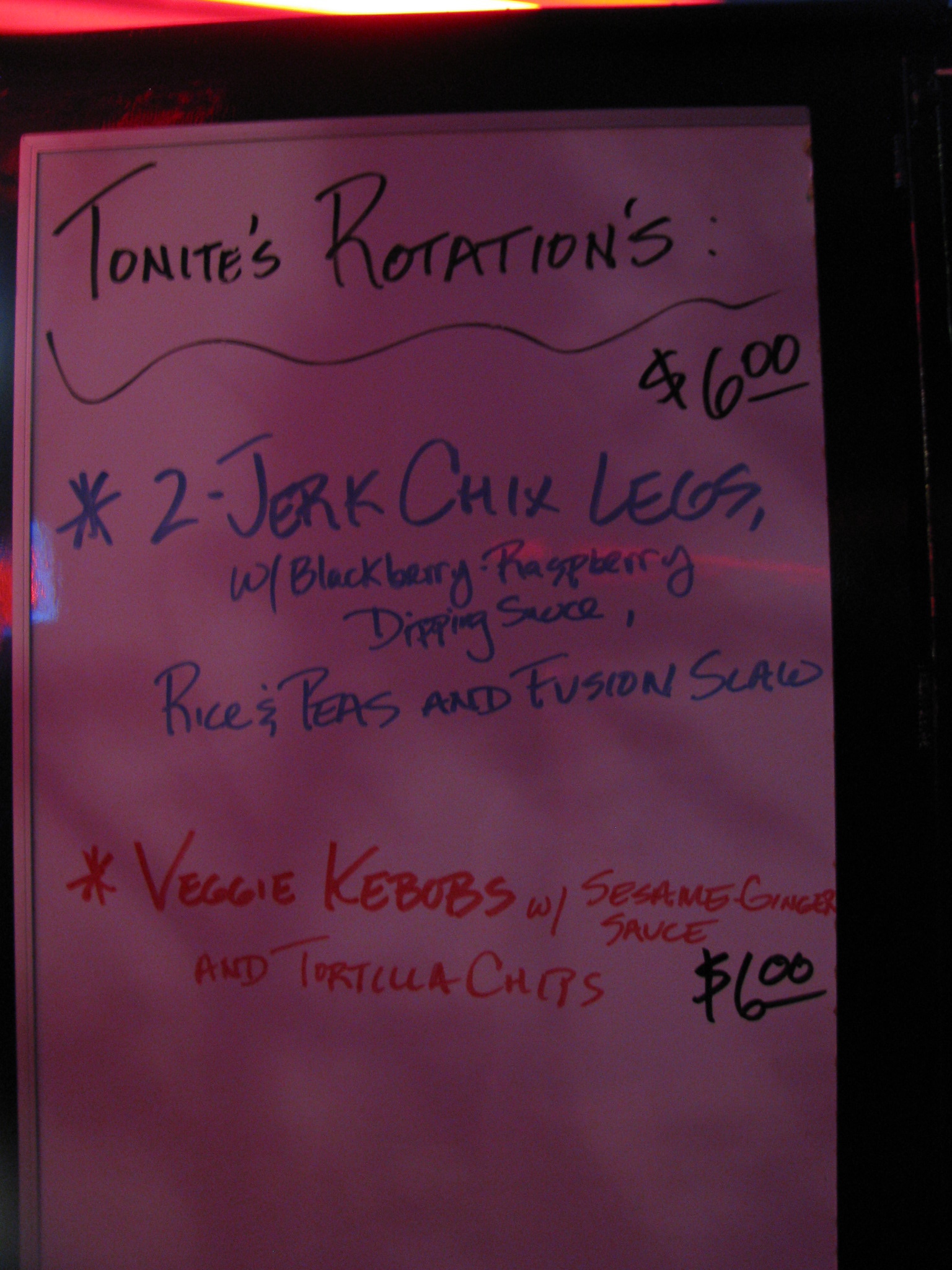
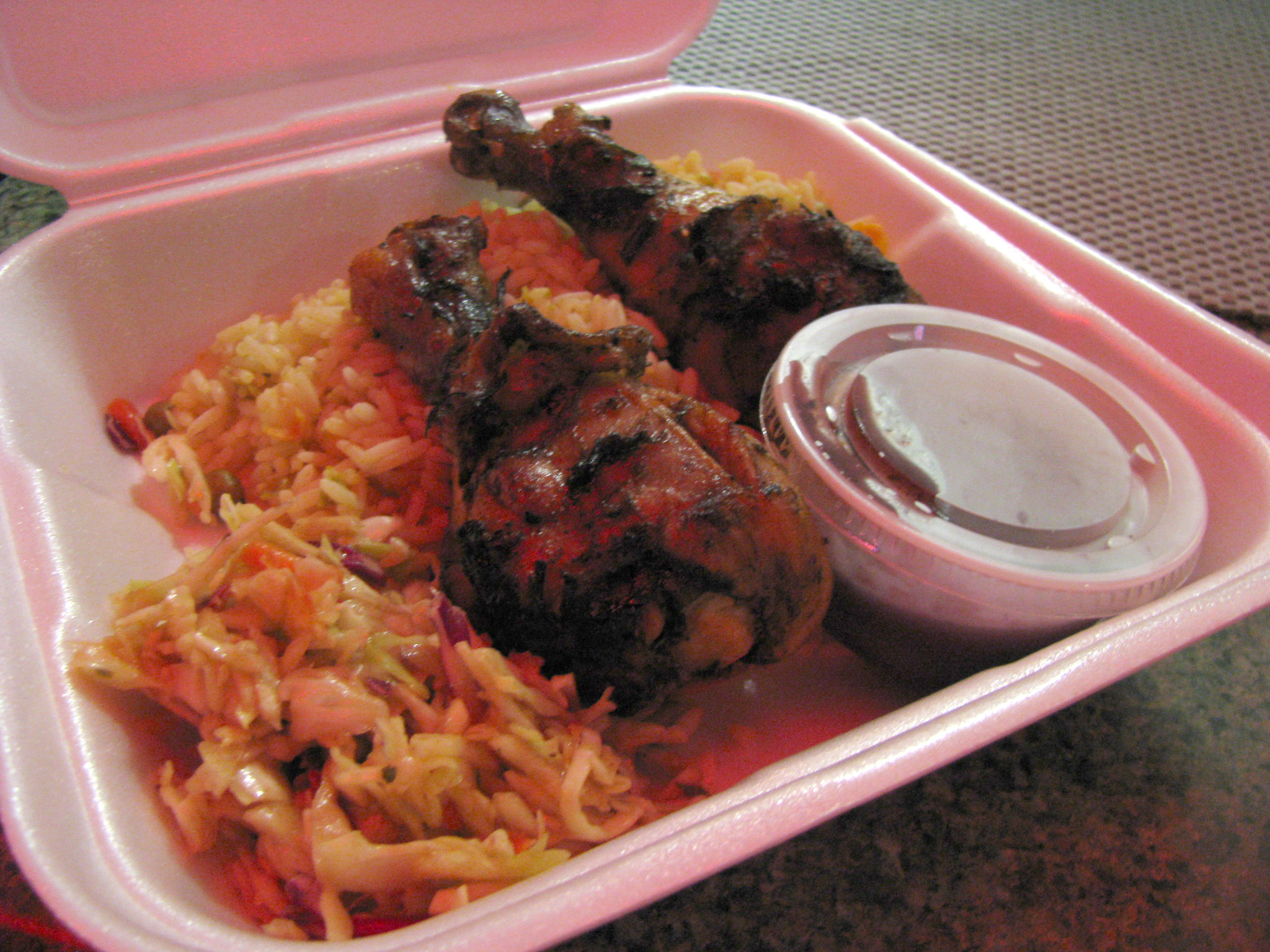
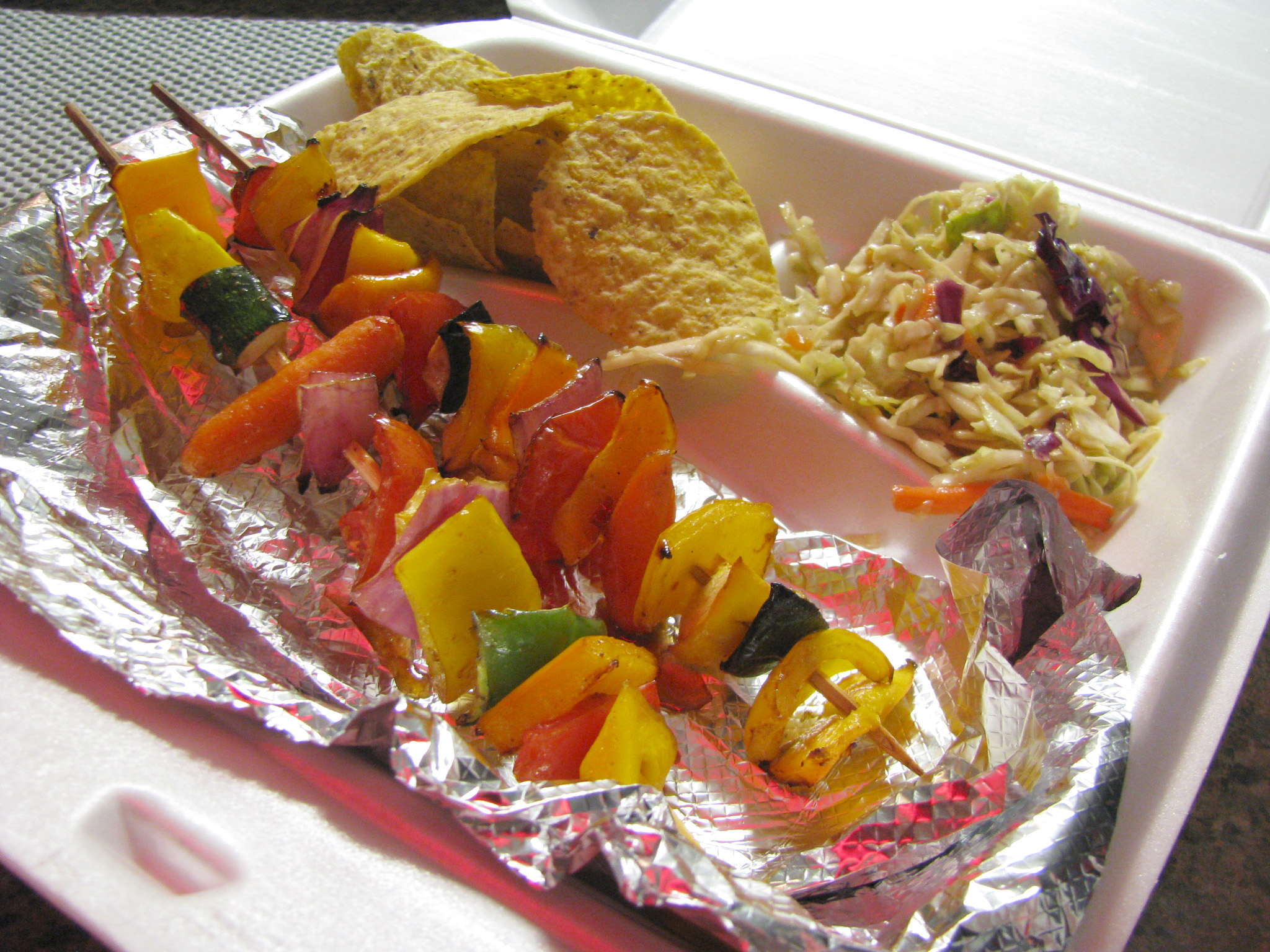
On our visit, they were serving jerk chicken legs with rice & peas and ‘Fusion’ slaw, and veggie kabobs with the ‘Fusion’ slaw and tortilla chips.  We (of course) ordered both.

Among our group of 5, the jerk chicken legs were unanimously well received.  There has been some discussion about the authenticity of the jerk recipe – was it ‘toned down’ for the American palate? – and I will cop to having very little experience to fall back on in evaluating the authenticity of Jamaican/’island’ food.  And, really, in this case, I’ll admit to having little interest in the discussion in the first place. Let’s put it this way – if given a choice between your average properly grilled chicken leg, a typical fried chicken leg, or this, I’d easily pick the jerk chicken 9 times out of 10 (yes, there are the rare occasions when only crispy fried chicken will do).

The rice & peas were a nice accompaniment, and the ‘Fusion’ slaw was nothing short of a sesame oil-powered flavor bomb. This Asian-inspired approach undoubtedly sounds a bit incongruous, but actually worked quite well.  Fusion indeed!

The veggie kebabs were also enjoyed. This wide variety of fresh vegetables on the skewer were marinaded with a simple, subtly sweet and savory blend that never overwhelmed.  An object lesson in leaving well enough alone, these kebabs showcased the bright flavors of the vegetables and were accompanied by the aforementioned cabbage slaw and some (relatively forgettable) tortilla chips. All in all, a nice snack.

There is much left to try at Fusion Cafe (examples from the rotation include jerk pulled pork sandwiches, fish tacos, and bison sliders), and our first tastes gave us more than ample motivation to do so.  We liked the concept, had a great time talking with the owners, and certainly enjoyed the food.

Perhaps most of all, we love thinking about this converted, solar-powered, onetime Wonder Bread truck as a metaphor for everything that’s right about the direction of Columbus’s food scene.